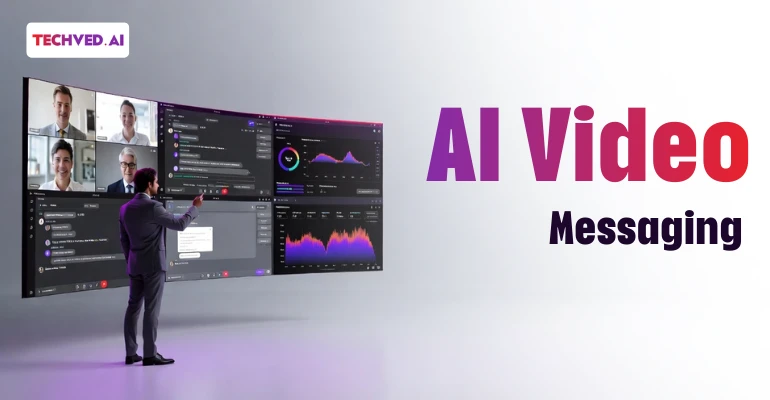

Enterprise personalization is at a breaking point. Despite years of investment, most organizations still deliver experiences that feel templated, predictable, and disconnected from real customer context. In fact, what many enterprises call “personalization” today is little more than dynamic tagging layered onto static content.
This gap is driving a critical shift one where AI-driven personalization in video is emerging as a scalable, experience-led solution to bridge intelligence with human relevance.
The Real Problem: Personalization That Doesn’t Feel Personal
At scale, personalization becomes operationally complex. Enterprises manage millions of users, multiple channels, and diverse journeys yet the experience often feels uniform.
Traditional video messaging services and engagement systems rely on:
- Pre-defined templates with limited variability
- Rule-based segmentation instead of behavioral intelligence
- Static content delivered across dynamic scenarios
- Minimal adaptation to user intent in real time
Even with growing investments in AI in customer experience, the output often lacks depth, context, and emotional alignment.
The result is a subtle but damaging disconnect customers see personalization, but they don’t feel understood.
Why It Fails: Static Logic in Dynamic Journeys
Most personalization strategies are built on structured data, not evolving context.
This leads to challenges such as:
- Over-reliance on historical data without real-time adaptation
- Fragmented insights across systems
- Limited ability to adjust tone, format, or delivery dynamically
While enterprises experiment with personalized ai video and AI video messaging communication, the underlying systems often remain rigid.
Even advanced implementations of AI video messaging struggle when personalization is treated as a feature rather than a system-wide capability.
Strategic Insight: Personalization Must Become Contextual and Conversational
The future of personalization lies not in predicting what users want—but in responding intelligently to what they need in the moment.
This is where humanized AI conversations intersect with video to create adaptive, real-time engagement.
By leveraging:
- Behavioral intelligence
- Context-aware decisioning
- Real-time content generation
enterprises can transform static video into dynamic experiences.
Multilingual AI video communication further extends this capability by ensuring personalization is not just individual but inclusive across geographies.
With the support of multilingual AI avatars, these interactions become relatable, culturally aligned, and emotionally resonant.
Platforms like Hola AI are enabling enterprises to move beyond templated personalization toward intelligent, conversation-driven video ecosystems.
Practical Framework: Scaling Intelligent Video Personalization
To unlock the full potential of Enterprise video AI solutions, organizations need to operationalize personalization as a strategic capability not a campaign tactic.
1. Focus on High-Impact Personalization Moments
Identify interactions where personalization directly influences outcomes:
- Customer onboarding
- Product discovery and education
- Renewal or retention journeys
- Support and issue resolution
These use cases are ideal for Video AI Solutions that adapt in real time.
2. Build Real-Time Contextual Intelligence
Effective personalization requires systems that can:
- Process behavioral and transactional data instantly
- Adjust messaging based on user intent
- Evolve interactions as journeys progress
This transforms AI video messaging communication into a responsive, living system.
3. Design for Multilingual and Cultural Relevance
Global personalization demands more than language translation.
By leveraging Multilingual AI video communication, enterprises can:
- Tailor experiences across regions
- Align messaging with cultural expectations
- Improve clarity and engagement
Here, multilingual AI avatars help create familiarity and trust at scale.
4. Integrate Across Data and Experience Ecosystems
Personalization cannot exist in silos.
To strengthen AI in customer experience, enterprises must connect:
- CRM and customer data platforms
- Marketing automation systems
- Support and service infrastructures
This ensures continuity and coherence across every interaction.
5. Leverage Scalable AI Capabilities
Sustained personalization requires robust infrastructure.
By adopting advanced AI development services, organizations can:
- Train models on diverse datasets
- Continuously optimize performance
- Ensure compliance and scalability
This forms the foundation for next-generation video messaging services.
Realistic Enterprise Example
A global e-commerce platform struggled with low engagement in post-purchase communication.
Traditional approach:
- Generic confirmation emails
- Static promotional videos
- Limited follow-up personalization
Challenges:
- Low repeat purchase rates
- Minimal engagement with video content
- Poor customer retention
After implementing AI-driven personalization in video:
- Customers received dynamic video messages tailored to their purchase behavior
- AI avatars provided product usage tips in preferred languages
- Real-time recommendations adapted to browsing patterns
Outcomes:
- Increased repeat purchases
- Higher video engagement rates
- Improved customer lifetime value
This demonstrates how Enterprise video AI solutions can transform personalization into a continuous, value-driven experience.
The Shift: From Segmentation to Intelligent Experience Design
What makes this evolution significant is the shift in mindset.
Enterprises are moving from:
- Segment-based targeting → Individual-level adaptation
- Predefined journeys → Real-time interaction flows
- Content personalization → Experience personalization
With advancements in AI development services, personalization is no longer a marketing function—it becomes an enterprise-wide capability embedded into every interaction layer.
Conclusion: Personalization That Understands, Not Just Adapts
The next era of customer experience will not be defined by how much data enterprises collect but by how intelligently they use it.
AI-driven personalization in video is enabling organizations to create experiences that are not only tailoredvbut truly responsive, contextual, and human.
For a deeper perspective on how AI-powered video is transforming enterprise engagement, this
AI-enabled video experience insight offers valuable strategic context.
At TECHVED.AI, this shift is shaping how enterprises design intelligent, scalable ecosystems where personalization evolves from a feature into a foundational capability.
Implement AI Video Messaging Today (CTA) by rethinking personalization as a real-time, conversation-driven experience.























Sign in to leave a comment.