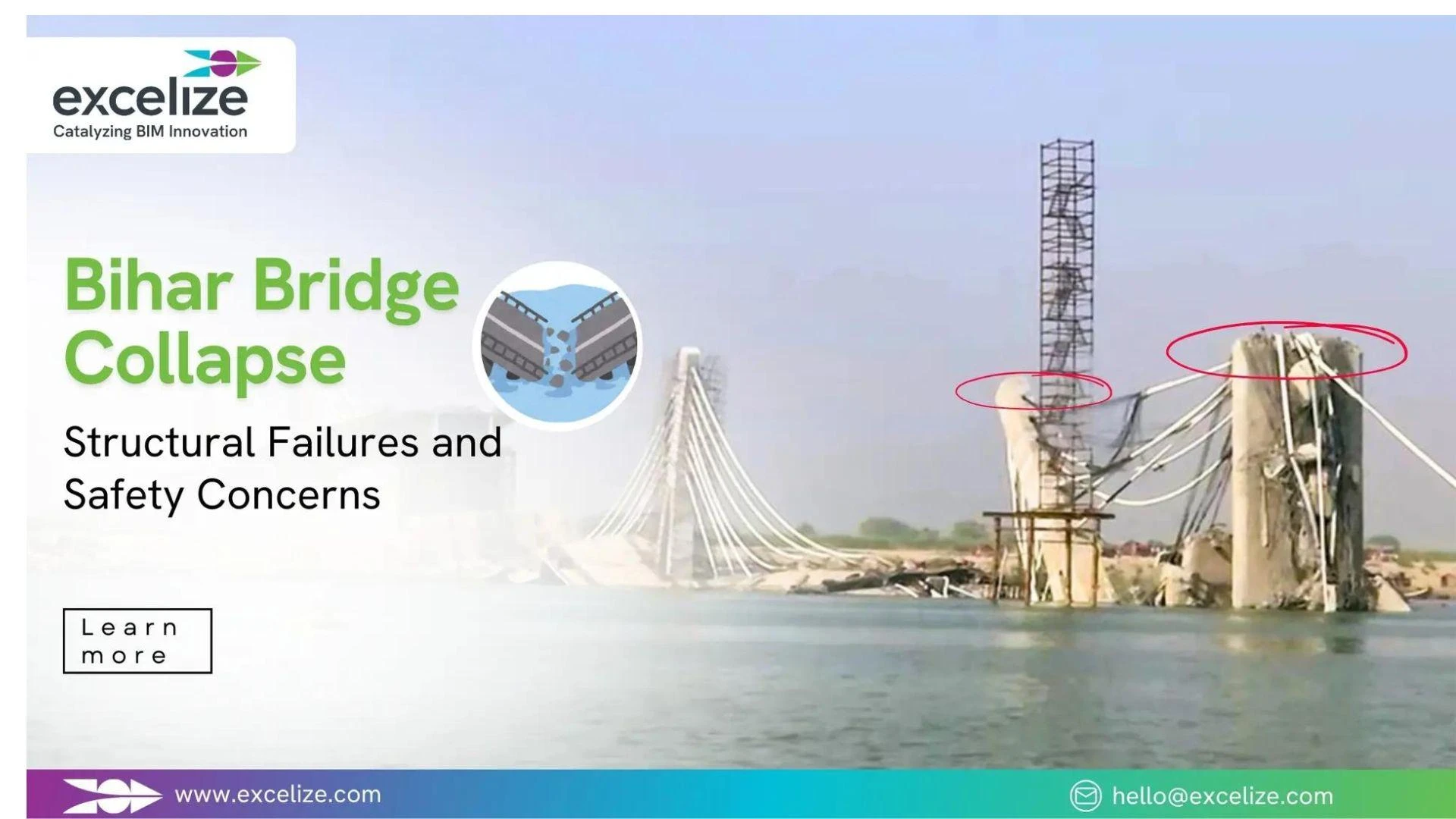

In the last 15 days, 10 bridges have been collapsed in Bihar state. The first incident happened on 18th of the June, when the newly constructed bridge over the Bakra River of the Araira district collapsed. Then it took place in several places including Siwan, East Champaran, Kishanganj, and Madhubani.
To date, 11 engineers have been suspended. All these happened because precautionary measures were not taken, proper technical supervision was not conducted, and most importantly proper technology was not used in the construction of the bridge.
If the proper technology had been used in the construction of these bridges, then probably many of these accidents could have been prevented. You might be wondering what technology can be used so that this accident prevention could be possible.
BIM or Building Information Modeling is a technology now used in the construction of many structures all over the world it provides strength, stability, and efficiency.
Building Information Modeling is a very powerful technology that prevents bridges from collapsing through the various stages of design, construction, and maintenance.
Let’s discuss all three stages in brief.
Design Phase:
- Enhanced Visualization and Simulation: BIM helps engineers to make a detailed 3D model of the bridge including structural components and the connections. With the help of these models, we can real words conditions such as load, stress, and environmental factors too. Engineers analyze these models in real time identify the possible errors and fix all the errors even before the construction of the bridge.
- Collaborative Design: BIM enables cooperation among architects, engineers, and stakeholders. By working on a shared digital platform, professionals can integrate their expertise and identify design conflicts or errors early on. This ensures that structural integrity is prioritized from the outset.
- Iterative Design Improvement: Designers can quickly iterate through different design alternatives in BIM, evaluating each for structural stability and feasibility. This iterative process allows for the optimization of designs to meet safety standards and operational requirements.
read more.....


























Sign in to leave a comment.