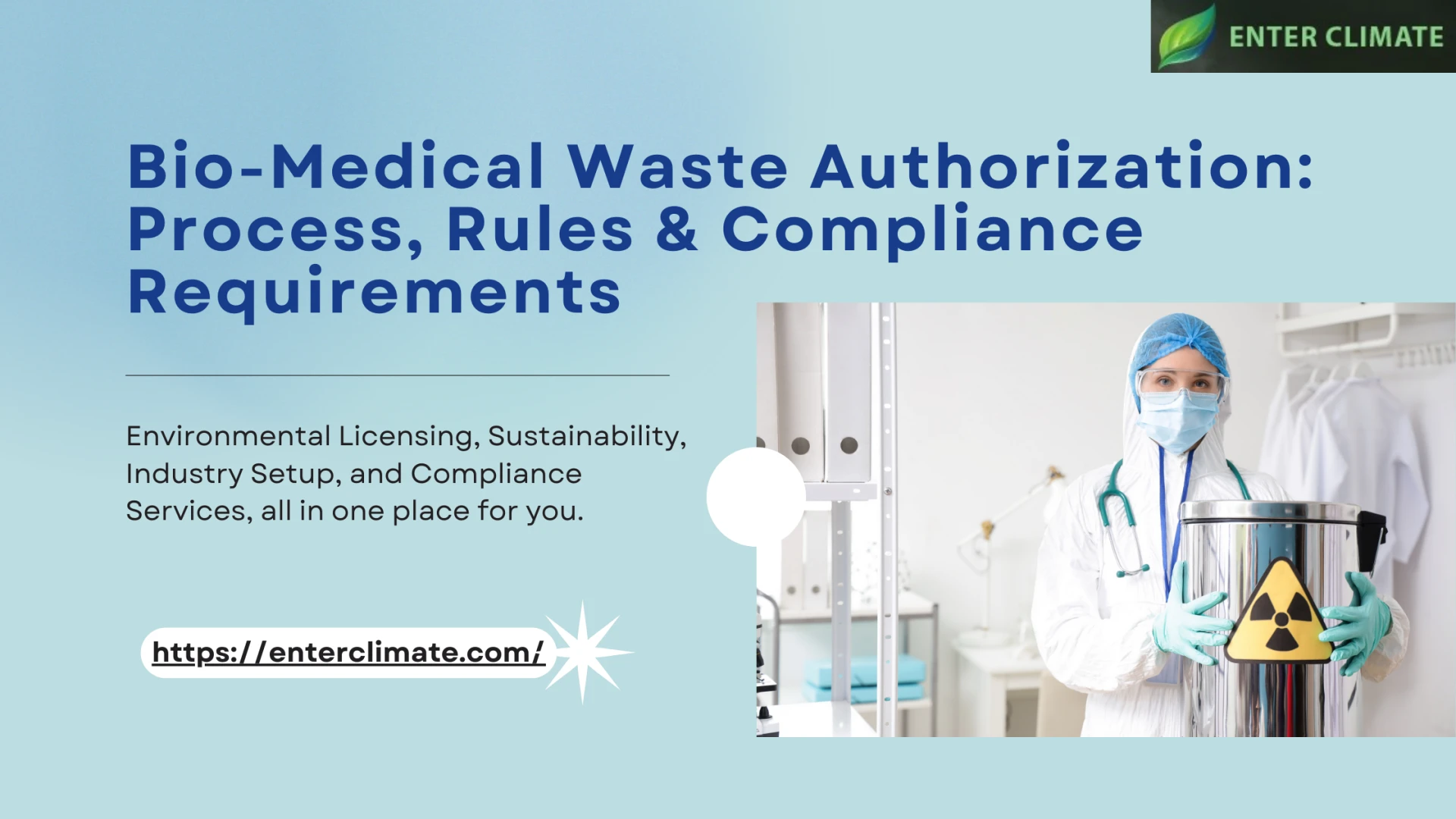

Hospitals, clinics, laboratories, diagnostic centers, blood banks, and even small nursing homes help people stay healthy. But while doing this good work, they also create bio-medical waste.
This waste can be dangerous if not handled properly. That is why Bio-Medical Waste Authorization is very important.
This guide is perfect for beginners, healthcare staff, business owners, and students.
What Is Bio-Medical Waste?
Bio-medical waste is any waste that comes from medical activities and can harm people, animals, or the environment.
Examples of Bio-Medical Waste:
- Used needles and syringes
- Blood-soaked bandages and cotton
- Human tissues and organs
- Expired medicines
- Laboratory samples
- Used gloves, masks, and PPE kits
If this waste is thrown in normal dustbins, it can:
- Spread infections
- Pollute water and soil
- Harm waste workers
- Create serious health risks
That is why the government made strict rules for handling this waste.
What Is Bio-Medical Waste Authorization?
Bio-Medical Waste Authorization is an official permission given by the State Pollution Control Board (SPCB) or Pollution Control Committee (PCC).
This permission allows a healthcare facility to:
- Collect bio-medical waste safely
- Store it properly
- Treat it correctly
- Dispose of it legally
Without authorization, handling bio-medical waste is illegal.
Who Needs Bio-Medical Waste Authorization?
Almost every healthcare-related facility needs it, such as:
- Hospitals (small or big)
- Clinics and nursing homes
- Pathology labs
- Diagnostic centers
- Blood banks
- Dental clinics
- Veterinary hospitals
- Medical colleges
- Research laboratories
Even a small clinic that generates waste must follow the rules.
Why Bio-Medical Waste Authorization Is Important
Let’s understand this with a simple example.
Imagine a used syringe is thrown on the road. A child steps on it and gets injured. This can cause serious diseases. Now imagine thousands of such waste items every day.
Authorization helps to:
- Protect public health
- Stop the spread of diseases
- Keep the environment clean
- Ensure safe working conditions
- Avoid legal trouble and penalties
Rules Governing Bio-Medical Waste in India
Bio-medical waste management in India is governed by:
Bio-Medical Waste Management Rules, 2016
These rules explain:
- How waste should be separated
- Color-coded bins to be used
- How long waste can be stored
- Treatment and disposal methods
- Reporting and record keeping
Color Coding System
To make waste handling simple, waste is separated using colored bins:
- Yellow Bin – Human tissues, soiled waste
- Red Bin – Tubes, IV sets, gloves
- White Bin – Sharps like needles
- Blue Bin – Glassware and medicine bottles
This system reduces confusion and keeps everyone safe.
Step-by-Step Process of Bio-Medical Waste Authorization
Now let’s understand the complete process in a simple way.
Step 1: Consent for Establishment (CFE)
Consent for Establishment is the first approval taken before starting a hospital, clinic, or lab.
It confirms that:
- The location is suitable
- Pollution control measures are planned
- Waste management systems are designed
Without CFE, you should not start construction or operations.
Step 2: Consent for Operation (CFO)
Once the facility is ready, you must apply for Consent for Operation.
This shows that:
- Pollution control equipment is installed
- Waste handling systems are working
- Safety measures are followed
Only after CFO, you can legally start operations.
Step 3: Apply for Bio-Medical Waste Authorization
After getting Consent for Establishment and Consent for Operation, you apply for Bio-Medical Waste Authorization.
You need to submit:
- Application form
- Details of waste generation
- Agreement with a common bio-medical waste treatment facility (CBWTF)
- Waste management plan
- Authorization fee
Step 4: Inspection by Pollution Control Board
Officials may visit your facility to check:
- Waste segregation system
- Storage area
- Record maintenance
- Safety practices
If everything is correct, authorization is granted.
Step 5: Receive Authorization Certificate
Once approved, you will receive the Bio-Medical Waste Authorization Certificate.
This certificate:
- Is usually valid for 1–5 years
- Must be renewed before expiry
- Must be displayed at the facility
Compliance Requirements You Must Follow
Getting authorization is not the end. You must stay compliant every day.
Daily Compliance:
- Proper waste segregation
- Use of color-coded bins
- Safe storage
Monthly & Annual Compliance:
- Maintain waste records
- Submit annual reports
- Train staff regularly
Safety Compliance:
- Provide gloves, masks, PPE
- Vaccinate staff
- Emergency spill management
Role of Social Impact Assessment
A social impact assessment helps understand how medical waste affects:
- Nearby communities
- Waste workers
- Public health
- Environment
Good waste management reduces:
- Health risks
- Community complaints
- Environmental damage
It also builds trust and responsibility toward society.
Common Mistakes to Avoid
- Mixing bio-medical waste with normal garbage
- Not renewing authorization on time
- Poor record keeping
- Untrained staff handling waste
- No agreement with treatment facility
These mistakes can lead to:
- Heavy fines
- Legal notices
- Closure of facility
Why Bio-Medical Waste Authorization
If you are reading this as part of a Bio-Medical Waste authorization remember:
- It shows your knowledge and responsibility
- It improves credibility in healthcare and compliance topics
- It helps businesses understand legal duties
- It spreads awareness and safety
This topic is valuable for blogs, ESG platforms, compliance websites, and healthcare portals.
Frequently Asked Questions (FAQs)
1. Is Bio-Medical Waste Authorization mandatory?
Yes, it is mandatory for all healthcare facilities generating bio-medical waste.
2. How long is the authorization valid?
Usually between 1 to 5 years, depending on the Pollution Control Board.
3. Can a small clinic apply for authorization?
Yes, even small clinics and labs must apply.
4. What happens if authorization is not taken?
Penalties, legal action, and even closure of the facility.
5. Is Consent for Establishment compulsory?
Yes, it is required before starting construction or setup.
6. Is Consent for Operation required every time?
Yes, it confirms that the facility follows pollution control rules.
7. Can authorization be renewed?
Yes, it must be renewed before expiry.
8. Does social impact assessment matter for hospitals?
Yes, it helps understand and reduce harm to society and environment.
Conclusion
Bio-Medical Waste Authorization is not just a legal requirement—it is a moral responsibility. Proper waste management protects:
- Doctors and nurses
- Patients
- Waste workers
- Society
- Environment
By following the right process, taking Consent for Establishment, Consent for Operation, and maintaining compliance, healthcare facilities can work safely and responsibly.
Author Profile
Upendra Sharma
Enterclimate | Environmental Compliance & Sustainability Professional
Upendra Sharma is an experienced professional working in environmental compliance, waste management, and sustainability advisory. He helps industries and healthcare facilities understand complex regulations in a simple and practical way. His expertise includes bio-medical waste authorization, environmental clearances, social impact assessment, and pollution control compliances. Upendra believes that compliance should be easy, ethical, and environment-friendly.
#BiomedicalWasteManagement #HealthcareCompliance #EnvironmentalSafety #PollutionControl #SustainableHealthcare





























Sign in to leave a comment.