
Bioremodelling treatment in Melbourne is one of the fastest growing non-surgical skin procedures available today. It uses a high dose of hyaluronic acid (a substance found naturally in the body) to stimulate new collagen and elastin production. It is widely considered safe when a qualified medical practitioner performs it. Serious side effects are rare. But the treatment is not right for everyone.
What Is Bioremodelling and How Does It Work?
Bioremodelling is not a dermal filler. This difference matters.
Standard dermal fillers add volume by sitting beneath the skin. Bioremodelling works differently. It delivers a high dose of hyaluronic acid into the middle layer of skin. This triggers the body's own repair response.
This process wakes up skin repair cells. Those cells then produce new collagen and elastin. Collagen gives skin its structure. Elastin keeps skin springy and firm.
The result builds gradually. Skin becomes firmer, more hydrated, and smoother over four to eight weeks. This makes bioremodelling a skin quality treatment, not a contouring one.
Most treatment plans involve two sessions spaced four weeks apart. Many Melbourne patients choose a maintenance session every six to twelve months after that.
Is Bioremodelling in Melbourne Actually Safe? What the Research Shows
For most healthy adults, yes. Safety depends on three things: the right patient, a skilled injector, and correct injection depth.
The product uses a specially bonded formula. This allows the hyaluronic acid to release slowly and stay in place. It reduces the risk of migration compared to traditional fillers.
Clinical reviews from 2020 to 2024 reported low risk rates. Patient satisfaction was high across all skin types. But "generally safe" does not mean risk-free.
The safety profile changes when the wrong patient receives treatment. It also changes when an untrained injector performs it. Both situations raise risk significantly.
What Are the Real Risks of Bioremodelling?
Patients often ask about risks only after they have already decided to proceed. A better approach is to review the risk profile before the consultation.
Common side effects include:
- Temporary redness and swelling at injection sites, typically resolving within 24 to 48 hours
- Small lumps or bumps beneath the skin in the first week, usually self-resolving
- Mild bruising at injection points
- Tenderness in treated areas for one to three days
Less common but clinically significant risks include:
- Vascular occlusion (blockage of a blood vessel) if product is inadvertently injected near a vessel — rare but serious
- Infection at the injection site, particularly if post-treatment care instructions are not followed
- Granuloma formation (a localised inflammatory response to the product) in rare cases
- Prolonged swelling or product irregularity requiring review
The risk of severe complications is low when treatment is performed by a medical professional using correct technique. It rises significantly with untrained injectors.
Who Is a Suitable Candidate for Bioremodelling?
Bioremodelling works best for patients experiencing early to moderate skin laxity (looseness), loss of skin hydration, and reduced firmness. It is not a solution for significant volume loss or deep structural sagging.
Good candidates generally include:
- Adults in their 30s to 60s noticing dull, dehydrated, or crepey skin texture
- Patients wanting skin quality improvement without visible filler effects
- Melbourne residents with UV-related skin damage and early collagen loss
- Those seeking a low-downtime treatment with a natural outcome
- Patients preparing skin before a thread lift or other procedure
Who Should Not Have Bioremodelling?
Not all patients are suitable. A thorough consultation should screen for the following contraindications.
Bioremodelling is not recommended for:
- Pregnant or breastfeeding individuals
- People with known hypersensitivity to hyaluronic acid or any product component
- Patients with active skin infection, inflammation, or open wounds in the treatment area
- Those with autoimmune conditions affecting connective tissue — always disclose full medical history
- Patients who have had permanent fillers injected in the same area previously
- Individuals on immunosuppressive medications (discuss with both your prescribing doctor and your injector)
What Happens to Your Skin If You Do Nothing?
This is the question most clinic content skips.
Collagen production declines at roughly one percent per year after the age of 25. In Melbourne's UV-heavy climate, that decline is often accelerated by cumulative sun exposure. The skin becomes progressively thinner, drier, and less elastic. Fine lines deepen. Skin texture becomes uneven.
Choosing not to treat is a completely valid decision. But patients who wait until changes are advanced typically find they need more aggressive interventions, such as combination treatments or surgical options, to achieve comparable results. Bioremodelling works most effectively when skin still has reasonable structural integrity to stimulate. Starting earlier generally means less product, fewer sessions, and more natural-looking outcomes.
What Does a Safe Bioremodelling Treatment Look Like?
Patients who have never had the treatment often do not know what to expect procedurally. A safe, well-run treatment should include:
Before treatment:
- A thorough consultation covering medical history, medications, allergies, and skin goals
- A clear explanation of expected results, realistic timelines, and possible side effects
- No pressure to proceed or upsell to additional treatments at the same visit
During treatment:
- Topical anaesthetic (numbing cream) applied before injection
- A standardised injection pattern using specific anatomical landmarks, not a freehand approach
- Clean technique with single-use needles throughout
After treatment:
- Written aftercare instructions provided
- Advice to avoid vigorous exercise, saunas, and active skincare ingredients for 24 to 48 hours
- A follow-up contact point if unexpected reactions occur
For a detailed overview of what a bioremodelling consultation involves, this treatment guide at Dr. Green Cosmetic Group outlines what patients can expect from the clinical assessment process.
Bioremodelling vs. Skin Boosters: Are They the Same Thing?
Patients frequently confuse these two treatments. They are different products with different mechanisms.
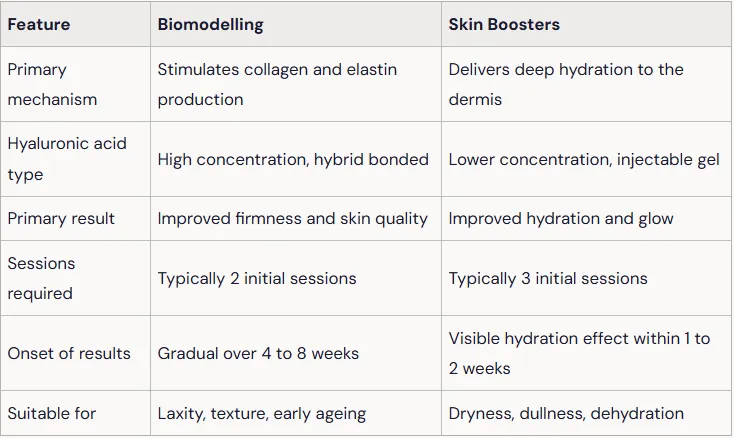
Some Melbourne patients benefit from combining both treatments depending on skin assessment findings. A practitioner can advise which option or combination suits individual skin concerns.
Realistic Expectations: What Bioremodelling Can and Cannot Do
Setting accurate expectations before treatment prevents disappointment and builds informed consent.
Bioremodelling can deliver:
- Improved skin firmness and elasticity over 4 to 8 weeks
- Noticeably better skin texture and hydration
- A natural, refreshed appearance without obvious filler effects
- Gradual improvement with each treatment cycle
Bioremodelling cannot deliver:
- Immediate volume or lift
- Correction of deep folds or structural sagging
- Permanent results — maintenance is required
- Significant change in skin pigmentation or sun damage
How Much Does Bioremodelling Treatment in Melbourne Cost?
Bioremodelling sits at a higher price point than standard skin booster treatments. This reflects the concentration of hyaluronic acid used and the clinical expertise required for correct injection placement.
General industry pricing in Melbourne:
- Single session: $600 to $900
- Initial two-session protocol: $1,200 to $1,800 total
- Maintenance session (every 6 to 12 months): $600 to $900
Pricing varies depending on:
- The treating practitioner's qualifications and experience
- The number of areas treated in a single session
- Whether bioremodelling is combined with other treatments such as anti-wrinkle injections or skin boosters
- Clinic location within Melbourne
Medicare does not cover cosmetic bioremodelling in Australia. Some private health funds offer partial rebates for certain injectable treatments — check directly with your provider before booking.
Patients should approach heavily discounted pricing with caution. Product quality, correct injection depth, and practitioner training all directly affect both safety and results. The lowest price is rarely the lowest risk.
FAQ Bioremodelling
Is bioremodelling the same as getting filler?
Bioremodelling and dermal fillers are different treatments with different mechanisms. Dermal fillers physically add volume beneath the skin to reshape or plump a specific area. Bioremodelling delivers a high concentration of hyaluronic acid to stimulate the skin's own collagen and elastin production. The outcome is a general improvement in skin quality, firmness, and hydration rather than a targeted volumising effect. Patients wanting structural changes to facial contours would require dermal fillers or a different treatment approach.
How long does bioremodelling last?
Initial results from a two-session protocol typically last between six and twelve months, depending on the individual's age, skin condition, UV exposure history, and lifestyle factors. Melbourne patients with significant cumulative sun damage may find results fade more quickly due to ongoing collagen degradation. Most practitioners recommend a maintenance session every six to twelve months to sustain outcomes. Results build progressively with each treatment cycle over time.
Is there any downtime after bioremodelling?
Most patients return to normal daily activities the same day or the following day. Injection-site redness, mild swelling, and small temporary lumps are common in the first 24 to 72 hours. Strenuous exercise, saunas, steam rooms, and UV exposure should be avoided for 24 to 48 hours post-treatment. Makeup can generally be applied after 12 hours if there are no open injection sites. Patients with important events should allow at least one week after treatment for any minor reactions to fully settle.
Can bioremodelling be combined with other treatments?
Bioremodelling pairs well with several other non-surgical treatments, including anti-wrinkle injections, skin boosters, and Healite LED therapy, which uses specific light wavelengths to support cellular repair and reduce post-treatment inflammation. However, combining treatments on the same day requires careful clinical assessment. Some combinations are appropriate, while others need to be spaced weeks apart to avoid overloading the tissue response. A practitioner should map out a staged treatment plan rather than booking multiple procedures simultaneously.
















Sign in to leave a comment.