
In the ever-evolving landscape of international trade and logistics, choosing the right warehousing model can make or break your supply chain efficiency. In India, two of the most popular options are Bonded Warehouses and Free Trade Warehousing Zones (FTWZ). Both offer significant advantages for importers, exporters, and global traders — but they serve different business needs. Understanding the distinction between them can help you decide which model is the best fit for your operations.
Understanding a Bonded Warehouse
A custom bonded warehouse is a secured storage facility licensed by Indian Customs, where imported goods can be stored without immediate payment of customs duty or taxes. This allows businesses to defer duty payments until goods are actually released into the domestic market.
Bonded warehouses are commonly used by importers dealing with high-value or high-duty goods, such as alcohol, luxury items, electronics, and automobiles. These warehouses operate under strict customs supervision and are ideal for businesses looking to manage cash flow and reduce upfront costs.
The main benefit of bonded warehousing is the ability to delay tax payments and store goods safely for future use or re-export. However, operational flexibility is limited since every movement requires customs permission. Businesses looking for more liberal and global trading options often prefer FTWZ in India.
What Is a Free Trade Warehousing Zone (FTWZ)?
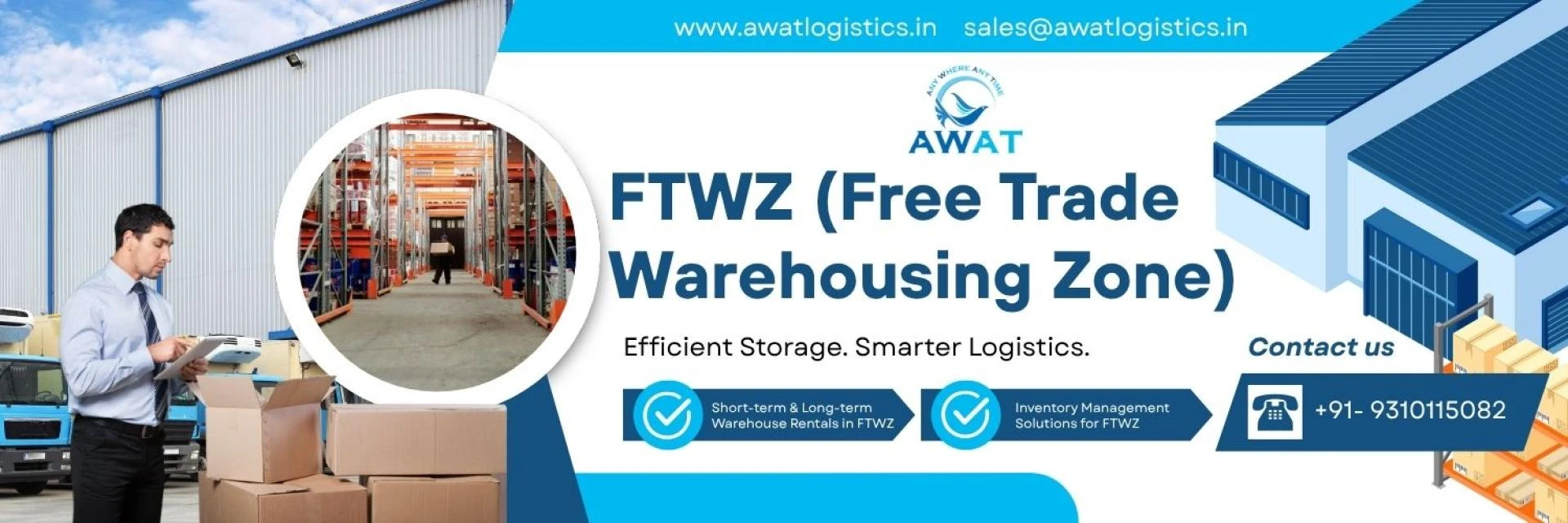
A Free Trade Warehousing Zone (FTWZ) is a designated area treated as a foreign territory for trade and customs purposes. It allows goods to be imported, stored, handled, repacked, relabeled, assembled, and even re-exported — all without paying any customs duties or taxes until goods are moved into the domestic tariff area.
FTWZs operate under the Special Economic Zone (SEZ) framework and are designed to support global trade by offering world-class infrastructure and 100% foreign ownership flexibility. Businesses can store goods for an unlimited duration, making it the perfect choice for international traders and manufacturers.
Key FTWZ hubs such as FTWZ Chennai, FTWZ Mumbai, and Delhi NCR have become major logistics centers in India. They are strategically located near ports and airports, offering seamless connectivity for import, export, and third country export activities.
Bonded Warehouse vs FTWZ: The Key Differences
While both bonded warehouses and FTWZs offer duty-free benefits, their operational structures differ significantly. A bonded warehouse mainly serves as a storage facility for imported goods under customs control, with duty deferment benefits until domestic clearance. In contrast, an FTWZ offers far greater flexibility — allowing goods to be imported duty-free, stored indefinitely, and even re-exported without customs intervention.
Another major difference lies in ownership and control. Bonded warehouses require Indian Customs licensing and close supervision, while FTWZs operate under the SEZ Act, allowing 100% FDI participation. This gives global companies and logistics providers like Awat Logistics the freedom to operate world-class trade hubs with integrated logistics and freight forwarding, supply chain management, and custom clearance facilities.
FTWZs also provide a platform for value-added services such as labeling, packaging, testing, and assembling — capabilities not available in traditional bonded warehouses. Businesses involved in third country exports, duty-free shops, or specialized sectors like the liquor warehouse and alcohol warehousing find FTWZs far more advantageous.
Why FTWZs Are the Future of Global Trade
FTWZs represent the next generation of logistics infrastructure in India. They are designed to simplify global supply chains and provide a one-stop solution for storage, processing, and distribution. Here’s why more businesses are switching to FTWZ solutions:
1. Complete Duty and Tax Exemption:
Goods stored inside an FTWZ are not subject to customs duties, GST, or IGST until they are brought into India’s domestic market. This significantly reduces working capital pressure and improves liquidity.
2. Unlimited Storage Period:
Unlike bonded warehouses, FTWZs allow indefinite storage duration. Companies can store goods as long as needed without worrying about expiry of customs permissions.
3. Third-Country Trade Flexibility:
Businesses can import goods from one country and re-export them to another without the goods ever entering the Indian market. This is ideal for companies managing global distribution under the Moowr scheme or international trade hubs.
4. Advanced Infrastructure and Technology:
FTWZs are equipped with temperature-controlled facilities, automated inventory systems, and advanced tracking for sensitive goods such as electronics, pharmaceuticals, and liquor.
5. Faster Custom Clearance:
FTWZs streamline custom clearance with dedicated customs officers on site, ensuring faster processing and reduced paperwork.
6. Integrated Supply Chain and Freight Forwarding:
With integrated logistics and freight forwarding operations, FTWZs ensure smooth coordination between air, sea, and land transport. This results in faster delivery, optimized inventory, and reduced operational costs.
FTWZ Chennai, FTWZ Mumbai, and India’s Growing Trade Network
India’s FTWZ network is expanding rapidly to support its role as a global trading hub.
- FTWZ Chennai caters to South India’s manufacturing and export ecosystem, offering direct access to Chennai and Ennore ports.
- FTWZ Mumbai serves as a gateway for Western India, close to Nhava Sheva Port and major international air routes.
- Delhi NCR and Gujarat FTWZs connect Northern and Western India to global supply chains through seamless connectivity.
With these hubs, companies can easily manage imports, re-exports, and third-country exports through a unified logistics platform managed by Awat Logistics.
Awat Logistics: India’s Trusted FTWZ Partner
Awat Logistics is one of India’s most trusted providers of FTWZ solutions and custom bonded warehousing services. With a presence in key trade hubs like FTWZ Chennai and FTWZ Mumbai, Awat offers a complete range of logistics services, including custom clearance, freight forwarding, and supply chain management.
Our expertise covers diverse sectors such as alcohol warehousing, electronics, automotive, and FMCG. We also support businesses utilizing the Moowr scheme, enabling them to defer customs duties and optimize trade costs.
Whether you’re managing duty-free shops, operating a liquor warehouse, or planning third country exports, Awat Logistics ensures seamless operations through advanced FTWZ infrastructure and expert compliance management.
Which Is Best for Your Business?
If your business involves short-term storage of imports with limited export activity, a bonded warehouse may meet your needs. However, if you aim to scale globally, reduce costs, and streamline your international trade, the Free Trade Warehousing Zone (FTWZ) offers unmatched flexibility and efficiency.
Choosing an FTWZ with Awat Logistics gives you access to world-class warehousing, faster custom clearance, and integrated logistics and freight forwarding solutions — all under one roof. Our end-to-end FTWZ services ensure your goods move smoothly across borders, helping your business stay competitive in the global market.
Get Started with Awat Logistics
Discover how Awat Logistics can transform your trade operations through innovative FTWZ solutions and custom bonded warehousing. Contact our team today to explore our facilities in FTWZ Chennai, FTWZ Mumbai, and other locations across India.
Unlock the power of Free Trade Warehousing Zones (FTWZ) in India with Awat Logistics — your partner in global supply chain excellence.



























Sign in to leave a comment.