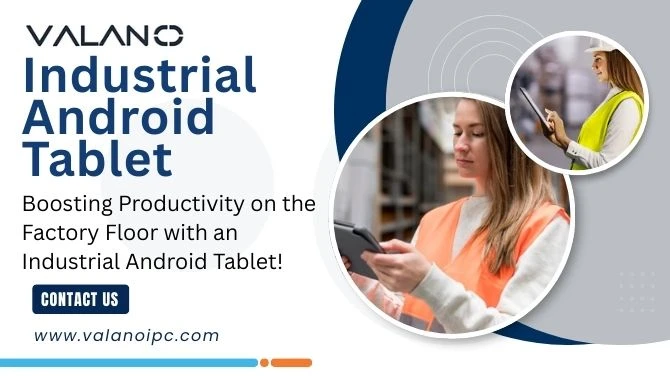
In today’s era of digital transformation, manufacturers are under constant pressure to improve productivity, reduce waste, and deliver products faster—all while maintaining quality and safety on the factory floor. To stay competitive, modern production facilities are embracing Industry 4.0 technologies that streamline workflows, centralize data, and enable real-time decision-making. One innovation driving this transformation is the Industrial Android Tablet.
Unlike conventional consumer tablets, an Industrial Android Tablet is engineered for the rugged demands of industrial environments. These devices are water-resistant, shockproof, dust-tight, and equipped with an array of industrial-grade features like barcode scanners, NFC modules, and long-lasting batteries. Most importantly, they run on the familiar Android operating system, which allows for rapid deployment, intuitive use, and seamless integration with existing systems.
At ValanoIPC, we specialize in delivering powerful and ruggedized mobile computing solutions tailored for manufacturers, logistics operators, and field technicians. Our line of Industrial Android Tablets empowers frontline workers with real-time access to production data, diagnostic tools, communication platforms, and inventory systems—helping boost productivity on the factory floor like never before.
Why Choose an Industrial Android Tablet Over Consumer Devices?
It's important to understand the unique advantages of using an Industrial Android Tablet on the factory floor:
1. Ruggedized Hardware
Consumer tablets are designed for moderate usage in controlled environments. In contrast, an Industrial Android Tablet is IP-rated for water and dust resistance, features reinforced screens, industrial-grade casing, and is drop-proof from heights typically encountered in factory settings.
2. Android OS Compatibility
Android continues to dominate the mobile operating system market worldwide. The advantages include:
- A wide range of compatible mobile apps
- Familiar UI for faster onboarding
- Easier custom development and integration
- Ongoing support from a robust developer community
3. Built-in Industrial Features
Many Industrial Android Tablets come equipped with:
- 1D/2D barcode scanners
- RFID/NFC readers
- External I/O ports (USB, RS232, RJ45)
- Hot-swappable batteries for continuous operation
4. Long Product Lifecycle
While consumer tablets change models frequently, an Industrial Android Tablet is designed with long-term support in mind—critical for manufacturers running stable versions of software and hardware.
Real-World Use Cases on the Factory Floor
Here are key areas where Industrial Android Tablets enhance productivity and streamline operations in manufacturing environments:
1. Inventory Management
ValanoIPC tablets integrated with Warehouse Management Systems (WMS) allow workers to:
- Scan barcodes and RFID tags
- Track materials in real-time
- Reduce inventory discrepancies
- Replenish stock automatically using predefined thresholds
2. Production Line Monitoring
Operators and supervisors can access Overall Equipment Effectiveness (OEE), machine downtime reports, and maintenance schedules directly from their Industrial Android Tablet.
3. Digital Work Instructions
Gone are the days of bulky manuals and printed SOPs. Workers can receive digital instructions:
- Customized based on machine or product type
- Multilingual, with diagrams and videos
- Integrated with quality control checkpoints
4. Quality Assurance and Data Entry
Workers can record quality inspection results on the go, reducing paper-driven errors:
- Real-time data syncing to MES or ERP
- Photo capture of defective parts
- Instant alerts to quality management teams
5. Communication and Task Management
With built-in LTE/Wi-Fi and VoIP apps:
- Employees can receive task updates in real time
- Supervisors can send alerts or instructions
- Teams spread across large facilities can stay connected
6. Mobile Diagnostics and Maintenance
Technical teams can:
- Run machine diagnostics using industry-specific apps
- Access maintenance history from the tablet
- Process service requests using CMMS platforms
Integration Tips for IT and Operational Success
Successfully deploying Industrial Android Tablets requires collaboration between IT, operations, and HR teams. Here are the best practices:
1. Choose the Right Device Configuration
Each manufacturing environment is different. Choose devices based on:
- Screen size (8–12 inches is common for factory use)
- Ingress protection (IP65 or higher for water/dust resistance)
- Connectivity (Wi-Fi, 4G LTE, Bluetooth, GPS)
- Additional features (glove-compatible touchscreen, stylus input, hot-swappable battery)
2. Leverage Existing ERP, MES, or WMS Platforms
Industrial Android Tablets can be easily integrated with:
- SAP, Oracle ERP
- Siemens/Mindsphere
- Infor, Plex, and other MES systems
- Custom-built or legacy systems via REST APIs or middleware
3. Implement Mobile Device Management (MDM)
Secure and monitor your fleet with MDM software:
- Control app installations and updates
- Remotely lock or wipe lost/stolen devices
- Monitor performance and health
4. Provide Worker Training
Even if workers are familiar with Android devices, it’s essential to:
- Train users on industrial applications
- Offer hands-on sessions during rollout
- Communicate benefits clearly to ensure buy-in
Productivity That Moves with You
From enhancing real-time communication and digitizing workflows to maximizing equipment uptime, the Industrial Android Tablet is a transformative tool for manufacturers looking to streamline operations and embrace the future of smart manufacturing.
As demonstrated through real-world use cases and proven ROI, deploying rugged tablet solutions empowers your workforce, cuts down inefficiencies, and provides a strategic edge in today's competitive landscape. Whether it’s for quality checks, mobile diagnostics, or connected inventory tracking, the Industrial Android Tablet is your all-in-one platform for factory floor innovation.
Frequently Asked Questions (FAQ)
Q1: What distinguishes an Industrial Android Tablet from a consumer tablet?
A: Industrial tablets are ruggedized, tested to military standards, and built with industrial-grade components. They include features like drop resistance, waterproofing (IP65+), and integrated barcode scanning or RFID—all essential for factory environments.
Q2: Can our existing software run on an Industrial Android Tablet?
A: In most cases, yes. If your existing software is Android-compatible or browser-based, it will run smoothly. ValanoIPC also provides integration support for linking with ERP/MES/WMS platforms.
Q3: Are these tablets customizable?
A: Absolutely. ValanoIPC offers customizable units, including branding, hardware configuration (e.g., scanner types), and pre-loaded applications.
Q4: How can we manage multiple devices across different locations?
A: You can deploy an MDM (Mobile Device Management) platform, which allows centralized configuration, security policy enforcement, app management, and remote troubleshooting.
Q5: What is the expected lifespan of an Industrial Android Tablet?
A: Typically, 5 to 7 years of service, thanks to durable hardware and long-term OS support plans.
Q6: How do Industrial Android Tablets improve compliance?
A: With automated time-stamped data capture, remote audits, and real-time error identification, compliance tracking becomes more accurate and audit-friendly.
Q7: How do we train employees to use the tablets effectively?
A: ValanoIPC offers onboarding sessions, along with user manuals and remote support to ensure smooth adoption.
Q8: Do these tablets work in cold or hot environments?
A: Yes. Designed for industrial use, they typically operate between -20°C to 60°C or more, depending on the model.
Q9: What about connectivity on a large factory floor?
A: Tablets come with dual-band Wi-Fi, and optional 4G LTE models are available. Signal boosters or mesh networks may be used for full coverage.
Q10: Can Industrial Android Tablets be used for remote diagnostics or support?
A: Absolutely. With camera access, screen sharing apps, and diagnostic tools, technicians can perform remote troubleshooting or maintenance tasks.






















Sign in to leave a comment.