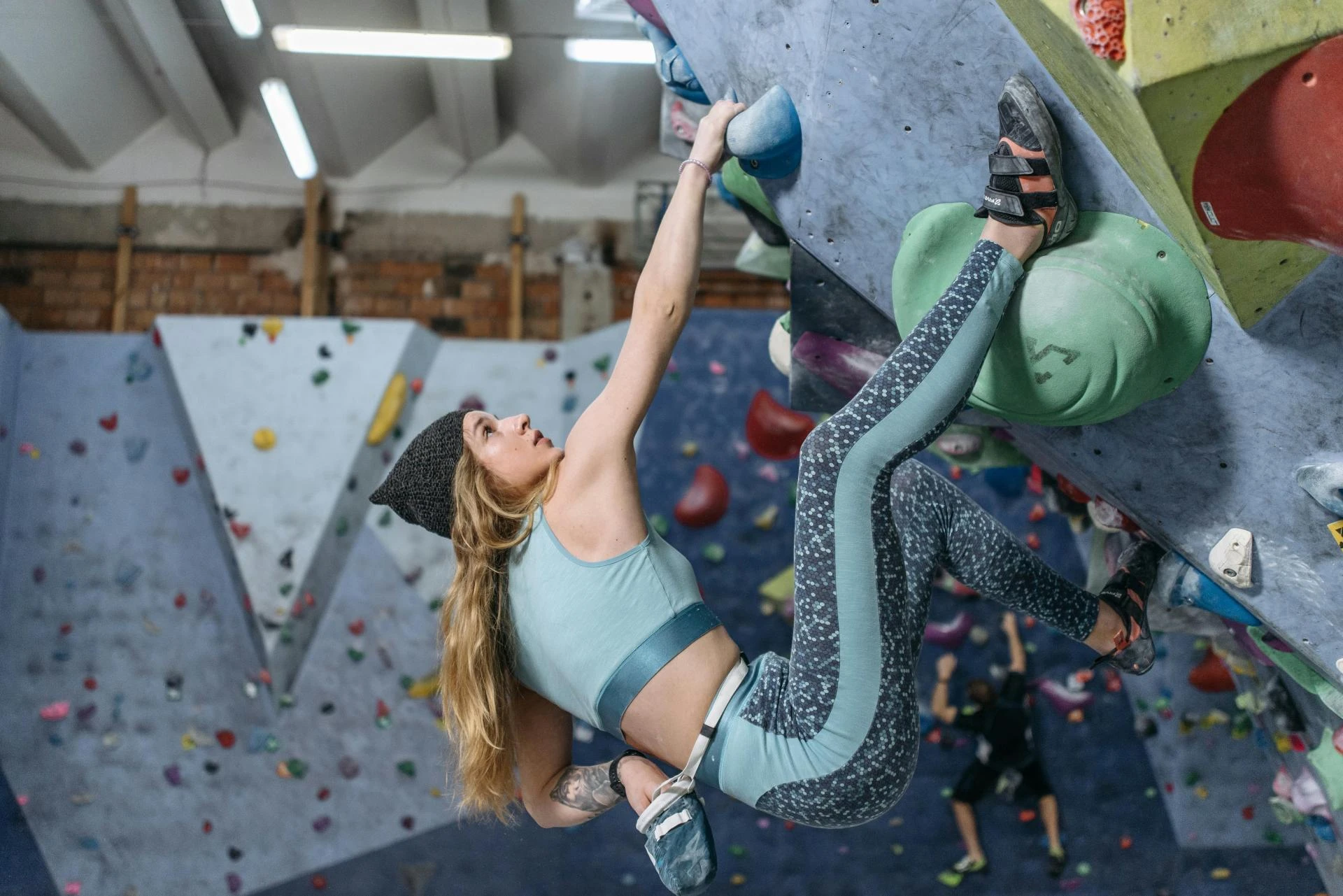

Bouldering is one of the hottest sports right now, which has become very popular in the last few years due to its accessible nature. People of all abilities and ages can climb as most gyms provide a range of climbs, from short children's clubs to Olympic-level climbs. Its range of benefits, such as full-body strength training and problem-solving aspects, has made it an obvious hobby choice for most.
So you've decided you want to start bouldering but have no idea where to start? Don’t worry, this simple yet comprehensive guide tells you everything that you need to know before tackling your first boulder problem.
Get to know bouldering
A bouldering problem is a short route on a 4 to 5-meter wall that you must tackle without help from a rope and can be completed indoors or outdoors. As a beginner, it's recommended to start indoors, as it is both safer and easier when you're first starting, and it requires less gear, as outdoor mats can cost hundreds of pounds. There are a few basic terms that you should know before completing your first route.
Routes - one set of climbing problems.
Top-out - finishing a route.
Flash - Finishing a route on the first try.
Arret - The point where to walls meet, aka the side of a wall.
Beta - The technique or way to climb the route.
Essential gear
There is some essential gear that you need to start your climbing journey. The two most important pieces of gear that you need for bouldering are climbing shoes, chalk and some comfortable clothes.
Climbing shoes are tight and specialised shoes, especially for climbing with a pointed toe and thick rubber on the heel. As a beginner, it's best to rent these from the climbing centre, as a pair of climbing shoes is an investment that can set you back around £70. A tip for your first time is to size up, as they are very tight, and then slowly downsize until you reach a size smaller than your own.
Chalk is essential not only to help you grip onto holds but to protect your hands from holds, as these can be very taxing, especially on softer skin. Most climbing centres offer climbing balls that you can carry around in a paper bag before you invest in a specialised chalk bag.
Comfortable clothes are key for climbing, as you need to be flexible to reach hand and footholds. The best thing to wear is a pair of leggings, shorts or baggy trousers and a long-sleeved training tops for comfort and breathability.
Solving your first problem
When tackling your first problem, it's important to choose one within your grade range- V0 to V2 is best for beginners. Looking at a route at first and identifying how you might climb it is called route reading and is a skill that is good to start as a beginner, as it stops any surprises when you're on the wall and helps to avoid any unnecessary energy loss. Most gyms will have to have identifiers to show the first two holds to put your hands on to start the climb, and this is where you start.
It's okay to try different methods of climbing the route and falling nd getting stuck is part of the climb, but the important thing is to stay calm and be patient. A great tip is to work with someone who is also tackling the climb to work out the puzzle together!
Over to you
Now you know your first steps to completing your first route, it's over to you! Just remember that it's okay to fall, and every climber started exactly where you are now!





























Sign in to leave a comment.