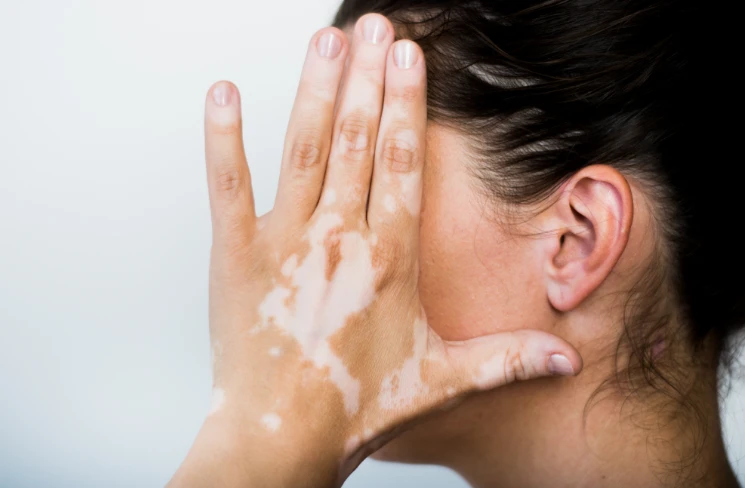

As someone who has been living with vitiligo for over a decade, I can attest to the fact that there is still a lot of misinformation about this condition. In this article, we will discuss the causes of vitiligo, its symptoms, types, and treatment options. Finally, I will provide some coping strategies for those living with vitiligo.
Introduction to Vitiligo
Vitiligo is a skin condition that causes the loss of pigmentation in patches on the skin. It affects people of all races and genders, but it is more noticeable in people with darker skin. The exact cause of vitiligo is unknown, but it is believed to be an autoimmune disorder, where the body's immune system attacks and destroys the melanocyte cells that produce skin pigment.
Vitiligo can occur at any age, but it usually begins in adolescence or early adulthood. It affects about 1% of the world's population, and it can be hereditary. Vitiligo is not contagious, and it does not cause any physical harm, but it can be emotionally distressing.
What Causes Vitiligo?
As mentioned earlier, the exact cause of vitiligo is unknown, but it is believed to be an autoimmune disorder. In people with vitiligo, the immune system attacks and destroys melanocyte cells, which produce skin pigment. The reasons why this occurs are not entirely clear, but it is believed to be a combination of genetic and environmental factors.
Some research suggests that vitiligo may be triggered by a stressful event, such as severe sunburn or emotional trauma. Other researchers believe that an autoimmune response may occur when the body's immune system mistakes melanocytes for foreign invaders and attacks them.
Symptoms of Vitiligo
The most noticeable symptom of vitiligo is the loss of pigmentation in patches on the skin. These patches may be small or large and can occur anywhere on the body, including the face, hands, feet, and genitals. The patches may be circular or irregular in shape and may appear on one side of the body or both.
Vitiligo can also affect the mucous membranes, such as the lips and inside the mouth, and the eyes. In some cases, people with vitiligo may also have premature graying of the hair, eyebrows, or eyelashes.
Types of Vitiligo
There are two main types of vitiligo: non-segmental and segmental. Non-segmental vitiligo is the most common type and occurs in patches on both sides of the body. Segmental vitiligo is less common and occurs in one area of the body.
There are also subtypes of vitiligo, including focal, mucosal, acrofacial, and universal. Focal vitiligo occurs in one or a few areas of the body, while mucosal vitiligo affects the mucous membranes. Acrofacial vitiligo affects the face and hands, and universal vitiligo affects most of the body.
Diagnosis of Vitiligo
If you suspect that you have vitiligo, you should see a dermatologist or a specialist in skin disorders. Your doctor will examine your skin and ask you about your medical history and any symptoms you may be experiencing.
In some cases, your doctor may perform a skin biopsy to confirm the diagnosis. A skin biopsy involves removing a small piece of skin from the affected area and examining it under a microscope.
Treatment Options for Vitiligo
While there is no cure for vitiligo, there are several vitiligo treatment options available. The goal of treatment is to stop or slow the progression of the disease and to restore skin pigment. Treatment options may include:
Topical corticosteroids: These are creams or ointments that are applied to the affected areas of the skin. They work by reducing inflammation and suppressing the immune system.Phototherapy: This involves exposing the skin to ultraviolet (UV) light. Phototherapy can be done with a UVB lamp or in a phototherapy booth.Excimer laser: This is a type of phototherapy that uses a laser to target the affected areas of the skin.Depigmentation: This involves removing the remaining pigment from the unaffected areas of the skin to make the skin color uniform.Living with Vitiligo - Coping Strategies
Living with vitiligo can be challenging, but there are several coping strategies that can help. Here are a few tips:
Talk to a therapist: Vitiligo can be emotionally distressing, and talking to a therapist can help you cope with the psychological effects of the condition.Wear sunscreen: People with vitiligo are more susceptible to sunburn and skin damage, so it is essential to wear sunscreen and protective clothing when going outside.Join a support group: Connecting with other people who have vitiligo can provide emotional support and help you feel less isolated.Conclusion
In conclusion, vitiligo is a skin condition that affects people of all races and genders. While there is no cure for vitiligo, there are several treatment options available, and many people have had success with these treatments. It is essential to see a Vitiligo Specialist in Coimbatore who has experience treating the condition. Don't hesitate to reach out for help and support.





























Sign in to leave a comment.