

Most experience centres age the moment they're finished. A campaign ends, a product line changes, and the beautifully designed space quietly becomes outdated within a year or two, waiting for a budget to rebuild it from scratch. That's the quiet cost of designing for a single moment instead of designing for change. Genuinely future-ready Experience Center Solutions are built with the opposite assumption from day one: that the story will keep evolving, and the space needs to evolve with it.
Future-readiness isn't a buzzword here — it's a specific design discipline, and Protean's experience centre is a strong example of what it actually requires in practice.
Why Most Experience Centres Aren't Built to Last
Protean eGov Technologies needed something rare: a permanent, physical space that could articulate the scale and role of its Digital Public Infrastructure across life stages, geographies, and industries — not for a single event, but as an ongoing asset. A typical exhibit build, optimised for one launch moment, simply wasn't going to hold up as Protean's systems, partnerships, and data kept expanding.
The brief to Ink In Caps reflected that reality directly: design something modular enough to stay relevant as the underlying story kept growing.
What "Modular" Actually Looked Like in Practice
Future-readiness showed up in specific engineering choices, not just design language:
- A structured, taggable data system. Instead of hard-coding one static dataset, over 70,000 data points were normalised into a structured system built to be updated and expanded over time, rather than replaced wholesale.
- Zone-by-zone independence. Each of the five zones — human milestones, national geography, platform capability, cinematic narrative, and the digital follow-up layer — was designed to stand on its own, meaning any single zone could be refreshed or expanded without disrupting the others.
- Offline and low-bandwidth logic built in from day one. Rather than assuming perfect connectivity forever, the system was engineered to keep functioning reliably even under real-world network conditions, protecting the experience against future infrastructure gaps.
- Socket-based real-time synchronisation. This kept every screen and device across the physical space working in lockstep, a foundation flexible enough to support new content and new interaction points as the platform grows.
- A digital layer that extends past the physical visit. The QR-linked AR identity card meant the experience wasn't locked to the four walls of the centre — it could keep delivering value long after Protean's next product launch.
Why This Matters More Than It Sounds
A future-ready customer experience isn't really about picking trendy technology. It's about designing decision points now that won't box the brand into a corner later. Protean's team clearly documented every derived metric shown in the experience — a transparency decision that also makes future updates far easier, since nobody has to reverse-engineer what a number meant two years after it was built.
The Payoff of Designing for the Long Game
- 70,000+ data points transformed into an interactive, continuously updatable system rather than a one-time static build
- A single strategic asset, not a disposable campaign, doing double duty as a sales tool, stakeholder briefing space, and institutional positioning platform
- Post-deployment leadership feedback describing the space as engineered rather than promotional — a marker of design built to serve the brand for years, not weeks
Tips for Building Your Own Future-Ready Customer Experience
- Design zones to be independent, not interlocked. If updating one part of your experience requires rebuilding the whole thing, it isn't future-ready yet.
- Structure your data before you visualise it. A normalised, taggable dataset can grow. A one-off static graphic can't.
- Build for imperfect conditions, not ideal ones. Offline logic and low-bandwidth fallbacks protect an experience from becoming unreliable the moment infrastructure changes.
- Extend the experience beyond the physical visit. A digital layer — even something simple — means your investment keeps working after the visitor walks out the door.
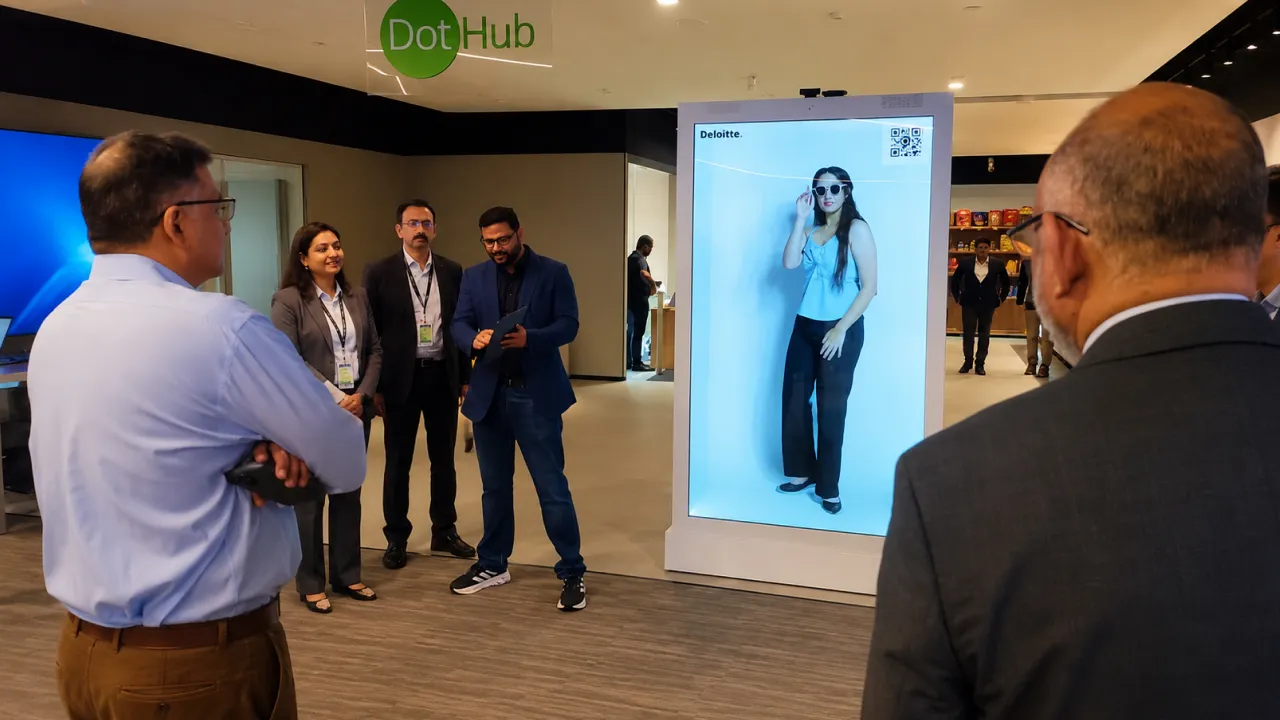
This principle isn't exclusive to gov-tech infrastructure. Enterprise B2B brands with evolving product lines face the exact same challenge, which is why a modular, updatable format matters as much for a fintech platform or industrial equipment provider as it does for national infrastructure. Retail brands benefit from the same discipline on a smaller scale too — Deloitte's AI-powered retail experience centre was built around a continuously updatable virtual assistant, precisely so new product lines could be added without rebuilding the entire installation.
Future-Readiness Is a Decision, Not an Accident
Protean's experience centre wasn't future-ready by luck. Every structural decision — from modular zones to normalised data to offline logic — was made specifically so the space could keep growing alongside the organisation it represents. Explore the complete technical build in the Protean interactive experience centre case study, and read more on the thinking behind it in our post on interactive experience centres for digital infrastructure.
Let's Build an Experience That Grows With You
If your brand's story is going to keep evolving — and it should be — your experience centre needs to be built to evolve alongside it. Ink In Caps designs experience center solutions engineered for the long game, not just launch day. Talk to our team about building something genuinely future-ready.
























Sign in to leave a comment.