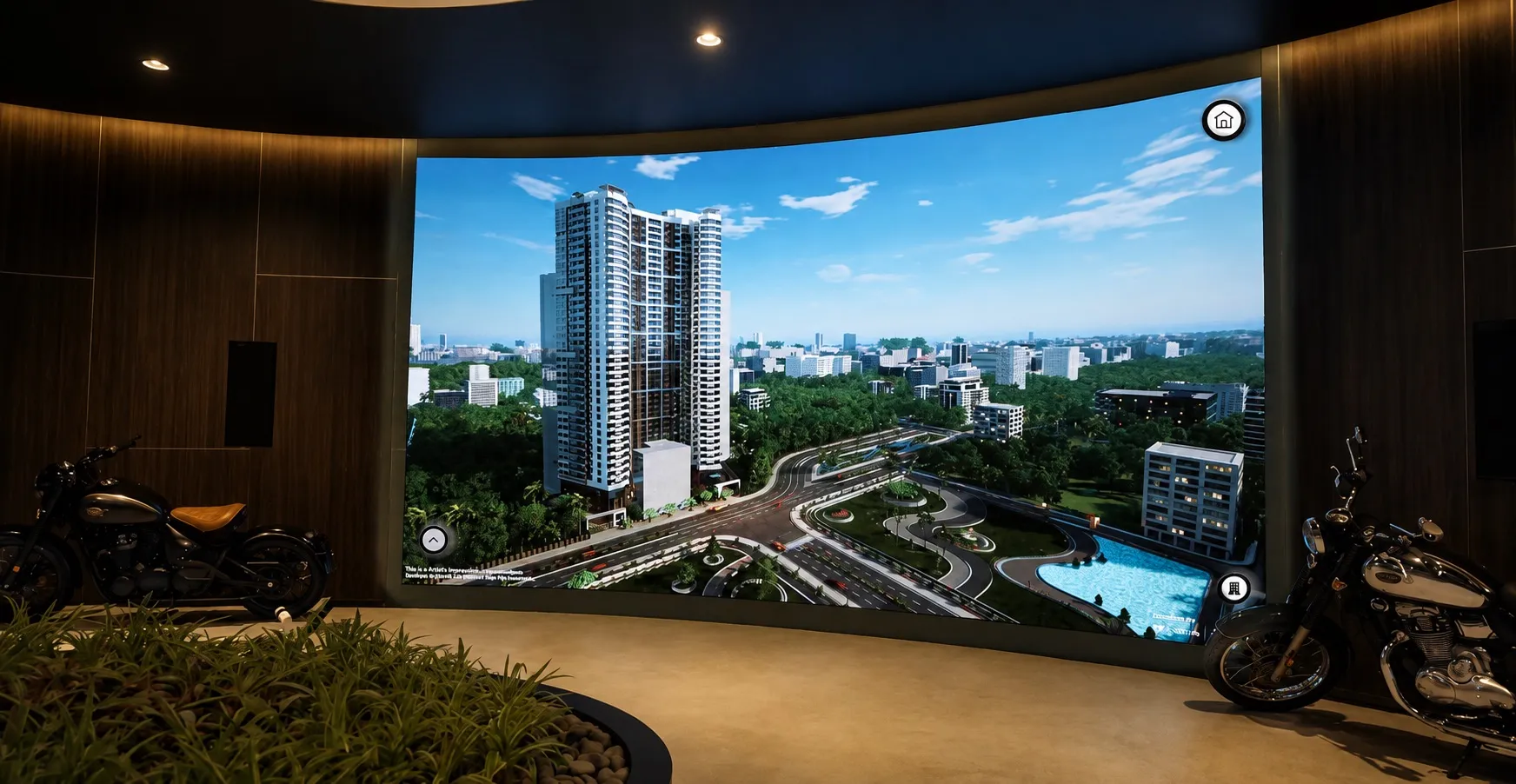

Every CMO has a customer journey map somewhere in a shared drive — a neat diagram of touchpoints from awareness to decision. Fewer CMOs have actually built a physical version of that journey, one a customer walks through zone by zone, each stop earning the next. That's the real opportunity behind well-planned experience center development: turning a journey that exists on paper into one a customer can physically move through, in an order you designed on purpose.
A Journey Only Works If the Order Is Intentional
A collection of impressive zones isn't the same as a journey. The difference is sequence — each stop should build on what came before it and set up what comes next. Without that intentional structure, even the most advanced technology ends up feeling like a series of disconnected demos rather than a story that's leading somewhere.
Rustomjee's Four Zones as a Deliberate Journey
Rustomjee's 180 Bayview project in Matunga offers a clean example of journey design done well. Working with IIC Lab, the space was structured as four zones that each serve a distinct role in moving a buyer from curiosity to commitment:
- Zone 1 opens with scope — a curved LED panel and IoT-enabled scale model, giving buyers a full sense of the project before anything gets specific.
- Zone 2 narrows into amenities, using an L-shaped LED panel to make the lifestyle features tangible rather than a bullet point in a brochure.
- Zone 3 gets personal — an enhanced sample flat with an iPad-controlled display that shows a buyer their actual window view, answering a question no static model ever could.
- Zone 4 closes the loop with a smart discussion room, complete with a 55-inch touchscreen and dedicated PC, reserved specifically for the detailed, private conversation that actually closes a deal.
Each zone earns the next. Scope builds interest. Amenities build desire. The window view builds emotional buy-in. And only then does the journey arrive at the discussion room — the point where a buyer is ready for a serious conversation, not the point where they're first being sold to.
That sequencing shows up in the numbers: 700+ demos within the first month, and an average engagement time of 50 minutes per visitor — a strong sign that the journey held attention across all four zones rather than losing people halfway through.
Building a Co-Creation Moment Into the Journey
The strongest customer journeys don't end at persuasion — they open a space for genuine collaboration. Rustomjee's smart discussion room plays this role well: rather than a final hard sell, it functions as a space where a sales team and a serious buyer can work through specifics together — unit configurations, timelines, financing questions — using the same interactive tools that shaped the rest of the visit.
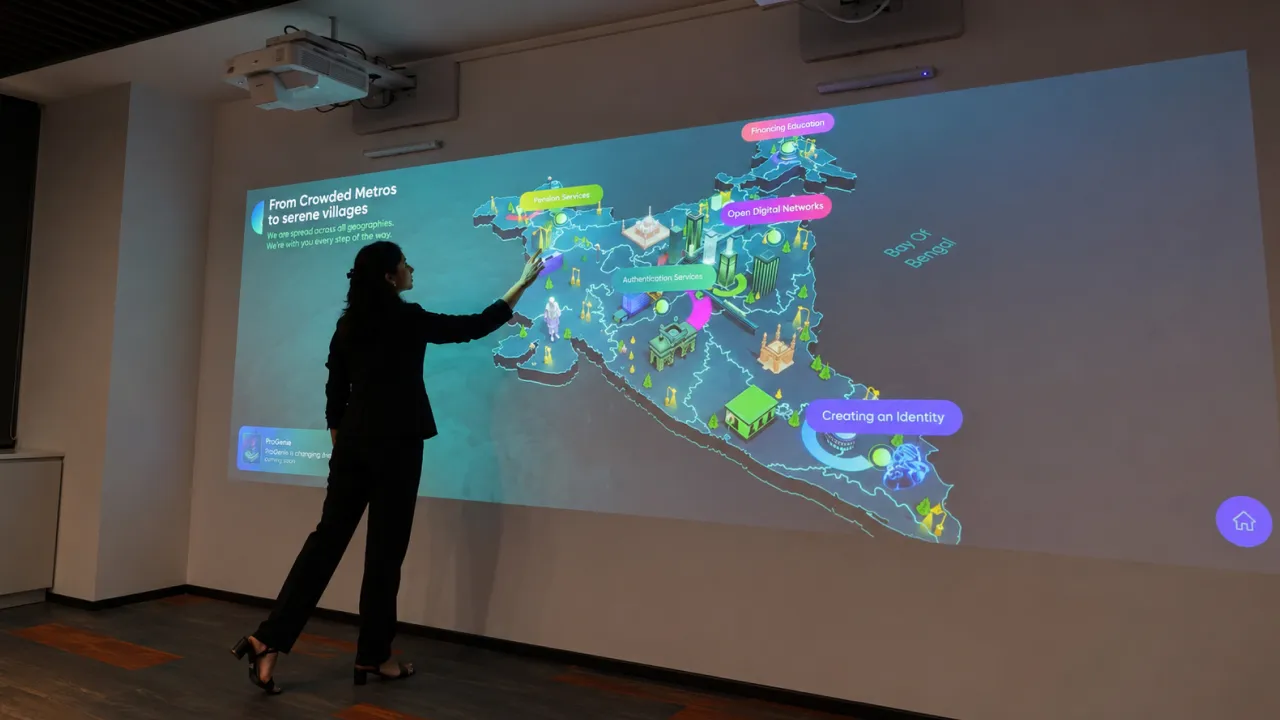
This idea scales beyond real estate. For B2B and enterprise journeys especially, a dedicated collaborative zone — sometimes built around a large interactive touch surface — lets a client work directly alongside your team to map out a genuinely customized solution, rather than reviewing a pre-built pitch. The conversation shifts from a presentation to a working session, and the output of that session often becomes the technical foundation for whatever comes next in the sales process.
A Framework CMOs Can Apply to Any Journey
Whatever industry you're in, four questions can guide how you sequence your own physical customer journey:
- What's the first thing a visitor needs to believe before anything else will land? (For Rustomjee, it was scope and scale.)
- What emotional or practical gap needs closing next? (Amenities, then the window view — desire, then personal relevance.)
- Where does the journey earn the right to get personal? (Only after the earlier zones have done their work.)
- Where does collaboration replace persuasion? (The discussion room — the moment selling gives way to working together.)
Real Estate Journeys, Explored Further
If you're building or rethinking a real estate sales journey specifically, this piece on experiential technology in luxury real estate sales covers how other Mumbai-area developers are approaching the same sequencing challenge across different price points and project scales.
How IIC Lab Designs Physical Customer Journeys
At IIC Lab, experience center design starts with the same tool most CMOs already have on hand — a customer journey map — and asks a different question of it: what would it mean to build this physically, zone by zone, so a customer walks the map instead of just reading about it? Our real estate use cases show how this translates across projects of very different scale and ambition.
If your customer journey map is still living in a slide deck, it might be time to give it a floor plan. Talk to IIC Lab about building an interactive journey your customers actually walk through, not just read about.



























Sign in to leave a comment.