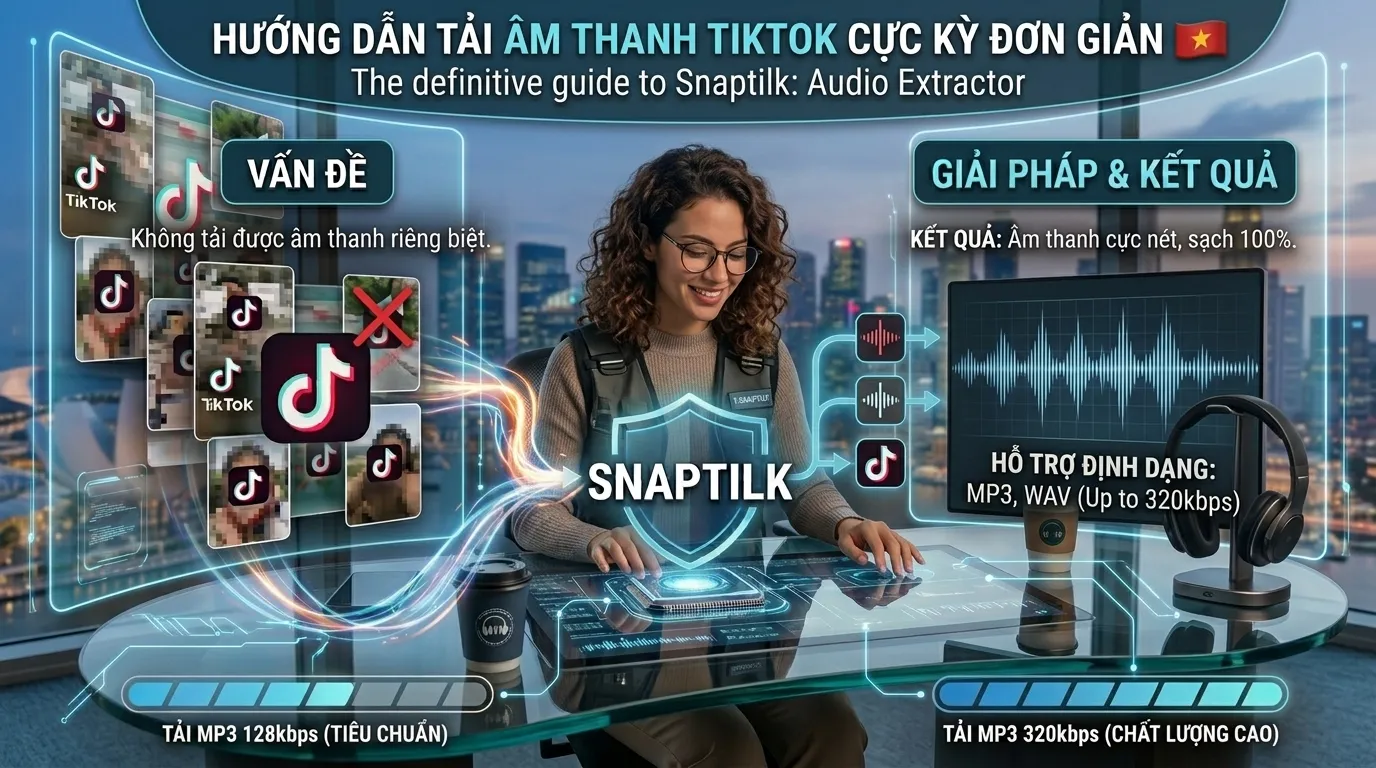

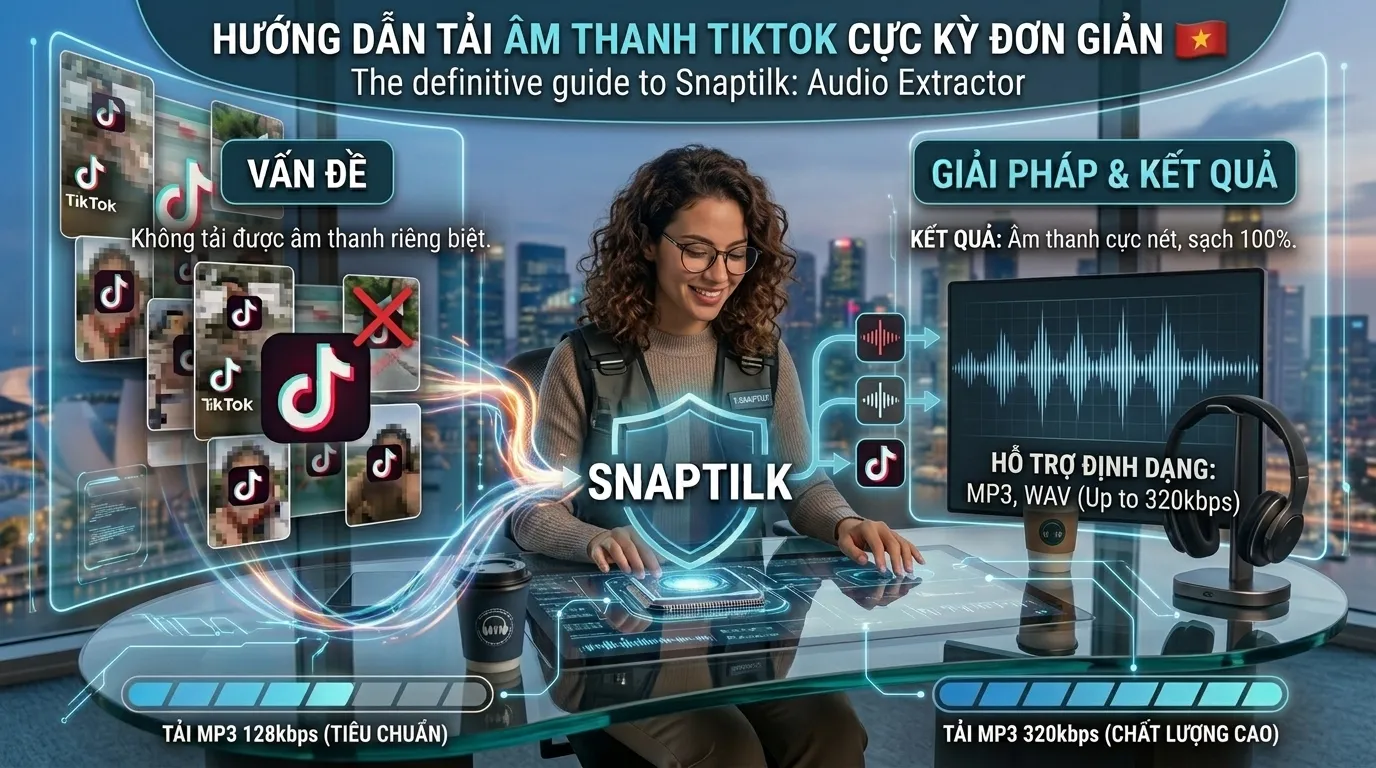
Short-form videos have changed the way people discover music, sounds, interviews, tutorials, and other forms of audio. A few seconds of a clip can introduce someone to a new song, an interesting voice, a useful explanation, or a memorable sound that they want to hear again later.
Unlike traditional music discovery, short-form platforms often expose people to audio unexpectedly. You might hear a song while watching a travel video, discover a useful spoken explanation in a tutorial, or come across an original sound created by a small creator. These moments can lead people to look for convenient ways to keep suitable audio for personal reference.
Instead of thinking about saved audio as a random collection of files, it can be more useful to build a small personal audio library. With the right organization, saved clips can become helpful resources for listening, studying, creative research, language learning, and inspiration.
However, convenience should always be balanced with responsible use. Saving an audio track does not automatically give you ownership of it. Copyright, creator rights, privacy, and platform rules should be considered before using or sharing any saved material.
Why Audio Discovery Has Changed
Music and audio discovery used to depend heavily on radio, television, albums, and dedicated music platforms. Today, people often discover sounds while watching short-form videos.
This has created a more spontaneous way to find new audio. A song may become interesting because it appears in a funny clip, while an independent musician can attract attention through a short performance.
Audio is also used for much more than music. Creators use narration, interviews, educational explanations, sound effects, conversations, and original recordings to make their videos more engaging.
This variety makes short-form platforms useful discovery spaces. People can encounter sounds they would probably never search for directly.
For many viewers, the next step is finding a convenient way to keep an interesting audio clip for later.
What Makes a Useful Personal Audio Library?
A personal audio library does not need to contain hundreds or thousands of files. In fact, a smaller collection of carefully selected material can be more useful than a huge folder filled with forgotten downloads.
Start by asking why you want to save something.
Perhaps you want to remember a song you discovered. Maybe you are learning a language and want to listen to natural pronunciation again. A creator might save suitable public examples to study pacing, narration, or storytelling.
Once the purpose is clear, it becomes easier to decide what deserves a place in your library.
This approach also saves storage space and reduces clutter. Instead of keeping every interesting sound you encounter, you can focus on content that has genuine long-term value.
Exploring Different Types of Audio
Short-form content contains many different kinds of audio, and each type can have a different purpose.
Music is obviously one of the most common categories. People discover songs, remixes, performances, instrumentals, and emerging artists through short clips.
Spoken audio is another interesting category. Educational creators may explain complicated subjects in a few seconds, while interview clips can contain useful opinions or memorable statements.
Language learners can also benefit from suitable audio examples. Hearing natural speech can help them become familiar with pronunciation, rhythm, and common expressions.
Sound effects and original recordings may be useful to creators who are studying how audio influences the mood of a video.
When searching for methods to save suitable audio from short-form content, tải âm thanh TikTok may appear as a relevant Vietnamese search phrase.
The important thing is to use saved material responsibly and understand that availability does not automatically mean unrestricted reuse.
How Browser-Based Tools Can Help
Online audio tools can provide a convenient way to process suitable public links. In general, a user finds a video, copies its share link, and enters that link into a compatible browser-based service.
If the service supports the content, it may process the link and provide an available audio option.
The exact process and supported formats can vary from one service to another. Some may focus on simplicity, while others may offer different quality or file-format choices.
One advantage of browser-based services is that they may work without requiring an additional application. This can be useful for people who do not want to fill their phone with software they rarely use.
However, convenience should not replace caution. Users should evaluate a website's security, privacy practices, and general behavior before relying on it.
Choosing the Right Audio Quality
Audio quality is important, but maximum quality is not always necessary.
A high-quality file can preserve more detail, which may be useful when listening through headphones or speakers. However, higher-quality files can also require more storage.
For casual listening on a smartphone, moderate quality may be sufficient. Someone using better audio equipment might prefer a higher-quality option.
The source also matters. If the original recording is already heavily compressed, converting it into a larger or supposedly higher-quality file cannot restore information that was lost.
For this reason, choose a quality level that matches both the source and your listening needs.
Keep Your Audio Collection Organized
A growing collection becomes difficult to manage without a simple organizational system.
Folders can be divided according to categories such as music, education, language learning, podcasts, interviews, sounds, or creative research.
You can also organize music by artist or genre if your collection becomes large enough to justify more detailed categories.
File names matter too. A descriptive name makes it easier to identify something without opening the file.
For research purposes, you might include the topic or creator in the filename. For personal listening, a simple title and category may be enough.
Good organization saves time and makes your library much more useful.
Security and Privacy Should Not Be Ignored
Online audio tools can vary significantly in reliability. Some websites may use excessive advertising, misleading buttons, pop-ups, or unexpected redirects.
Always check what you are clicking before downloading anything. If a website repeatedly asks you to install unfamiliar software, provides suspicious prompts, or requests unnecessary personal details, consider leaving it.
A service designed to process a public link should not normally need sensitive information such as passwords, banking details, or private account credentials.
Keeping your browser and operating system updated can also help protect your device.
These simple habits are useful whenever you interact with unfamiliar online services.
Copyright and Responsible Listening
Audio can be protected by copyright just like video, photographs, writing, and other creative work.
Saving an audio file for a legitimate personal purpose is different from uploading it to another platform, using it commercially, or presenting it as your own creation.
If you intend to use another person's music or recording in a public video, advertisement, podcast, website, or business project, you may need permission or an appropriate license.
Giving credit to the original artist or creator is a good practice, but credit alone does not necessarily provide permission to reuse copyrighted material.
The safest approach is to understand the rights associated with the content before using it outside its original context.
Audio Can Be Useful for Learning
One of the most interesting uses of saved audio is education.
Language learners can listen to natural speech repeatedly and become more comfortable with pronunciation and everyday expressions. Repetition can be particularly helpful when a learner wants to recognize words more quickly.
Students can also use suitable educational recordings as supplementary learning material. Listening to an explanation more than once may make a difficult idea easier to understand.
Creators can use saved examples for creative research as well. Studying how narration, music, silence, and sound effects are used can provide insights into effective storytelling.
The goal should always be to learn and develop new ideas rather than reproduce someone else's work.
Using Audio for Creative Research
Audio plays an important role in how people experience short-form content.
A creator might notice that a particular sound creates suspense before a reveal. Another may discover that soft background music makes an educational explanation feel more relaxed.
By comparing different videos, creators can identify patterns in audio selection, timing, volume, narration, and transitions.
These observations can influence original projects without requiring anyone to copy an existing recording.
A good research library should therefore contain examples that teach you something. It should not simply become a storage folder for other people's work.
When to Clean Up Your Collection
Digital clutter can build up quickly.
If you save audio regularly, review your collection from time to time. Remove duplicate files, recordings you no longer need, and content that was saved for a project that has already finished.
This helps preserve storage and makes it easier to find the recordings that actually matter.
You can also create a temporary folder for new discoveries. After reviewing them, move useful items into permanent categories and delete everything else.
This simple system can keep a growing library under control.
Final Thoughts
Short-form platforms have become powerful discovery tools for music, spoken content, original sounds, education, and creative inspiration. People can encounter audio from artists and creators they might never have discovered through traditional channels.
Building a personal audio library can make useful discoveries easier to revisit. Whether the goal is learning a language, researching creative techniques, remembering music, or simply enjoying suitable content offline, organization and thoughtful selection can make the collection much more valuable.
Quality, file size, security, privacy, and compatibility are all worth considering when choosing an online tool. At the same time, copyright and creator rights should never be forgotten.
For users exploring available solutions, Snaptikk can be considered as one option for handling suitable publicly shared short-form video links.
Ultimately, the best audio library is not necessarily the largest one. It is the one that contains content you genuinely value, is organized so you can find things easily, and is managed responsibly. Save suitable material for legitimate purposes, protect your device and personal information, respect artists and creators, and obtain permission whenever you intend to reuse someone else's work.















Sign in to leave a comment.