

The Shift from Generic Public Models to Domain-Specific AI
In today's rapidly evolving digital economy, artificial intelligence has transitioned from an experimental technology into a core driver of enterprise innovation and operational efficiency. Organizations across financial services, healthcare, legal advisory, and global manufacturing are eager to harness the power of large language models to automate complex workflows, enhance customer support, and accelerate research analytics. However, corporate leadership teams quickly discover that off-the-shelf, public foundation models often fall short when deployed in specialized institutional environments.
Generic public models are trained on broad internet datasets, making them prone to generating imprecise answers, hallucinating facts, or lacking domain-specific vocabulary when applied to specialized corporate tasks. Furthermore, passing sensitive proprietary corporate data or confidential customer records through public model APIs introduces severe security vulnerabilities, potential intellectual property leaks, and regulatory compliance breaches under global privacy mandates.
By customizing generative models for specific operational tasks, modern enterprises achieve superior response accuracy, eliminate hallucinations, protect proprietary data assets within private enterprise cloud boundaries, and drive measurable ROI across digital transformation initiatives.
Establishing a Comprehensive AI Implementation Roadmap
While fine-tuning neural weights provides the technical capability to build highly accurate domain models, successfully deploying generative AI across a global corporate network requires a clear, overarching technology architecture. Model training cannot occur in isolation; it must align directly with clean data pipelines, enterprise security guardrails, hardware compute availability, and specific business unit objectives.
When custom model fine-tuning is paired with strategic data consulting, enterprise AI adoption transforms into a systematic, high-velocity capability. Engineering teams can clean and sanitize internal knowledge bases, select optimal base model architectures, execute parameter-efficient fine-tuning (PEFT), and deploy private inference endpoints with total architectural precision.
Furthermore, establishing a comprehensive data strategy significantly enhances model auditability. Implementing retrieval-augmented generation (RAG) alongside fine-tuned models allows compliance officers to trace every AI-generated output back to verified primary source documents, ensuring total transparency during internal quality reviews.
Core Commercial Advantages of Custom Generative Models
Deploying custom fine-tuned models supported by a robust enterprise data strategy consulting delivers tangible operational advantages across key business divisions:
1. Exceptional Model Precision and Zero Hallucination: Retraining neural weights on domain datasets ensures models understand proprietary terminology and generate accurate, context-aware responses.
2. Total Data Security and Regulatory Compliance: Hosting fine-tuned models within private cloud boundaries prevents proprietary data leaks and guarantees compliance with GDPR, HIPAA, and CCPA standards.
3. Reduced Inference Costs and Compute Latency: Fine-tuning smaller, efficient base models reduces cloud GPU memory requirements, lowering operational hosting expenses substantially.
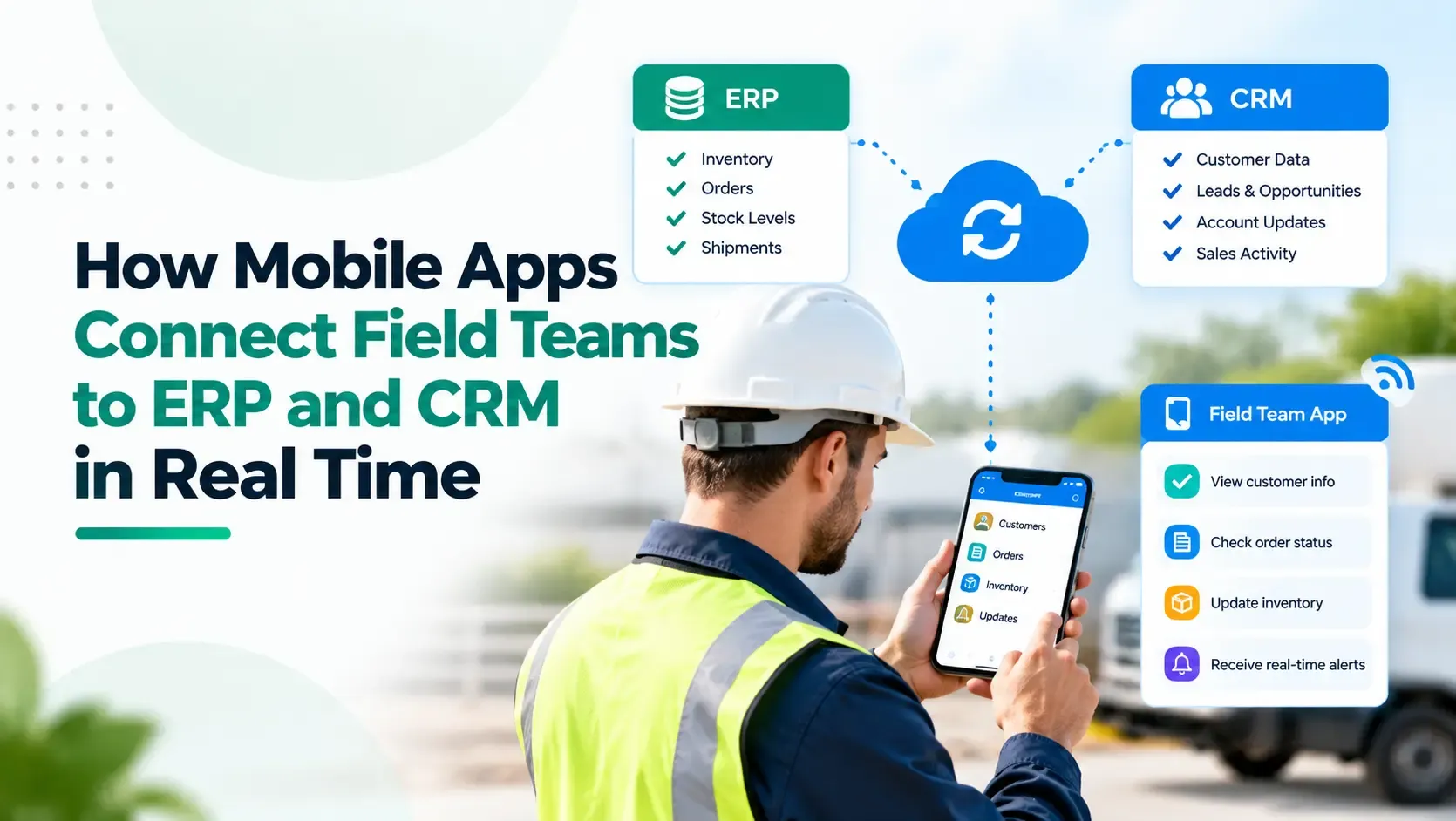
4. Seamless Workflow Integration: Custom models integrate directly with internal CRM, ERP, and document management applications, allowing employees to query institutional knowledge effortlessly.
Overcoming Data Infrastructure and Fine-Tuning Roadblocks
Building domain-expert AI models requires navigating several technical and operational hurdles. Many established corporations possess unstructured, uncurated data stored in disconnected departmental silos, making dataset preparation difficult.
Leading enterprise technology teams resolve these integration challenges by building modern cloud data lakes supported by automated data cleansing and synthetic data generation pipelines. Standardizing and anonymizing training data ensures that models learn from high-quality, unbiased inputs without exposing sensitive personally identifiable information (PII).
Equally critical is enforcing strict model evaluation and guardrail protocols. Continuous benchmarking pipelines monitor fine-tuned model outputs against human-annotated test sets, preventing model drift and ensuring responses remain aligned with corporate brand safety guidelines.
Establishing scalable cloud inference architecture also ensures that fine-tuned AI endpoints handle high-concurrency employee query spikes seamlessly during peak operational hours.
Structuring an Implementation Strategy for Generative Excellence
Corporate technology leaders seeking to build domain-specific AI models and maximize generative ROI should adopt a structured implementation roadmap:
• Audit Enterprise AI Readiness: Evaluate existing data infrastructure, dataset quality, and internal technical capabilities to identify high-impact AI use cases.
• Define a Scalable Enterprise Data Strategy: Partner with strategic data advisors to clean internal knowledge bases, establish metadata standards, and build cloud data fabrics.
• Select Base Models and Fine-Tuning Strategies: Choose appropriate open-weight foundation models and apply parameter-efficient fine-tuning techniques (such as LoRA or QLoRA).
• Deploy Private Inference Infrastructure: Host fine-tuned models within secure enterprise cloud environments protected by role-based access permissions and end-to-end encryption.
• Align Technology Infrastructure with Business Goals: Ensure that custom model pipelines scale flexibly to support new departmental applications and global market expansions.
• Establish Continuous Governance and Monitoring: Implement automated evaluation frameworks to benchmark model accuracy, monitor drift, and enforce brand safety guardrails continuously.
• Empower Employees with Interactive AI Tools: Train domain specialists and operational leads to leverage custom AI assistants, embedding intelligent automation into everyday workflows.
By combining specialized techniques for fine-tuning LLMs with comprehensive data strategy consulting, modern corporations can unlock the full potential of artificial intelligence, protect proprietary knowledge, and achieve sustainable competitive advantage in global markets.





















Sign in to leave a comment.