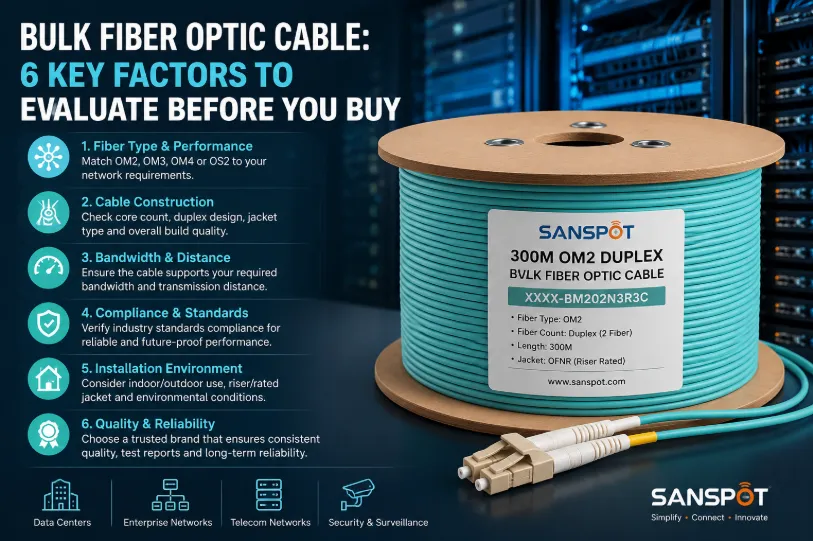

Choosing the right bulk fiber optic cable for a large deployment is one of the most consequential infrastructure decisions a network team makes. A wrong choice means costly re-pulls, signal degradation, or compliance failures down the line. Understanding the key evaluation factors upfront saves significant time and budget.
Why Bulk Fiber Optic Cable Procurement Deserves Careful Planning
According to the Telecommunications Industry Association (TIA), improper cable selection accounts for nearly 30% of network performance issues in structured cabling installations. Buying in bulk amplifies both the savings and the risk. Getting specifications right at the planning stage is far more efficient than correcting errors after installation.
6 Factors to Evaluate When Selecting Fiber Optic Cabling in Bulk
1. Fiber Type: Single-Mode vs. Multimode
Single-mode fiber supports longer transmission distances, typically over 10 kilometers. Multimode fiber suits shorter runs within buildings or campuses. Match the fiber type to your actual link distances before ordering spools.
2. Cable Construction and Jacket Type
Outdoor-rated, riser, and plenum jackets each serve different environments. Plenum-rated fiber cable meets fire safety codes for air-handling spaces. Confirm local building codes before specifying jacket material.
3. Fiber Count Per Bundle
Bulk fiber comes in fiber counts ranging from 2 to 144 or higher. Over-provisioning by 20-30% is a common best practice. This spare capacity supports future growth without another full re-pull.
4. Bend Radius and Mechanical Ratings
According to IEEE 802.3, exceeding a cable's minimum bend radius causes micro-bending losses that degrade signal performance. Tight pathways in data centers demand cables rated for small bend radii. Always verify the manufacturer's mechanical specifications against your routing plan.
5. Connector Compatibility and Polish Type
The polish type on fiber end-faces, whether PC, UPC, or APC, must match across your entire link. Mismatched connectors introduce return loss that degrades performance in high-bandwidth systems. Standardize polish type across the installation to avoid this problem.
6. Standards Compliance and Testing Certification
Look for cable tested and certified to ANSI/TIA-568 or ISO/IEC 11801 standards. According to BICSI, compliance with recognized cabling standards reduces troubleshooting time by up to 40% over the life of a network. Request test documentation from your supplier before accepting bulk shipments.
Key Questions to Ask Your Supplier
Before finalizing any bulk order, run through this checklist:
- Is the cable tested to current ANSI/TIA or ISO standards?
- Are third-party test reports available for each reel?
- Does the jacket rating match your installation environment?
- Is the fiber count sufficient for planned and future capacity?
- Are bend radius specifications documented and verified?
Bottom Line
Selecting bulk fiber optic cable is not simply a purchasing decision. It is a foundational infrastructure choice that affects network reliability for years. Evaluating fiber type, construction, fiber count, bend ratings, connector compatibility, and standards compliance before ordering protects your installation investment. Take the time to validate specifications thoroughly, and your network will perform as designed from day one.




























Sign in to leave a comment.