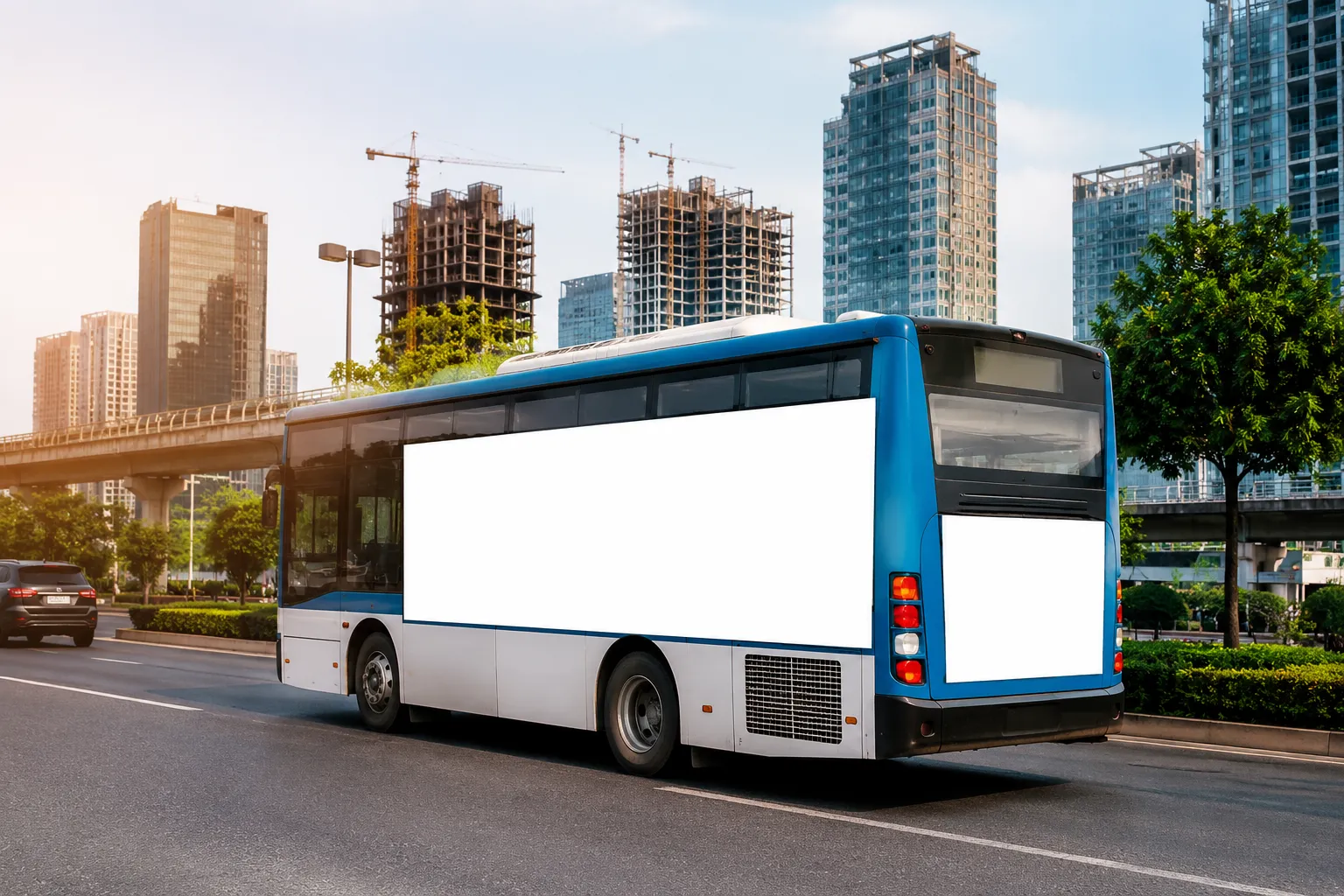

As cities continue to expand and consumer mobility increases, businesses are constantly seeking effective ways to reach large audiences across multiple locations. While digital and traditional advertising channels remain important, bus advertising has emerged as one of the most impactful Out-of-Home (OOH) advertising formats for achieving widespread visibility. By transforming public vehicles into moving advertisements, brands can connect with consumers throughout their daily journeys.
Buses travel through residential neighborhoods, commercial districts, shopping centers, educational zones, and major traffic corridors, making them powerful tools for increasing brand awareness. With the right strategy, businesses can leverage bus advertising to achieve extensive citywide reach and strengthen long-term brand recall.
What Is Bus Advertising?
Bus advertising refers to promotional messages displayed on public buses through formats such as full wraps, partial wraps, side panels, rear panels, interior displays, and window graphics. These advertisements move across different parts of a city, allowing brands to gain visibility in multiple locations through a single campaign.
One of the biggest advantages of bus advertising is its ability to deliver continuous exposure. Unlike static billboards that remain fixed in one place, buses carry brand messages throughout the city, helping businesses reach diverse audience groups and maximize campaign visibility.
Select Routes That Match Your Target Audience
One of the most important strategies for successful bus advertising is choosing routes that align with the target market. Different bus routes serve different demographics and locations.
For example, businesses targeting students may focus on routes near colleges and universities, while financial institutions may benefit from routes serving business districts. Retail brands often achieve better results by selecting routes that pass through shopping centers and commercial hubs.
Carefully selecting routes helps ensure that advertisements reach the most relevant audience segments.
Use High-Impact Creative Designs
Since bus advertisements are often viewed while people are walking, driving, or commuting, visual appeal plays a critical role in campaign effectiveness.
Businesses should use bold colors, large fonts, strong imagery, and concise messaging to capture attention quickly. The most effective bus advertisements communicate a clear message that can be understood within seconds.
Simple yet memorable designs help increase audience engagement and improve brand recall.
Leverage Full Bus Wraps for Maximum Visibility
Full bus wraps offer one of the highest-impact advertising options available. By covering the entire vehicle with branded graphics, businesses can create a dominant visual presence on city streets.
These large-format advertisements attract attention from motorists, pedestrians, passengers, and nearby residents. Full wraps also provide ample space for creative storytelling, product showcases, and strong brand messaging.
For businesses seeking maximum exposure, full bus wraps often deliver excellent results.
Target High-Traffic Urban Areas
Citywide campaigns perform best when buses operate in areas with substantial traffic and pedestrian activity. Major roads, transportation hubs, shopping districts, entertainment zones, and business centers offer valuable advertising opportunities.
Advertisements displayed in these locations benefit from higher visibility and increased audience exposure. The greater the traffic volume, the more impressions a campaign can generate throughout its duration.
Strategic route planning can significantly improve campaign reach and effectiveness.
Focus on Repetition to Improve Brand Recall
One of the key strengths of bus advertising is repeated exposure. Consumers often follow similar travel patterns each day and may encounter the same branded buses multiple times during the week.
This repetition helps reinforce brand messaging and strengthens memory retention. The more frequently people see an advertisement, the more likely they are to remember the brand when making purchasing decisions.
Consistent exposure is a major contributor to successful citywide branding campaigns.
Combine Bus Advertising with Other OOH Media
While bus advertising is highly effective on its own, integrating it with other outdoor advertising formats can further increase campaign impact.
Businesses can combine bus advertisements with billboards, transit shelters, metro branding, digital displays, and street furniture advertising. This multi-format approach creates multiple consumer touchpoints and reinforces brand visibility across different locations.
A coordinated OOH strategy often delivers stronger awareness and recall than relying on a single advertising medium.
Integrate Digital Elements into Bus Campaigns
Modern advertising campaigns benefit from combining offline and online engagement. Businesses can include QR codes, website URLs, social media handles, and promotional offers on bus advertisements.
These digital elements encourage consumers to interact with the brand after seeing the advertisement. For example, commuters can scan a QR code to learn more about a product, access special offers, or visit the company website.
This integration helps extend campaign effectiveness beyond physical visibility.
Measure Campaign Performance
Although outdoor advertising can be challenging to measure directly, businesses can track campaign effectiveness using various methods.
Website traffic, customer inquiries, QR code scans, promotional code redemptions, and social media engagement can provide insights into campaign performance. Monitoring these metrics helps businesses evaluate results and improve future advertising strategies.
Regular analysis ensures that marketing investments generate maximum value.
Industries That Benefit Most from Bus Advertising
Several industries successfully use bus advertising for citywide brand promotion, including:
- Retail and e-commerce businesses
- Educational institutions
- Healthcare providers
- Real estate companies
- Financial services
- Restaurants and food delivery brands
- Entertainment and event organizers
These industries benefit from broad audience reach and high-frequency exposure.
Conclusion
Bus advertising remains one of the most effective strategies for achieving citywide brand reach. Its ability to deliver continuous visibility, extensive geographic coverage, repeated exposure, and strong audience engagement makes it a valuable component of modern marketing campaigns.
By selecting the right routes, creating impactful designs, targeting high-traffic areas, and integrating digital elements, businesses can maximize the effectiveness of their bus advertising efforts. As urban populations continue to grow, bus advertising will remain a powerful tool for building awareness and strengthening brand presence across cities.



















Sign in to leave a comment.