

The world today is very unpredictable, and organizations face risks that may disrupt work at any time of the day. Business continuity and disaster recovery are helpful resources that can assist businesses in remaining healthy and continuing on their way. The two concepts are confused in many teams since both are concerned with managing an emergency, yet they are different in their roles. Being aware of the apparent distinctions helps to make smarter business continuity and risk management and secure future success.
This blog defines the meaning of each strategy, demonstrates its key differences and explains why the differences really matter to your organization. Let's begin!
What Is Business Continuity and Disaster Recovery?
Business continuity refers to the process through which an organization takes steps to ensure that its most crucial functions are operational during and immediately after a disruption. It is concerned with the efficient running of operations and the safeguarding of the entire operation in order to allow the business to keep on with its mission.
Disaster recovery is about restoring technology systems, data and important equipment following an incident. It aims at the rapid recovery of such resources to sustain the overall business demands.
Key Differences Between Business Continuity and Disaster Recovery
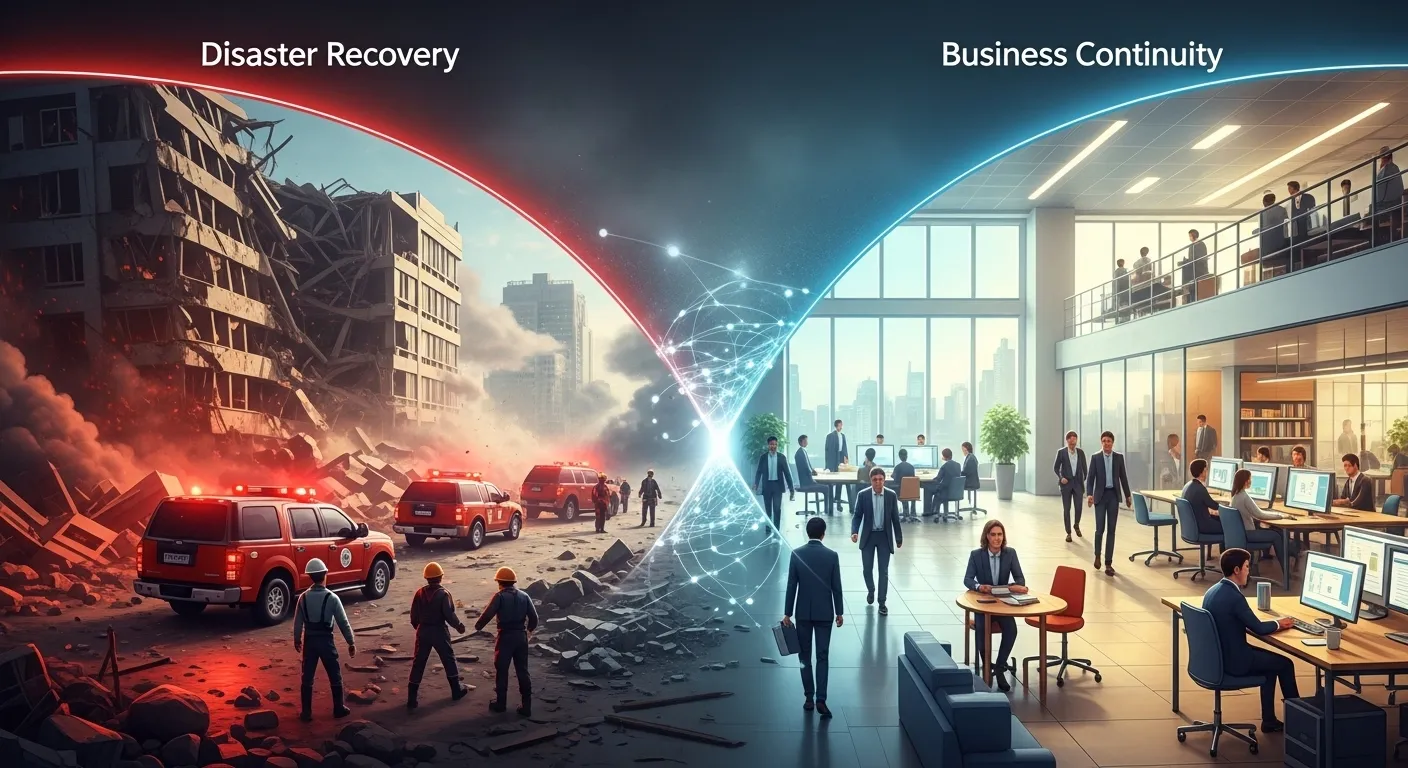
Business continuity and disaster recovery both help protect organizations, yet they differ in how they work and what they cover. Business continuity looks at the full picture of operations, while disaster recovery narrows in on technical fixes. These clear distinctions improve BCP in risk management by guiding better decisions and stronger plans.
- Business continuity keeps essential operations active before, during, and after any disruption.
- Disaster recovery restores technology systems and data once the event has passed.
- Business continuity reviews critical processes across every part of the organization.
- Disaster recovery creates targeted plans for recovering infrastructure and applications.
- Business continuity builds the ongoing ability to maintain daily work without major breaks.
- Disaster recovery tests and carries out steps to bring IT resources back quickly.
Why These Differences Matter

Seeing how business continuity and disaster recovery differ allows teams to create plans that fit real needs instead of using a single approach. This understanding shapes smarter choices and helps every part of the organization prepare in the right way.
- Supports better planning and the wise use of available resources.
- Reduces the effect of interruptions on everyday business activities.
- Strengthens business continuity and risk management across the whole team.
- Allows faster return of important technology tools when needed.
- Helps meet industry rules and keep operations in good standing.
- Builds lasting trust with customers through dependable readiness.
Bottom Line:
Business continuity and disaster recovery each bring important value, yet their combined strength creates the best protection for any organization. When used together, they form a complete shield that covers both steady operations and fast technical fixes. Every business should put both strategies in place to face challenges with confidence.
For tailored guidance, trusted providers of business continuity management consulting services and disaster recovery consulting services can help design solutions that match your exact situation. At Business Contingency Group, we stand ready to support your journey toward lasting preparedness. Start building your plan today and secure a more stable tomorrow.
FAQ Section
How do business continuity and disaster recovery work together?
Continuity keeps operations going during issues/mishaps, and disaster recovery restores IT afterward. They team up for total protection.
Why should businesses understand the difference?
It sharpens BCP in risk management, guiding precise actions, cutting waste, and tailoring plans to specific risks.
What do consulting services typically include?
Business continuity management consulting services and disaster recovery consulting services offer risk assessments, plan development, training, and testing for real readiness.





























Sign in to leave a comment.