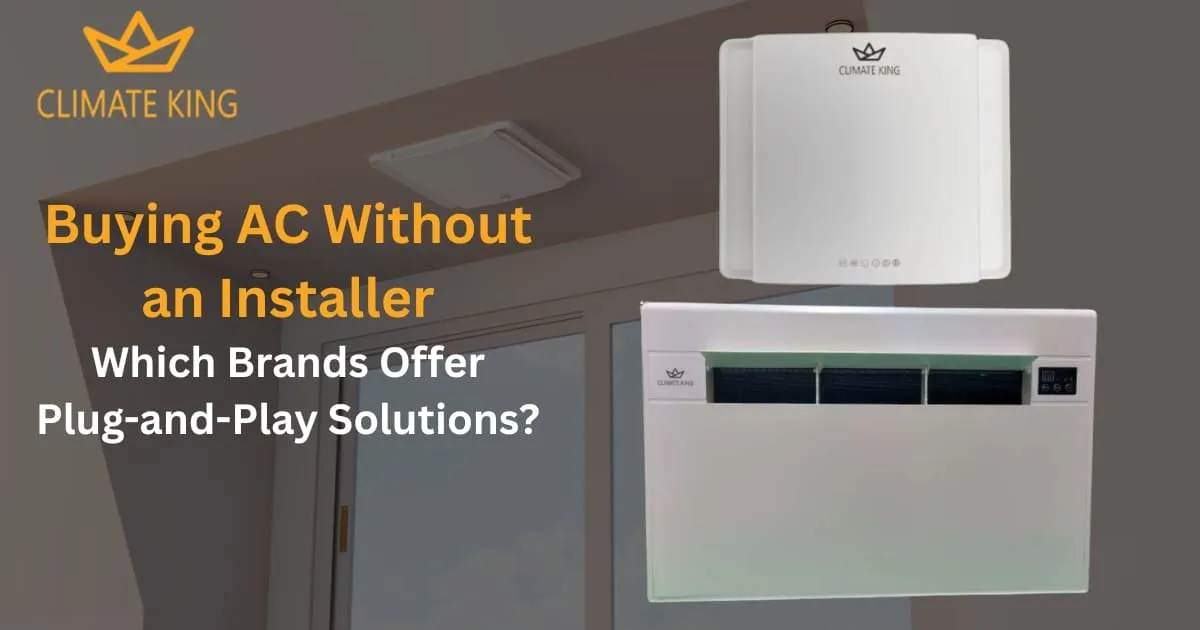

Anyone shopping for an air conditioner for home use in Europe eventually runs into the same two costs: the unit itself, and a certified installer. In the Netherlands and most of the EU, traditional split-AC systems run on refrigerant gas that has to be added, pressure-tested, and vacuum-sealed on-site work that legally requires an F-gas certified technician. That's a few hundred euros and a scheduling wait before you even feel cool air.
But a growing category of air conditioners is built specifically to skip that step. They arrive from the factory pre-charged and sealed, so installation becomes an electrical and mechanical job rather than a refrigeration job, something many homeowners, or a general handyman, can legally do themselves. Understanding which of the best air conditioner brands in Europe like Climate King actually offer genuine plug-and-play installation can save both money and weeks of waiting. Here's what actually makes an AC "plug-and-play," and how the main options on the market compare.
Why Do Some AC Units Need a Certified Installer?
Standard split-AC systems (the classic wall unit and a separate outdoor unit) are shipped with the two halves unconnected. An installer has to run copper refrigerant lines between them, then add or top up the refrigerant gas on-site. Because refrigerants are pressurised gases regulated under EU F-gas rules, this step legally requires F-gas certification, the same rule that applies to professional refrigeration and heat-pump work.
This is why a "cheap" split AC often ends up costing far more once installation, line-running, and certification fees are added and why installation slots can be booked out weeks in advance during summer.
What Makes an AC Genuinely Plug-and-Play?
Three things distinguish a true plug-and-play unit from a split system marketed as "easy install":
- Factory pre-charged, closed refrigerant circuit: no gas is added or removed during setup, so no F-gas certification is legally required.
- Monoblock construction: cooling and heating components sit in one housing (either fully indoor, like portable units, or a single outdoor-and-indoor pairing that ships pre-connected), rather than two separate units joined on-site.
- Standard electrical connection only: the unit plugs into a normal socket or is wired to an existing circuit, with no specialist wiring.
The Main Plug-and-Play Categories, Compared
1. Portable Air Conditioners for Home
The simplest category: a single indoor unit on wheels with an exhaust hose out a window or through a wall vent. No outdoor unit, no drilling beyond a small hose gap, making it one of the most searched-for portable air conditioners for home setups precisely because there's nothing to install.
- Pros: Cheapest entry point (often €300 to €500), fully self-installable in minutes, movable between rooms.
- Cons: Lower cooling capacity for the price (typically 2.5 to 3kW), the exhaust hose is a visible compromise, and noise levels are usually higher since the compressor sits indoors.
- Example: Climate King's portable line (A011C2, A010G, A011D1) sits in this bracket, with cooling capacities around 2.6 to 2.9kW and R290 refrigerant, and models offering both air conditioner with heating and cooling functionality from around €300.
2. Monoblock Wall Units (No Outdoor Unit)
A step up: a single wall-mounted unit that handles both intake and exhaust through the wall, without a separate outdoor condenser. Installation is still non-specialist mounting the bracket and cutting one or two small wall ducts, but it's more permanent and considerably quieter and more powerful than a portable unit.
- Pros: No visible outdoor unit at all, cleaner design than a portable unit, higher cooling capacity than most portables.
- Cons: Requires wall-drilling (better suited to a one-time install than a rental), and airflow and noise performance vary more by brand than in the rooftop category below.
- Example: Climate King's CK-WT-2650W (2.65kW cooling, R290 refrigerant) is a current model in this bracket, priced from around €749.
3. Rooftop and Flat Roof Air Conditioner Units
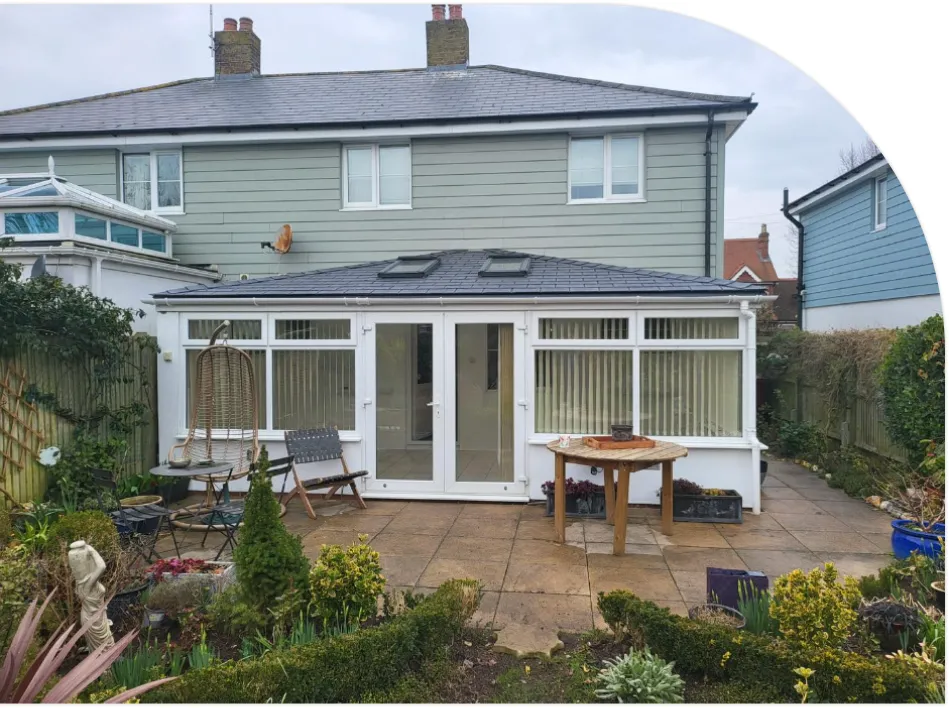
The newest and most specialised category, built for flat roofs, dormer conversions, and loft extensions where a wall-mounted outdoor unit isn't practical or isn't allowed. A single, low-profile roof-mounted air conditioner sits on the roof and connects to a slim indoor panel both halves ship pre-connected and pre-charged, which is what makes this one of the few genuinely DIY air conditioner categories at this capacity level.
- Pros: No visible outdoor condenser on the facade at all, higher capacity than portable or wall monoblock options (often 3 to 4kW), and closed/pre-filled systems mean no refrigeration work on installation.
- Cons: Higher upfront price point, and still requires basic roof-penetration work (though not refrigeration-certified work).
- Brands active in this niche: This is a genuinely narrow category but really important in advanced technology; the major AC manufacturers (Daikin, Mitsubishi, LG) still compete in traditional split ac systems, since it's a specialised rooftop HVAC unit design rather than a standard split system. The names that come up repeatedly for residential rooftop AC units in this format are Climate King (AirDeck Pro, model CK-RV-35), Breeze Hub, and Mini Rooftop. Of the three, Climate King's AirDeck Pro currently has the widest published spec sheet, a 283mm-high outdoor unit, 3.4 to 3.6kW nominal cooling/heating, integrated WiFi as standard, and a heating range down to -5°C outdoor temperature, along with the broadest retail availability across Dutch and wider-EU marketplaces, making it one of the more established best home rooftop air conditioner options currently sold online in Europe.
What to Check Before Buying a Plug-and-Play AC
- Confirm the refrigerant is factory pre-charged, the product listing or manual should explicitly say the system is "closed" or "pre-filled." If it isn't stated, assume it may still need a certified technician.
- Check the refrigerant type, R290 and R32 are both common in this category; R32 units typically carry a higher GWP (global warming potential) figure, worth checking if that matters to you.
- Match capacity (kW) to room size, not just budget, a portable unit rated for 2.6kW will underperform in a room over roughly 25–30m², regardless of brand.
- Check the noise spec for both indoor and outdoor components, not just one, rooftop and wall monoblock units vary noticeably here, and it's usually listed in dB(A) at both minimum and maximum output.
- Look at warranty length, plug-and-play categories vary widely, from around 2 years on portable units up to 3+ years on rooftop systems, depending on the brand.
- Confirm what's actually included, mounting hardware, roof/wall ducting components, and WiFi modules aren't always bundled as standard across every brand, even within the same category.
Frequently Asked Questions
How much does a rooftop AC unit cost, including installation?
For residential-scale units, expect the rooftop AC unit cost to run from roughly €750 for a monoblock wall model up to €2,500–€3,000 for a full flat-roof/dormer monoblock system like the AirDeck Pro. Because these units are pre-charged and don't require F-gas certified refrigeration work, the rooftop AC unit installation cost is typically limited to basic roof-penetration and electrical work rather than a full HVAC contractor visit — often a fraction of what a comparable split-system installation would add.
Can I install a roof-mounted air conditioner myself as a DIY project?
In most cases, yes, for the plug-and-play categories described above. Since the refrigerant circuit is sealed at the factory, mounting an air conditioner on the roof doesn't legally require an F-gas certified technician the way a traditional split system does — the remaining work is roof-penetration sealing, bracket mounting, and a standard electrical connection. That said, always confirm local building regulations before cutting into a roof, and use a professional for the structural and waterproofing steps if you're not confident doing them yourself.
What's the difference between a residential and a commercial rooftop AC unit?
Commercial rooftop HVAC units are built for much larger areas, typically whole floors of office or retail space with capacities well beyond what a home needs, and they're usually installed on reinforced commercial roofing with dedicated ductwork. A residential rooftop AC unit like the AirDeck Pro is sized for a single room or small extension (up to roughly 35m² in the case of the CK-RV-35), designed for a standard home roof structure, and doesn't require the ducted distribution system that commercial installs typically use.
Do rooftop and flat roof air conditioners come with WiFi and heating as standard?
Increasingly, yes. Most current-generation rooftop AC and heat units, including Climate King's AirDeck Pro, are heat pumps rather than cooling-only systems, meaning they handle both air conditioners with cooling and heating functions from a single unit. Built-in WiFi control has also become close to standard across this category, letting you adjust temperature and schedules remotely rather than relying only on an infrared remote.
Where can I buy a rooftop or flat roof air conditioner online in Europe?
Rooftop and flat-roof units in this category are increasingly sold direct-to-consumer rather than only through HVAC contractors. Climate King, for example, sells its AirDeck Pro and wider range directly online with delivery across the Netherlands, Germany, Spain, and other EU countries, alongside a network of installation partners for anyone who prefers professional fitting rather than a full DIY approach.
Bottom Line
"No installer needed" doesn't mean all plug-and-play options are equal; a €300 portable unit and a €2,500 rooftop monoblock solve very different problems. For simple, temporary cooling, a portable unit is the lowest-friction choice. For a permanent, discreet solution without a certified installer, wall monoblock and rooftop systems are worth the higher price and in the rooftop/dormer segment specifically, Climate King's AirDeck Pro is currently one of the most fully-specified plug-and-play options on the Dutch and wider European market.




















Sign in to leave a comment.