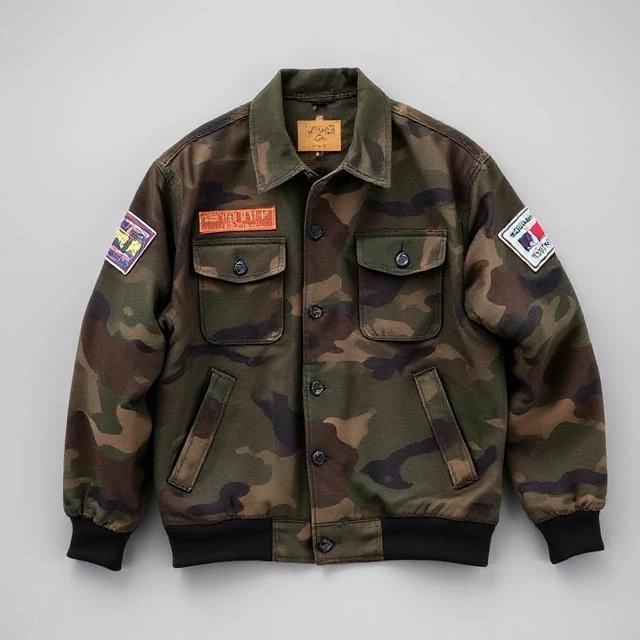

The camo patch jacket isn’t just a fashion statement—it’s a piece of wearable craftsmanship that blends rugged utility with street-smart flair. Whether you’ve spotted one at a vintage shop or caught a glimpse of it on a style influencer’s feed, this jacket has a story stitched into every patch. But what goes into making one? More than you’d think.
First things first: the base jacket. Most camo patch jackets start their lives as military surplus or inspired replicas. Think classic M65 field jackets or utility-style outerwear made from durable cotton twill or ripstop fabric. These materials are chosen not just for their durability but for how they wear over time—getting softer, more character-rich with every outing. The base jacket sets the stage for the artistry that follows.
Next comes the patchwork. Here’s where the jacket gets its soul. Crafters collect different camo fabrics—woodland, desert, tiger stripe, and even digital camo—often from worn-out uniforms or leftover textile stock. Each patch is carefully cut, often by hand, into various shapes and sizes. No two jackets are exactly alike because the fabric pieces are never uniform. This gives every piece that unique, one-of-a-kind vibe that fast fashion just can't replicate.
Before stitching anything down, makers usually plan the patch layout. This stage is part intuition, part puzzle-solving. The goal is balance—not just in color or tone, but in the way patches overlap and interact. It’s common to mix in other textures like denim, canvas, or corduroy to add dimension. Some designers even incorporate vintage labels, embroidery, or old military insignia to really dial up the detail.
Once the layout is set, the sewing begins. This isn’t a quick zip through a machine—each patch is sewn individually, often with reinforced stitching. Zigzag or double-stitched borders help keep the fabric secure, even with wear and tear. Depending on the maker’s style, the stitching might be clean and subtle or intentionally raw and exposed, giving the jacket a deconstructed, edgy feel.
The real magic, though, is in the finishing. Many camo patch jackets go through a distressing process—washed, faded, or even sanded to give them that well-worn, lived-in aesthetic. This not only softens the materials but also blends the patches with the jacket’s base, making it look less like a DIY project and more like a piece of art. Think of it as aging a good whiskey—it takes time, but the results are worth it.
Some makers take things further by adding personalization—hand-painted elements, printed slogans, or stitched messages on the inner lining. This step is all about storytelling. A camo patch jacket isn’t just about hiding in plain sight—it’s about expressing something raw, real, and a little rebellious.
In the end, what you get is more than just outerwear. A true camo patch jacket carries layers of history, fabric, and intention. It’s functional fashion rooted in craftsmanship, made to last and made to stand out. Whether you’re wearing one for style, symbolism, or simply because it looks cool, you’re sporting a jacket with a whole lot of heart sewn into every stitch.


























Sign in to leave a comment.