
Hair loss and thinning can make even a simple shower or hair-brushing session feel frustrating. When strands seem to be everywhere except where you want them, it is natural to look for an easy at-home solution. That is where the high frequency wand for hair has attracted attention.
These handheld devices have traditionally been associated with cosmetic skin treatments, but some people now use them on the scalp in the hope of encouraging healthier-looking hair. Online discussions often make impressive claims, including that electrical stimulation can improve circulation, strengthen follicles, or even trigger new hair growth.
But how much of that is actually supported by evidence?
The short answer is that high-frequency treatments are interesting, but the evidence for a typical cosmetic high-frequency wand specifically causing meaningful hair regrowth is limited. Research into other energy-based treatments, such as radiofrequency and low-level light therapy, is more developed, but those technologies should not be treated as interchangeable.
That distinction matters. A device can sound scientifically advanced while still having limited proof for the particular result it promises.
This guide explains what high-frequency scalp wands are, how they may work, what the research says, how to use one cautiously, and when it makes more sense to speak with a dermatologist.
What Is a High-Frequency Wand?
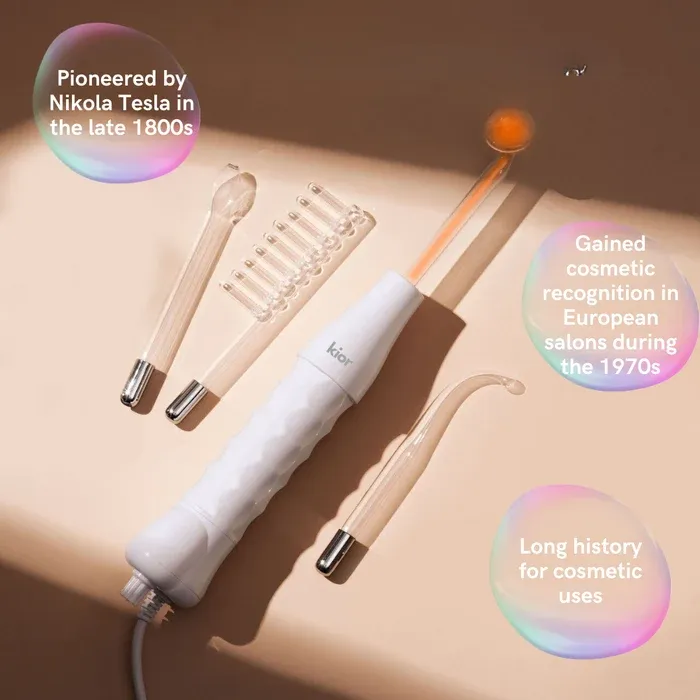
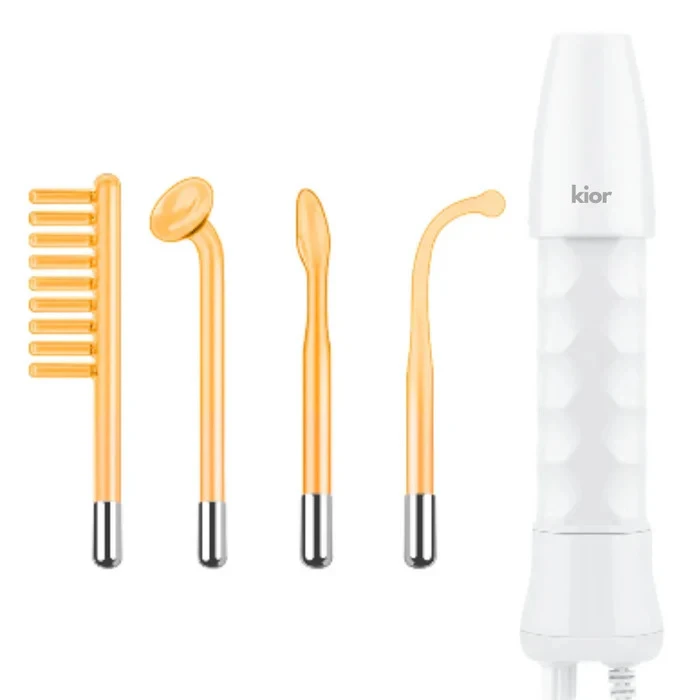
A high-frequency wand is a handheld cosmetic device that delivers a mild electrical current through a glass electrode. Depending on the design, the glass attachment may look like a comb, mushroom, or small curved tube.
When switched on, the electrode can produce a faint glow and sometimes a soft buzzing sensation.
Think of it as a very small electrical treatment tool designed to work on the surface of the skin. It is not the same thing as a laser, red-light therapy device, or ordinary electrical massager.
Some beauty devices are marketed for facial care, acne, skin appearance, and scalp treatments. However, the intended use and design can differ considerably between products, so it is important not to assume that every high-frequency device is suitable for the scalp.
Medical literature discussing high-frequency cosmetic wands notes that potential cosmetic benefits are still not strongly established, and reported benefits for hair growth largely come from anecdotal experiences rather than strong clinical trials.
Why Do People Use High-Frequency Devices on the Scalp?
The basic idea sounds appealing.
Hair follicles need a healthy environment to produce hair. Supporters of scalp high-frequency treatments suggest that mild electrical stimulation may influence the skin around follicles or improve local blood flow.
Imagine a garden. If the soil is healthy, the roots have access to water and nutrients, and the plant is otherwise capable of growing, improving the growing environment can be useful.
But a scalp is more complicated than a garden.
Hair loss can happen for many reasons. Genetics, hormonal changes, nutritional deficiencies, illness, medications, stress, scalp conditions, and aging can all contribute. If the underlying cause is not addressed, simply stimulating the scalp may not solve the problem.
That is why claims that a high-frequency wand can universally "activate" dormant follicles should be treated cautiously.
Does a High-Frequency Wand Promote Hair Growth?
This is the most important question.
At present, there is not enough high-quality evidence to say that ordinary consumer high-frequency wands reliably produce significant hair regrowth.
A review of radio frequency technologies in hair-related applications found that research exists on energy-based treatments and hair, but only a small portion of the reviewed studies focused on hair growth. The review included different radio frequency technologies, which should not automatically be equated with the cosmetic high-frequency wands sold for home use.
That difference is easy to overlook.
Radio frequency, high-frequency electrical current, red light, and laser-based treatments are separate technologies. They work differently and may deliver energy to different depths of tissue.
So, if a study shows that one type of energy treatment helped hair density, it does not automatically prove that another handheld wand will produce the same result.
Some online sources use the phrase Kior's high frequency wand hair growth as though the benefit has already been established. In reality, the evidence is not strong enough to make that conclusion.
What Might a High-Frequency Wand Do for the Scalp?
Although strong evidence for hair regrowth is lacking, there are several reasons people are interested in these devices.
It May Provide a Scalp-Stimulating Sensation
The mild current can create a tingling or vibrating sensation. Some users find this relaxing, especially when the device is moved slowly across the scalp.
However, feeling stimulation does not mean that hair follicles are necessarily producing more hair.
A sensation is not the same as a proven biological result.
It May Affect the Skin Environment
High-frequency cosmetic treatments are sometimes promoted for improving the appearance of skin and reducing certain surface concerns. Research on these cosmetic devices remains limited, however, and reported benefits should not be confused with proven treatment of hair loss.
It Can Become Part of a Scalp-Care Routine
Even when a device does not directly cause substantial regrowth, some people may enjoy using it as part of a consistent scalp-care routine.
That can be valuable from a routine-building perspective, but it should not replace treatments with stronger evidence when someone has significant hair loss.
High Frequency Is Not the Same as Red-Light Therapy
This is one of the biggest points to understand.
You may see hair-growth devices that use red or near-infrared light alongside products that use electrical stimulation. They may all be advertised as "energy-based" treatments, but that does not make them the same.
Low-level light therapy, sometimes called photo bio modulation, has been studied for pattern hair loss. Reviews have reported improvements in hair density in some people with and rogenetic alopecia, and home-use devices such as caps, helmets, headbands, and combs have been studied.
That evidence should not be transferred directly to a high-frequency wand.
It is similar to comparing a microwave and an oven simply because both use energy to heat something. The underlying technology and the way the energy interacts with the target are different.
Can It Help With Thinning Hair?
Thinning hair is not one single condition.
For example, hereditary pattern hair loss gradually causes follicles to become smaller and produce finer strands. Temporary shedding can occur after illness, major stress, rapid weight changes, or other triggers. Scalp inflammation can also affect hair growth.
A high-frequency wand cannot diagnose which situation is happening.
If your hair has suddenly become thinner, you have bald patches, your scalp is painful or inflamed, or you are losing substantially more hair than usual, identifying the cause is more important than purchasing a cosmetic device.
The earlier the underlying problem is recognized, the more useful appropriate treatment can be.
How to Use a High-Frequency Wand on the Scalp
If a device is specifically designed and labeled for scalp use, follow its manufacturer's instructions rather than relying on a generic routine.
A cautious approach generally includes the following principles:
Start With a Clean, Dry Scalp
Avoid using the device over heavy amounts of styling products, oils, or other substances unless the manufacturer specifically says they are compatible.
Electrical devices should always be used according to their instructions.
Use the Correct Attachment
Some devices come with different glass electrodes for different areas.
Do not assume that a facial electrode or another attachment is appropriate for the scalp. Use the attachment recommended for that purpose.
Keep the Setting Comfortable
More intensity does not automatically mean better results.
If the treatment feels painful, excessively hot, or irritating, stop. Cosmetic scalp care should not involve deliberately creating burns or significant discomfort.
Move the Device Gently
Do not press aggressively into the scalp.
Slow, controlled movement is preferable to scraping or repeatedly concentrating energy on one small spot.
Follow the Recommended Treatment Time
Longer sessions are not necessarily more effective.
Using a device far more frequently than instructed can increase the chance of irritation without providing an established additional benefit.
What Should You Avoid Before Using One?
Extra caution is important with electrical cosmetic devices.
Do not use a high-frequency wand over broken, irritated, or actively damaged skin. Medical guidance on high-frequency cosmetic wands also warns about possible effects such as redness, swelling, discomfort, blisters, and burns.
It is also sensible to avoid improvising with products or substances that could react poorly to electrical stimulation.
If you have an implanted electronic device or another medical device that could potentially be affected by electrical equipment, ask your healthcare professional before using a high-frequency wand. The same applies if you are unsure whether your particular medical or scalp condition makes the device appropriate.
Can a High-Frequency Wand Replace Proven Hair-Loss Treatments?
No.
This is perhaps the most important practical takeaway.
If you are experiencing persistent hair loss, a cosmetic wand should not be considered a substitute for evidence-based diagnosis and treatment.
For example, low-level light therapy has a substantially different research base from high-frequency cosmetic wands. Studies and reviews have investigated its role in pattern hair loss, including randomized trials and systematic analyses.
Other treatments may also be appropriate depending on the cause of hair loss.
A dermatologist can help determine whether the problem is hereditary hair loss, excessive shedding, a scalp disorder, nutritional issue, medication-related change, or another condition.
Think of it like a warning light on a car dashboard. You can polish the dashboard, but that does not fix the engine problem causing the warning.
What About Hair Oils and Serums?
Many people combine scalp devices with oils, serums, or hair-growth products.
Be careful with this approach.
Not every cosmetic product is designed to be used with electrical devices. Some ingredients may increase irritation, while others may not have been tested for use alongside electrical stimulation.
Always check the device instructions and the product manufacturer's guidance before combining treatments.
Also remember that "natural" does not automatically mean effective or risk-free.
A product can feel soothing without actually treating the biological cause of hair loss.
Signs That You Should See a Dermatologist
Consider professional evaluation if you notice:
- Sudden or unusually heavy shedding
- Clearly visible bald patches
- A rapidly widening part
- Significant recession or thinning
- Scalp pain, burning, crusting, or persistent itching
- Redness or scaling that does not improve
- Hair loss after starting a medication
- Hair loss accompanied by other unexplained symptoms
- Continued worsening despite home care
A dermatologist can examine the scalp and hair pattern and determine whether further testing is appropriate.
This is especially important because some forms of hair loss are easier to manage when treatment begins earlier.
What Results Should You Expect?
If you decide to try a high-frequency wand, keep expectations realistic.
You might notice that your scalp feels stimulated after a session. You may enjoy the sensation and find it relaxing. Some users may also report changes in how their scalp or hair feels.
But those observations do not prove that the device is creating new hair follicles or reversing hereditary hair loss.
Be particularly skeptical of claims promising dramatic regrowth within days or weeks.
Hair grows slowly. Even treatments with clinical evidence generally require consistent use over months rather than producing overnight changes. For example, studies of low-level light therapy for pattern hair loss have reported responses beginning around several months after treatment rather than immediately.
How to Choose a High-Frequency Scalp Device
If you are considering buying one, look beyond impressive marketing language.
Check whether:
- The manufacturer clearly explains the intended use.
- The device comes with detailed safety instructions.
- The scalp attachment is appropriate for the intended application.
- The company provides information about electrical safety.
- The device does not make unrealistic medical promises.
- You understand whether it is a cosmetic product or a regulated medical device.
Do not assume that a product is medically proven simply because it mentions words such as "professional," "clinical," "oxygen," "stimulation," or "therapy."
Regulatory status also needs careful interpretation. For example, FDA records show that some hair-growth devices use infrared light and have specific intended uses, while other high-frequency devices fall into entirely different categories.
The exact technology and intended use matter.
Common Mistakes People Make
One common mistake is using the device too aggressively.
Another is believing that stronger sensations mean stronger results.
Some people also use a device every day for long periods because they assume more treatment must produce faster growth. There is no good evidence that this strategy makes a high-frequency wand more effective.
Another mistake is ignoring the cause of hair loss.
If hereditary hair loss is progressing while someone spends months experimenting with cosmetic devices, they may lose valuable time that could have been used to discuss appropriate treatment options with a professional.
The Bottom Line
A high-frequency wand may be an interesting addition to a personal scalp-care routine, but it should not be presented as a guaranteed hair-growth solution.
The biggest problem is not that the concept is impossible. It is that strong clinical evidence specifically supporting consumer high-frequency wands for meaningful hair regrowth is currently lacking. Research on related technologies, including radiofrequency and low-level light therapy, is more developed, but those treatments should not be treated as interchangeable.
If you want to experiment with a scalp device, choose one designed for the intended purpose, follow the manufacturer's directions, avoid damaged or irritated skin, and stop if you experience pain, burning, or significant irritation.
Most importantly, persistent or unexplained hair loss deserves more than a cosmetic quick fix. Finding the reason behind the shedding is often the most useful first step.
Frequently Asked Questions
1. Can a high-frequency wand make hair grow faster?
There is currently insufficient strong evidence to say that consumer high-frequency wands reliably make scalp hair grow faster. Claims about hair growth are largely based on anecdotal reports rather than robust clinical evidence specific to these devices.
2. How often should I use a high-frequency wand on my scalp?
Follow the instructions supplied with your specific device. Do not assume that using it more often or for longer periods will produce better results. Excessive use may increase skin irritation.
3. Is a high-frequency wand the same as a red-light hair-growth device?
No. They use different technologies. Red-light or low-level light therapy has been studied separately for pattern hair loss, while evidence for cosmetic high-frequency scalp wands is much more limited.
4. Can I use a high-frequency wand if my scalp is irritated?
It is better not to use it over irritated, broken, or damaged skin. High-frequency cosmetic devices can cause redness, discomfort, swelling, blisters, or burns in some circumstances.
5. Should I see a dermatologist for hair thinning?
Yes, especially if the thinning is sudden, severe, patchy, persistent, or accompanied by scalp symptoms. Identifying the cause can help you choose a treatment with better evidence instead of relying only on cosmetic devices.
Conclusion
Hair care technology can be exciting, but good hair-growth advice should separate promising ideas from proven results. A high-frequency wand may offer a pleasant scalp-stimulation experience, yet there is not currently enough evidence to confidently call it a reliable treatment for hair loss.
If you choose to try one, think of it as an optional cosmetic tool rather than a guaranteed regrowth treatment. Combine realistic expectations with safe use, and seek professional advice when hair loss is persistent or unexplained.
That approach gives your scalp something more valuable than a trendy gadget: a sensible, evidence-aware care plan.





















Sign in to leave a comment.