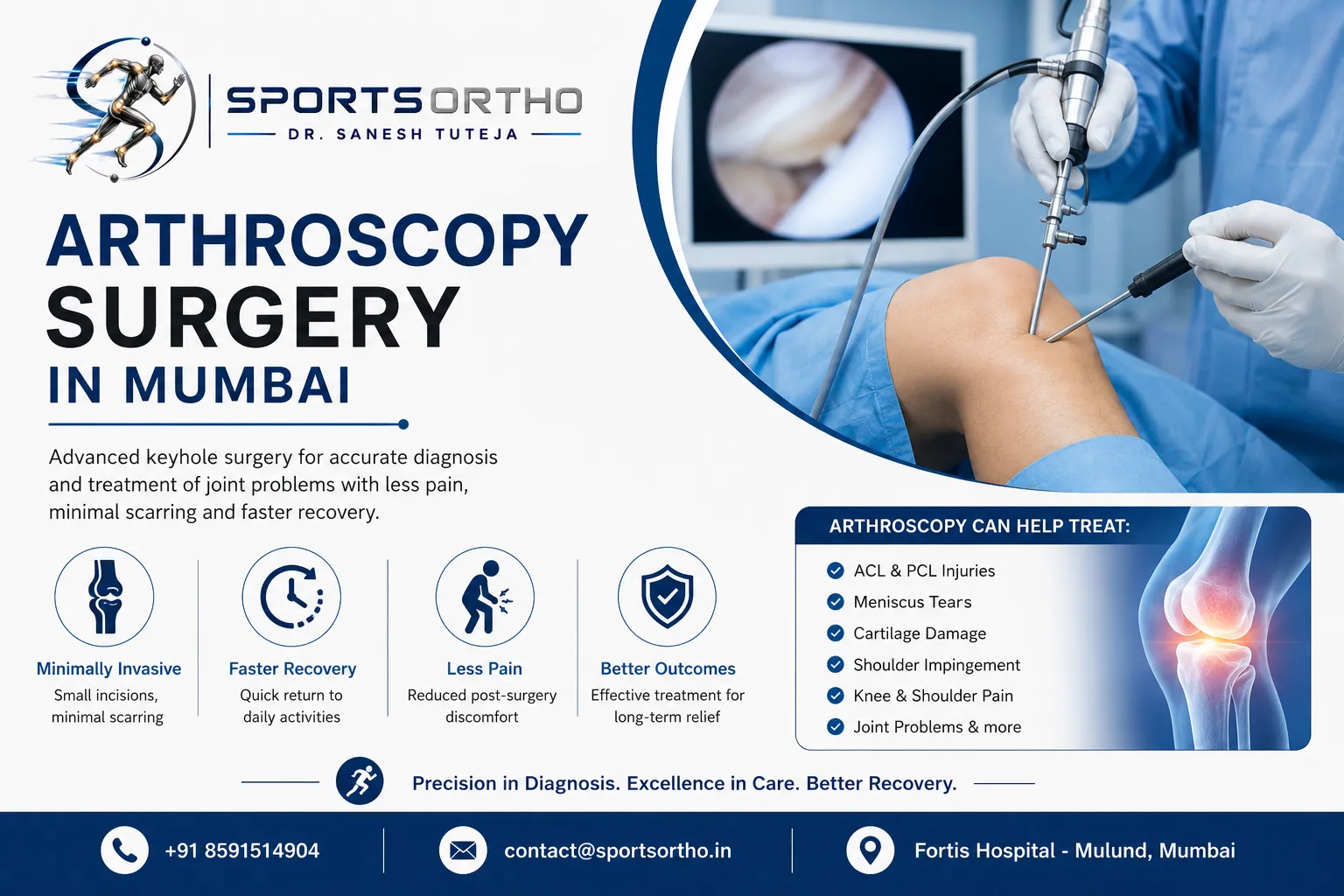

A torn meniscus is one of the most common knee injuries, affecting athletes and non-athletes alike. When patients are told they need surgery, the question that comes up almost immediately is whether the procedure will "fix" the tear completely. It's a fair question, but the honest answer is more complicated than a simple yes. Whether arthroscopy surgery in Mumbai can fully resolve a meniscus tear depends heavily on the type, location, and severity of the tear, as well as the treatment approach used. Here's a straightforward look at what arthroscopic surgery can and cannot do for a torn meniscus.
What Is the Meniscus, and Why Does It Tear?
The meniscus is a C-shaped piece of cartilage that acts as a cushion between the thighbone and shinbone within the knee joint. Each knee has two menisci, and they play a critical role in absorbing shock, stabilizing the joint, and distributing weight evenly during movement.
Tears typically occur in two ways: acute injuries, often from sudden twisting or pivoting movements during sports, and degenerative tears, which develop gradually over time due to wear and aging, particularly in people over 40. The cause and pattern of the tear directly affect how well it can be treated surgically.
Two Very Different Surgical Approaches
This is where the honest picture starts to take shape. Arthroscopic treatment for a torn meniscus generally falls into one of two categories, and they have very different implications for how "fixed" the knee actually becomes.
Meniscus Repair In select cases, particularly tears located in the outer, blood-rich portion of the meniscus in younger patients, the surgeon can stitch the torn edges back together. Because this region has a better blood supply, it has a genuine capacity to heal. A successful repair preserves the meniscus tissue and offers the best long-term outcome, closer to what most patients imagine when they hear the word "fix."
Meniscectomy (Partial Removal) The majority of meniscus tears, especially those in the inner two-thirds of the cartilage where blood supply is poor, cannot be stitched back together because that tissue simply does not have the capacity to heal on its own. In these cases, the surgeon removes the damaged, torn portion of the meniscus rather than repairing it. This relieves pain and mechanical symptoms like catching or locking, but it does not restore the meniscus to its original, intact state. Once tissue is removed, it does not grow back.
This distinction matters enormously. A repair aims to heal the tear. A meniscectomy manages the tear by removing what cannot be saved.
So, Is the Tear "Completely Fixed"?
If your tear qualifies for a repair and it heals successfully, the outcome can genuinely be described as close to a full fix, though even repairs carry a real risk of re-tearing, particularly if the knee is subjected to high-impact activity too soon.
If your tear requires a meniscectomy, it is important to understand that surgery removes the problematic, damaged tissue, it does not regenerate a new, healthy meniscus. Symptoms like pain and locking typically improve significantly, often dramatically, but the knee has permanently lost some of its natural cushioning. This is not a failure of the surgery; it is simply the biological reality of how meniscus tissue behaves once torn beyond repair.
What Determines Which Approach Is Used?
Several factors guide the surgeon's decision between repair and removal:
- Location of the tear — outer versus inner region of the meniscus
- Pattern of the tear — a clean, simple tear repairs more easily than a complex or degenerative one
- Patient's age — younger patients generally have better healing potential
- Time since injury — older, chronic tears are less likely to be repairable
- Overall knee health — existing arthritis or cartilage damage can influence the decision
This is typically assessed through imaging like an MRI beforehand, though the final decision is often confirmed once the surgeon directly visualizes the tear during the procedure itself.
What About Long-Term Joint Health?
It's also worth being direct about this: removing meniscus tissue, even a small amount, changes the mechanics of the knee and can increase the long-term risk of developing osteoarthritis in that joint over the years. This is not meant to discourage necessary surgery, since leaving a symptomatic tear untreated carries its own risks, but patients deserve to understand that a meniscectomy addresses the immediate problem without fully replicating the knee's original biomechanics.
Setting Realistic Expectations
Patients considering arthroscopic treatment for a meniscus tear should go in with realistic expectations. Surgery can significantly reduce pain, restore function, and allow a return to normal or near-normal activity levels. Whether it constitutes a "complete fix," however, depends entirely on whether repair was biologically possible in the first place.
Final Thoughts
The honest answer to whether arthroscopy can completely fix a torn meniscus is: it depends on the tear. When repair is possible, outcomes can be excellent and close to a full restoration. When removal is the only option, the surgery relieves symptoms effectively but does not fully replicate what was lost. For an accurate, individualized assessment of your specific tear and the most realistic outcome for arthroscopy surgery in Mumbai, consulting an experienced orthopedic surgeon like Dr Sanesh Tuteja is the best way to understand exactly what your knee needs and what to expect afterward.

























Sign in to leave a comment.