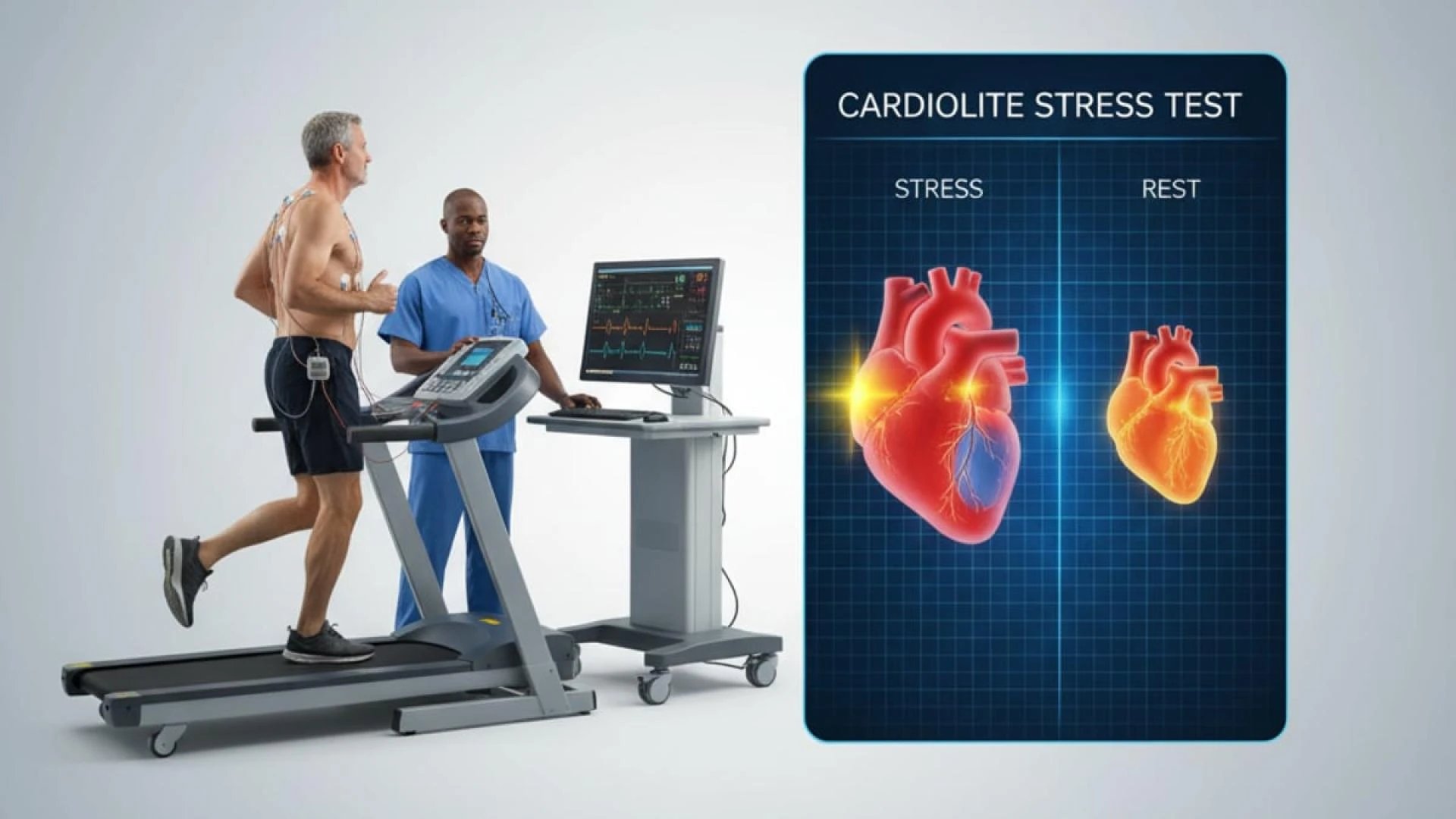
A Cardiolite stress test is a noninvasive nuclear imaging procedure used to assess how well your heart functions under physical or chemical stress. By using a small amount of radioactive tracer, the test produces detailed images that help identify areas with reduced blood flow, which may suggest coronary artery disease or other cardiac conditions.
This type of nuclear stress test, along with alternatives like the Lexiscan stress test, is especially helpful for individuals who cannot perform standard exercise-based tests or whose treadmill results are unclear. Your physician may recommend it if you’re experiencing symptoms such as chest pain, breathlessness, or unexplained fatigue, to gain a better understanding of your heart health.
What Is Cardiolite?
Cardiolite is the brand name for technetium-99m sestamibi, a radioactive tracer used in nuclear imaging. Once injected into your bloodstream, it travels to the heart and emits radiation that can be captured by a special camera. This allows doctors to view blood flow and detect any areas of reduced circulation.
The test involves taking two sets of images: one while you are at rest, and another after your heart has been stressed—either through exercise or medication. Comparing these images helps pinpoint blockages or regions with poor blood supply.
Cardiolite vs. Lexiscan Stress Test
While both are nuclear stress tests, they differ in how the heart is stressed. A Cardiolite test can involve either exercise or medication, whereas Lexiscan uses a drug called regadenoson to simulate the effects of exercise. Sometimes, a thallium tracer is used instead, depending on the clinical need.
Lexiscan is particularly useful for patients who are unable to exercise due to physical limitations. Both methods produce high-quality imaging, but the best option depends on your health condition and what your doctor recommends.
Nuclear vs. Standard Stress Testing
Traditional treadmill stress tests evaluate your heart’s rhythm and blood pressure during exercise. In contrast, nuclear stress tests like Cardiolite or Lexiscan provide visual images of blood flow, making them more accurate for detecting coronary artery disease, especially in complex cases.
Why Doctors Recommend Cardiolite Stress Tests
Diagnosing Heart Disease
The primary goal is to detect coronary artery disease by identifying regions of the heart that
don’t receive enough blood during stress.
Monitoring Treatment and Progress
Cardiolite and Lexiscan tests can be repeated to monitor recovery after heart surgery or a heart attack, helping guide further treatment.
Complementing Other Tests
Nuclear imaging provides insights that might not be available through echocardiograms or CT scans, making it valuable in difficult-to-diagnose cases.
How the Cardiolite Test Is Performed
Preparation Tips
Your healthcare provider will give you instructions such as avoiding caffeine, fasting for several hours, and potentially adjusting medications before the test. Comfortable clothing and proper footwear are advised, especially if you’ll be exercising.
Step-by-Step Process
- Injection & Rest Imaging
- An IV is placed and the Cardiolite tracer is injected. After 30 minutes, resting images of your heart are taken using a gamma camera.
- Stress Induction
- You’ll either walk on a treadmill or receive medication (e.g., Lexiscan) to elevate your heart rate.
- Post-Stress Imaging
- A second injection is administered, and another set of images is captured. The entire process typically takes 2 to 4 hours.
What to Expect During Lexiscan Testing
If using Lexiscan, you may feel warm, slightly breathless, or dizzy—effects that mimic exercise. These symptoms usually pass quickly. Throughout the procedure, your vitals will be closely monitored by the medical team.
Benefits of Nuclear Stress Testing
Clinical Advantages
Nuclear imaging is more accurate than standard tests in detecting subtle changes in heart function and early signs of coronary artery disease.
Patient-Friendly Procedure
It’s a noninvasive test with minimal discomfort, and it provides precise information that helps create a personalized care plan.
Risks and Side Effects
Safety of Cardiolite
The radiation exposure is very low and considered safe. Allergic reactions are rare. If you have concerns, speak with your doctor.
Lexiscan Side Effects
Common side effects include headaches, flushing, or mild chest discomfort. Serious complications like arrhythmias or heart attacks are rare.
Who Should Not Have a Nuclear Stress Test?
Patients who are pregnant, allergic to the tracers, or have unstable heart conditions may not be good candidates. Your doctor will determine whether it’s safe or if another type of test is better.
Getting Ready for Your Nuclear Stress Test
Inform Your Doctor
Provide a complete list of your medications, allergies, and medical history. Some medications may need to be paused prior to testing.
Checklist for Test Day
- Follow fasting instructions.
- Wear loose, comfortable clothing.
- Avoid lotions or oils on your skin.
- Bring your ID, insurance card, and medication list.
- Arrange a ride if you’re receiving sedating medications.
Understanding Your Test Results
Doctors evaluate areas where the tracer doesn’t absorb properly—this may signal poor blood flow or damage. Results from both Cardiolite and Lexiscan stress tests are interpreted similarly.
Based on your results, further steps might include lifestyle changes, medications, additional tests, or procedures. Your provider will go over everything in detail.
FAQs About Cardiolite & Lexiscan Tests
- Is the radiation safe?
- Yes, the dose is minimal and generally considered safe.
- Will I have side effects?
- Most are mild and short-lived.
- Does insurance cover it?
- Usually yes, if deemed medically necessary—check with your insurer.
Comparing Test Options
Cardiolite vs. Lexiscan Thallium
The choice of tracer (Cardiolite vs. thallium) and method (exercise vs. Lexiscan) depends on
your specific health profile and diagnostic needs.
Nuclear Imaging vs. Other Tests
Compared to stress echocardiograms, nuclear imaging offers better visualization of blood flow and is preferred when other tests are inconclusive.
Should You Get a Nuclear Stress Test?
Deciding whether to undergo a Cardiolite or Lexiscan test involves weighing the benefits of accurate diagnosis against the small risks involved. Collaborate with your cardiologist to ensure it’s the right step for you.
Ask questions about the procedure, preparation, and follow-up to feel confident in your decision.
Learn More from Trusted Sources
For additional information, consult reliable organizations such as:
- The American Heart Association
- The Society of Nuclear Cardiology
They offer educational resources and support for individuals navigating heart health concerns.
Final Thoughts
The Cardiolite Stress Test is a highly effective way to assess and monitor heart health. It can detect issues that traditional tests may miss and help tailor treatment plans more precisely. While the test involves a small amount of radiation and has potential side effects, the benefits in diagnosing and managing heart disease typically outweigh the risks.
By preparing properly and understanding what to expect, you can approach your test with confidence and take an informed step toward better heart health.
If you're scheduled for a nuclear stress test or have concerns, reach out to your healthcare provider. Taking control of your heart health begins with knowledge and preparation.























Sign in to leave a comment.