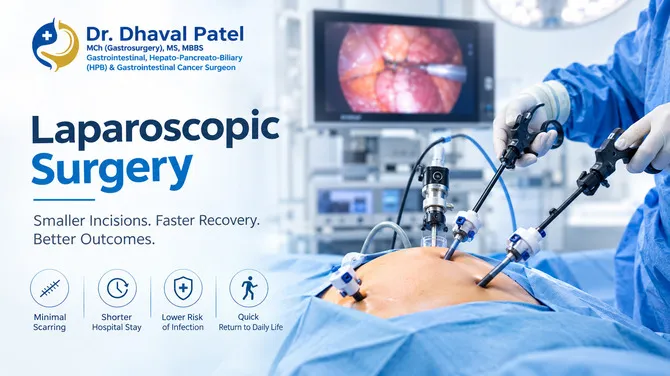

Can Laparoscopic Surgery Cause Long-Term Complications?
Before any operation, it's natural to think beyond the surgery date itself and wonder, "will this cause problems years down the line?" Patients considering laparoscopic surgery in Ahmedabad often ask this exact question, and it's a good one to ask. The reassuring truth is that laparoscopic surgery has one of the strongest long-term safety records in modern surgical care, but like any procedure, it isn't entirely without risk. Understanding what those risks actually look like can help you feel more prepared, not more anxious.
What Causes Long-Term Complications After Laparoscopic Surgery?
Most complications, when they do occur, trace back to a small number of factors:
- Internal scar tissue, known as adhesions, forming as part of the body's natural healing process
- Incomplete healing of the incision sites, occasionally leading to a weakness in the abdominal wall
- Pre-existing health conditions like diabetes, which can affect how tissue heals
- Not following post-surgery activity restrictions, especially around lifting
- Rare technical factors related to the specific procedure performed
What Symptoms Might Suggest a Long-Term Issue?
- Persistent or recurring pain near the surgical site, months after the procedure
- A new bulge or swelling at an old incision, which could indicate an incisional hernia
- Ongoing digestive changes that don't settle over time
- Discomfort that worsens with movement or physical activity
It's worth noting that mild, occasional discomfort during the first few months is common and usually not a cause for worry. It's the persistent, worsening, or new symptoms that deserve a proper check.
Who Is More Likely to Experience Complications?
- Patients with diabetes or conditions that slow wound healing
- Those who've had multiple previous abdominal surgeries
- Smokers, since smoking affects tissue repair
- Patients who return to heavy lifting or strenuous activity too early
- People with obesity, which places extra strain on healing tissue
How Can You Support Long-Term Healing After Surgery?
- Follow your surgeon's activity guidelines closely, even once you feel fine
- Attend every scheduled follow-up, not just the first one
- Keep chronic conditions like diabetes well managed
- Report new or worsening symptoms early rather than waiting them out
- Maintain a healthy weight to reduce strain on the abdominal wall
What Can You Do to Lower Your Risk From the Start?
- Choose an experienced surgical team with strong laparoscopic expertise
- Be transparent about your full medical history before surgery
- Avoid smoking in the weeks leading up to and following your procedure
- Ease back into physical activity gradually, rather than rushing recovery
- Don't skip post-operative check-ups, even if you feel completely normal
The vast majority of patients who undergo laparoscopic procedures recover fully and go on to live without any lasting issues. Long-term complications are uncommon, and when they do occur, early attention usually resolves them without major difficulty. If you're weighing your surgical options and want a clear, honest assessment of your case, laparoscopic surgery in Ahmedabad with an experienced team can make all the difference. Dr. Dhaval Patel takes a thorough, individualised approach to every patient's care, both before and long after surgery.
























Sign in to leave a comment.