

Why another opinion can help
Once the word “cancer” appears in a report, every decision feels heavy. It is normal to wonder whether the diagnosis is correct, if the suggested treatment is the best fit, or if something important is being missed. A cancer second opinion appointment gives you time with a fresh team to review the diagnosis, restage the disease if needed and check whether the proposed plan matches current evidence and your own priorities.
Research from cancer centres shows that most second opinions broadly confirm earlier plans, but a useful minority lead to changes in stage, treatment intensity or even overall strategy, often towards equally effective but less aggressive care. Just as importantly, they can improve understanding and peace of mind for patients and families.
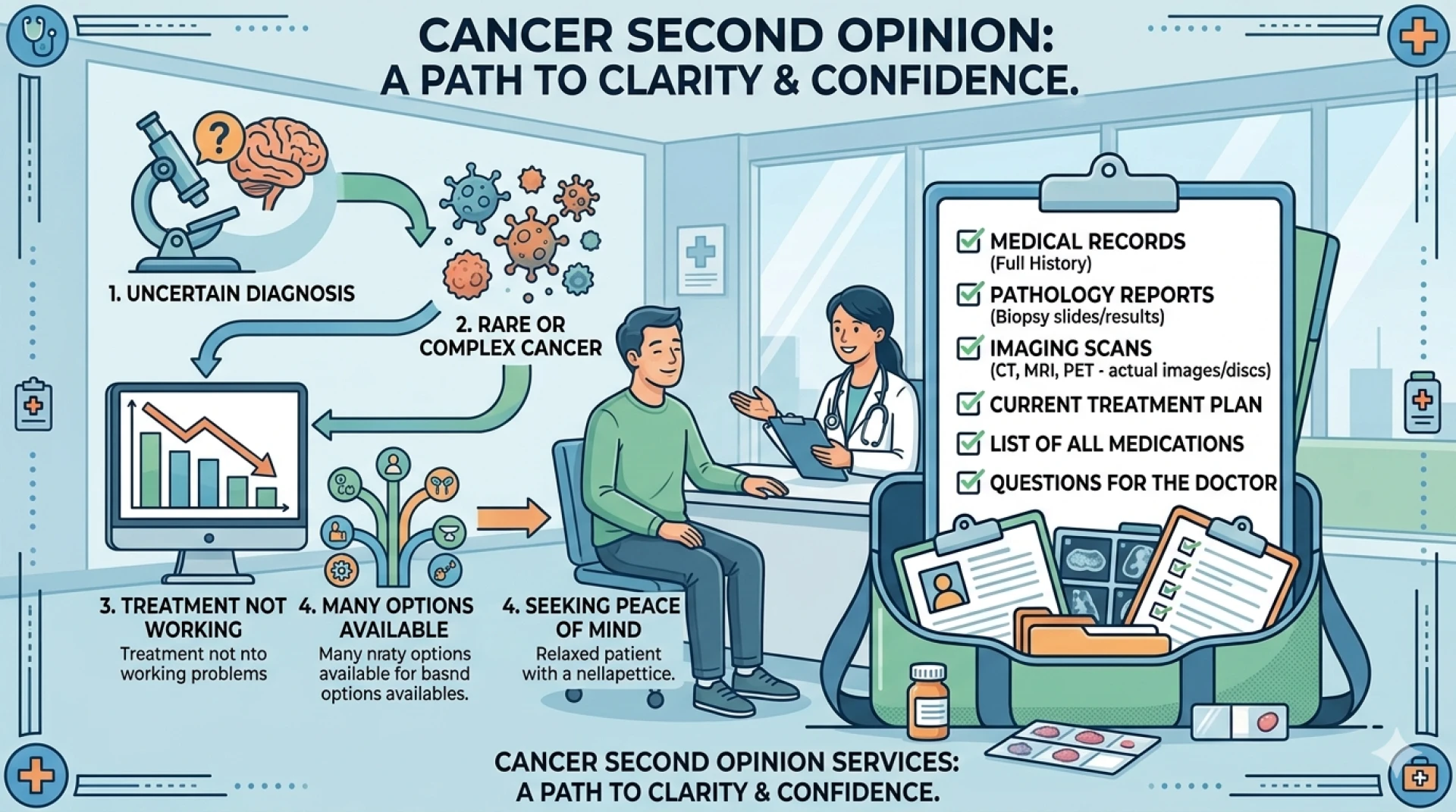
Situations where a second opinion is especially useful
Anyone can ask for another view, but a second opinion is particularly helpful when:
- The cancer is rare, high risk or complex
- Major surgery, long chemoradiation or transplant is being proposed
- You have been told there are no further options
- Different doctors have given conflicting advice
- You feel rushed, confused or unheard during consultations
Professional guidance encourages people to seek more information and take part in shared decision making, especially when there is more than one reasonable path forward.
What usually happens in a second opinion visit
During a cancer second opinion appointment the new specialist will usually:
- Review pathology slides and imaging, sometimes asking in-house experts to repeat the reading
- Check prior operations, chemotherapy, radiation plans and current medicines
- Ask about other illnesses, daily function and your own goals for treatment
- Explain how they see the diagnosis, stage and realistic aims of therapy
Sometimes the recommendation is the same as the first plan, sometimes there are small adjustments, and occasionally there is a clearly different option. The purpose is not to criticise your first doctor but to give you a clear, reasoned explanation so that you can choose with confidence.
How to prepare so the visit is productive
Good preparation makes the extra consultation worth the effort. Try to:
- Collect biopsy and surgery reports, imaging summaries, discharge notes and treatment charts
- Arrange digital copies of scans along with written reports
- Write a short timeline of symptoms, tests and treatments so far
- List all medicines and supplements you are taking
- Note your main questions and fears so they are not forgotten on the day
Attending with a trusted family member or friend can help with note taking and emotional support. Afterwards you can compare what both of you heard before making a decision.
The role of navigation and support services
Finding the right doctor for a fresh review, organising reports and keeping track of appointments can be overwhelming when you are already in treatment. A navigation platform like Uhapo looks at your diagnosis, key reports, location and budget band, then suggests suitable specialists and centres for a focused cancer second opinion appointment instead of leaving you to search blindly. It can also help you prioritise questions, interpret medical language and understand how two different opinions compare.
Across its support hubs in cities such as Mumbai, Varanasi and Thane, Uhapo uses phone, online and in person conversations to help families decide when to seek another view, how to avoid unsafe delays and how to bring the final decision back to their primary oncologist in a respectful way so that long term care remains coordinated.
When opinions differ and how to respond
Sometimes both doctors agree completely, which can strengthen trust in the chosen path. At other times they differ on staging, treatment intensity or whether a clinical trial is realistic. When this happens it is reasonable to:
- Ask each doctor to explain the reasons behind their plan
- Check whether both used the same pathology and imaging
- Ask which national or international guidelines support the options offered
- Request, if possible, that the two teams discuss your case together
Unless there is a genuine emergency, you can usually take a short, defined time to think, talk with family and, if needed, ask your navigator to summarise pros and cons before deciding.
Common questions from patients and caregivers
Is it disrespectful to my first doctor to get another opinion?
Most oncologists understand that cancer decisions are big decisions. Ethical guidance encourages them to respect a patient’s wish to seek more information, and many will even suggest another expert for complex cases.
Is it too late to ask once treatment has started?
No. Second opinions can help at diagnosis, before major surgery, when side effects are severe or when you are unsure about continuing a particular plan. Sometimes the new specialist confirms that the current approach is appropriate, making it easier to stay on course.
How many opinions are enough?
For most people, one carefully chosen cancer second opinion appointment is enough to clarify choices. If the two views are close, that usually builds confidence. If they are very different, a third opinion may help, but continuously changing doctors can delay treatment and increase stress. The goal is clarity, not a never ending search for perfect certainty.

































Sign in to leave a comment.