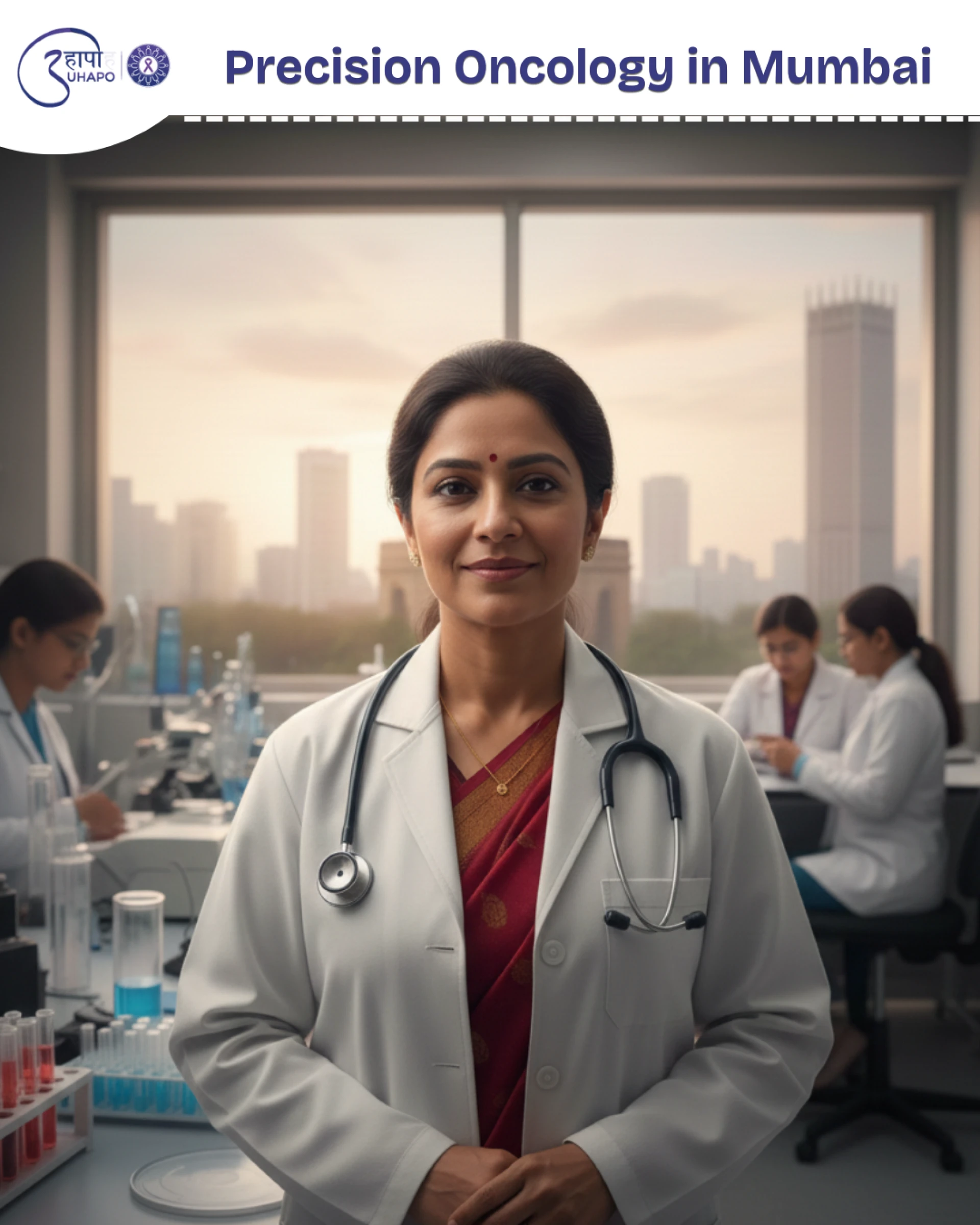

Training and leadership role in precision oncology
In Mumbai, many people with complex cancers are now offered treatment plans that consider tumour biology as well as stage and general health. Within this shift toward personalised medicine, Dr. Sewanti Limaye leads Medical and Precision Oncology at Sir H. N. Reliance Foundation Hospital and Research Centre, a tertiary cancer centre that treats patients from across India. After an MBBS from Jawahar Lal Nehru Medical College in Belgaum, she completed residency training in internal medicine, an MD at New York University, a fellowship in haematology and medical oncology in the United States, and an MS in clinical research from Columbia University. Her background links hands-on clinic work with structured training in statistics, trial design and translational science.
Clinical days usually combine outpatient clinics, inpatient rounds, day care chemotherapy oversight and discussions in multidisciplinary tumour boards. Time is also reserved for reviewing genomic reports, preparing case discussions with pathology, radiology and molecular diagnostics teams, and teaching fellows and residents. Years of experience in large academic centres abroad and in India have made her an early adopter of precision oncology approaches that connect genetic findings with real-world decisions on drugs, sequencing of treatments and surveillance.
Cancers and treatments commonly managed
Consultations cover a broad range of solid tumours. Breast, lung and gastrointestinal cancers form a large share of the practice, along with head and neck, gynaecological cancers and sarcomas, and selected haematological malignancies that need systemic therapy. For many people, Dr. Sewanti Limaye becomes involved at the stage of confirming diagnosis and stage, explaining what the biopsy shows, whether additional scans or molecular tests are useful, and what the realistic goals of treatment are. When cure is possible, the focus is on integrating systemic therapy with surgery and radiation. When disease is advanced, the emphasis often shifts to long-term control, preserving function and planning ahead for likely side effects.
Treatment plans may include chemotherapy, endocrine therapy for hormone-sensitive cancers, targeted drugs aimed at specific mutations, immunotherapy, or carefully chosen combinations. The team monitors blood counts, organ function and symptom burden closely, adjusting doses when toxicity appears. Written summaries and treatment calendars help families keep track of cycles, lab appointments, imaging and clinic reviews so that decisions feel less overwhelming.
How precision oncology is used in everyday care
One of the defining themes in her work is the use of molecular information to refine treatment choices. Many solid tumours are now tested for drivers such as EGFR, ALK, ROS1, HER2 or BRCA alterations, and broader next-generation sequencing panels may be ordered when standard tests are negative or disease behaves unusually. Results can open options for targeted drugs, clinical trials or, in some cases, more accurate estimates of prognosis.
Precision oncology is not only about prescribing expensive medicines. It can also show when standard chemotherapy is still the best option, when long-term endocrine therapy is enough, or when a drug is unlikely to help because the required target is absent. In tumour boards, genomic data are interpreted alongside imaging, pathology and the person’s overall condition, with attention to access, travel, potential drug interactions and the need for intensive monitoring.
Supportive care, survivorship and collaboration
Collaboration extends beyond a single hospital campus. She participates in national and international working groups and research collaborations focusing on breast cancer, thoracic oncology and genomics. Publications, invited talks and guideline work help translate complex data into practical algorithms that can be used by oncologists in both large centres and smaller hospitals. This loop between clinic, research and policy is a central feature of her practice.
Frequently asked questions
Which cancers does this oncologist mainly treat?
The largest groups are breast, lung and gastrointestinal cancers, but the practice also includes head and neck, gynaecological tumours, sarcomas and some haematological malignancies that require systemic therapy. Many of these cases involve integrating chemotherapy, targeted agents and immunotherapy with surgery and radiation planned by multidisciplinary teams.
What is distinctive about her training and experience?
She brings together medical training from India with advanced degrees and fellowship experience in the United States, including formal study of clinical research methods. Years spent in high-volume academic centres have been followed by leadership roles in a major oncology programme in Mumbai, with a specific mandate to build precision oncology and translational research.
How does Dr. Sewanti Limaye use precision oncology in daily practice?
Genomic and biomarker tests are ordered when they are likely to change management, such as identifying targets for specific drugs or clarifying prognosis. Results are discussed with patients in plain language, covering both added options and any limits. When suitable studies are available, clinical trials may be offered, with careful explanation of schedules, monitoring and how standard care would look if the person chooses not to participate.
How does Dr. Sewanti Limaye use precision oncology in daily practice?
Genomic and biomarker tests are ordered when they are likely to change management, such as identifying targets for specific drugs or clarifying prognosis. Results are discussed with patients in plain language, covering both added options and any limits. When suitable studies are available, clinical trials may be offered, with careful explanation of schedules, monitoring and how standard care would look if the person chooses not to participate.






























Sign in to leave a comment.