
Resume fraud is a measurable hiring risk. According to 2025 background check data, an estimated 42.6 million US residents admit to lying on a resume at least once. For compliance teams and HR leaders, that number signals a structural gap in how most organizations screen candidates.
A properly structured candidate background check does more than confirm employment dates. It verifies identity with biometric precision, surfaces instant criminal record data, and creates a documented trail that holds up under audit. The process has changed sharply. The global employment screening services market reached USD 7.19 billion in 2025, driven largely by the shift from manual checks to automated, AI-powered workflows.
This guide covers what a complete screening process looks like in 2026, how identity verification technology fits into the flow, and why the speed and accuracy of your
pre-employment screening software directly affects hire quality and legal exposure.
What Does a Candidate Background Check Actually Cover?
A thorough background check for hiring goes beyond a criminal records query. It cross-references multiple data layers to build a verified picture of who you're hiring and whether their documented history matches what they've claimed.
Core Components of a Complete Check
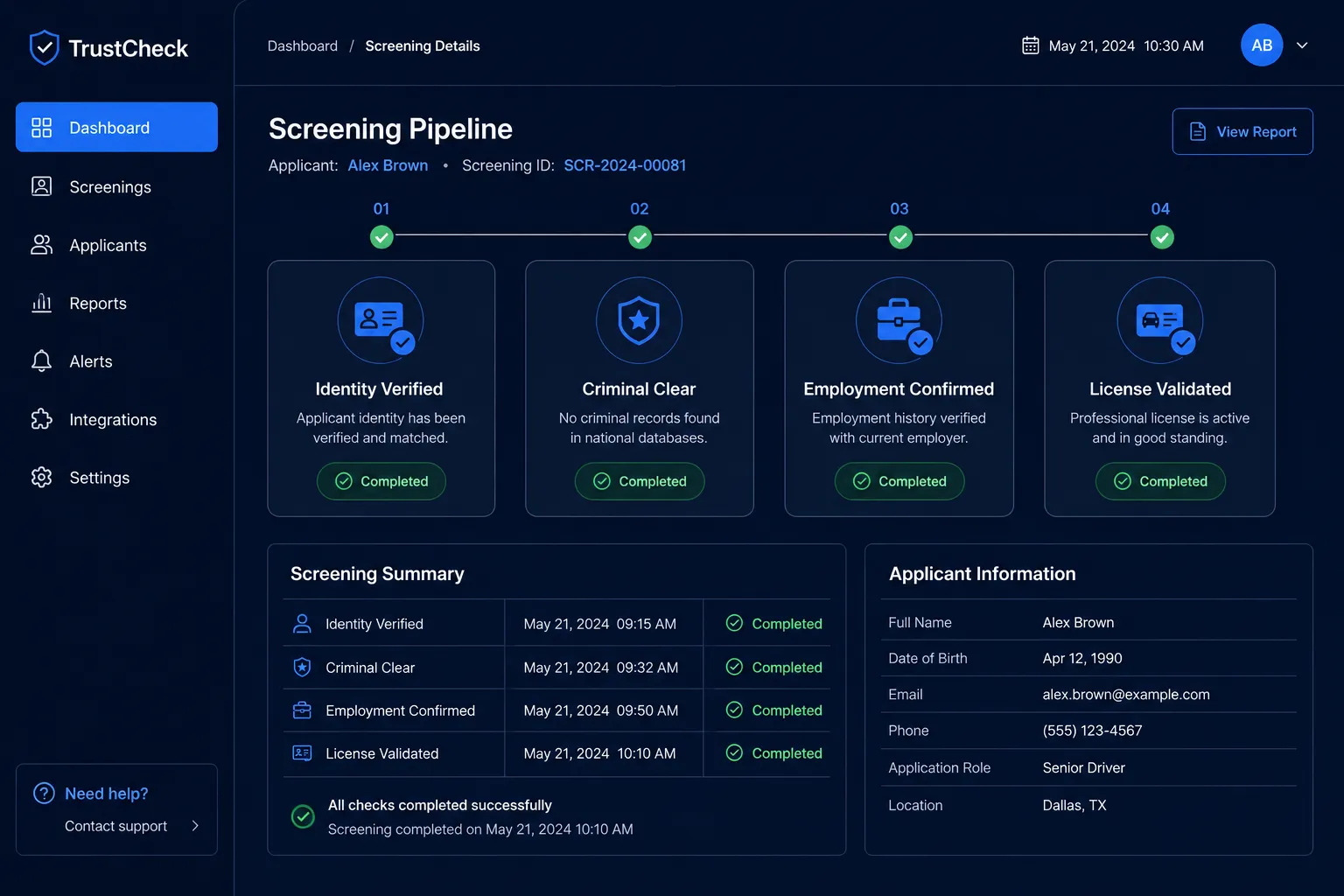
- Identity verification: Confirms the applicant is who they claim to be, using government-issued ID and biometric matching
- Criminal record check: Searches federal, state, and county databases for convictions, pending charges, and sex offender registries
- Employment history verification: Confirms job titles, employers, and dates directly with prior organizations
- Education credential check: Validates degrees, certifications, and institutions
- Professional license verification: Required for regulated roles in healthcare, finance, and legal sectors
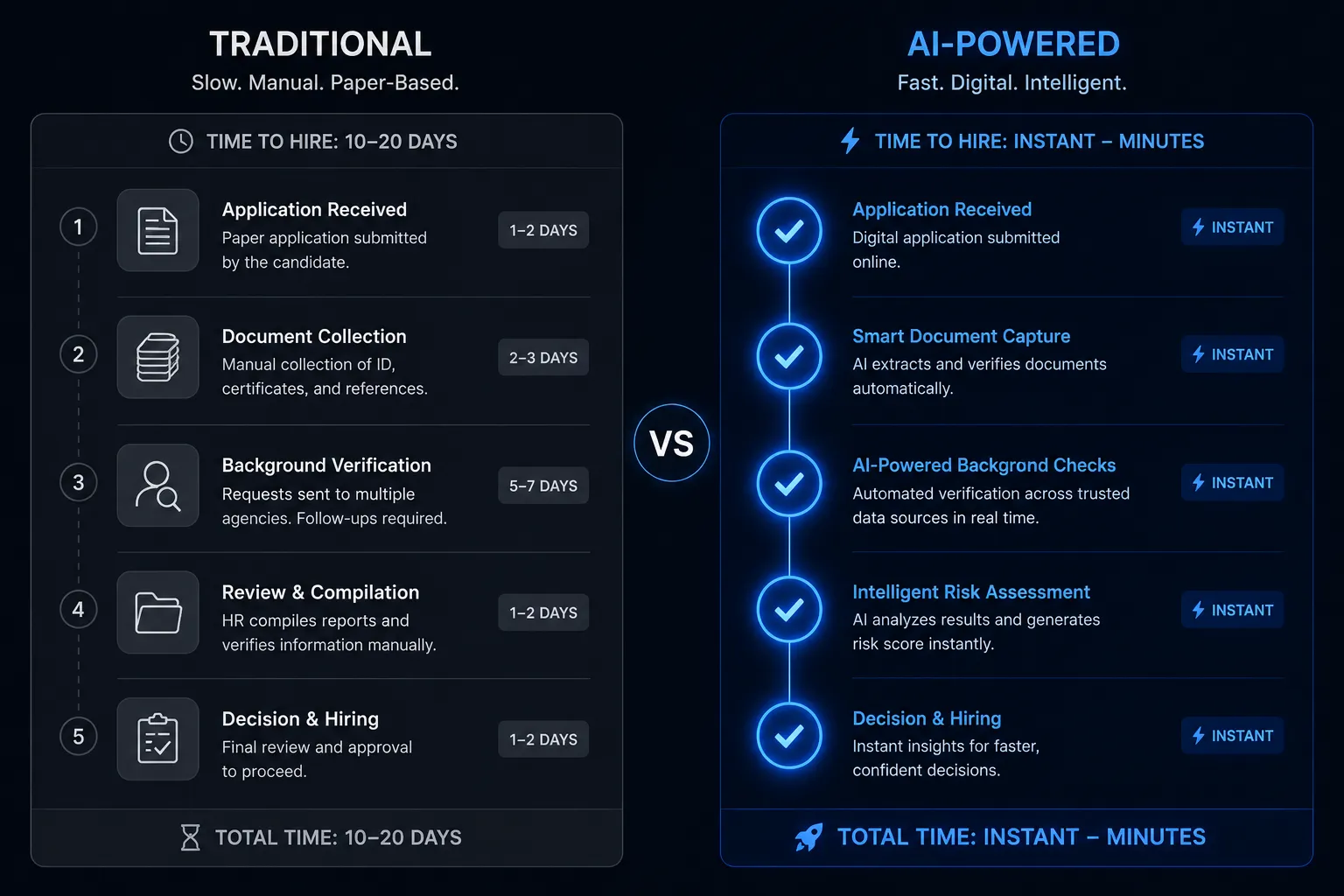
Modern employee verification systems handle all five layers simultaneously, cutting turnaround from days to minutes. Traditional manual workflows often check these sequentially, creating delays that slow offer timelines and frustrate candidates.
Traditional vs. AI-Powered Background Checks: A Direct Comparison
| Screening Type | Traditional Method | AI-Powered Method | VEVR Advantage |
| Identity Verification | Manual ID review (2-5 days) | Biometric facial scan (seconds) | Real-time, fraud-resistant |
| Criminal Record Check | Court requests (3-7 days) | Automated database query | Instant criminal record check |
| Employment History | Phone/email (5+ days) | API-linked verification | Verified in minutes |
| Compliance Reporting | Manual documentation | Auto-generated audit trail | GDPR & CCPA ready |
How Does Identity Verification Technology Work in Background Screening?
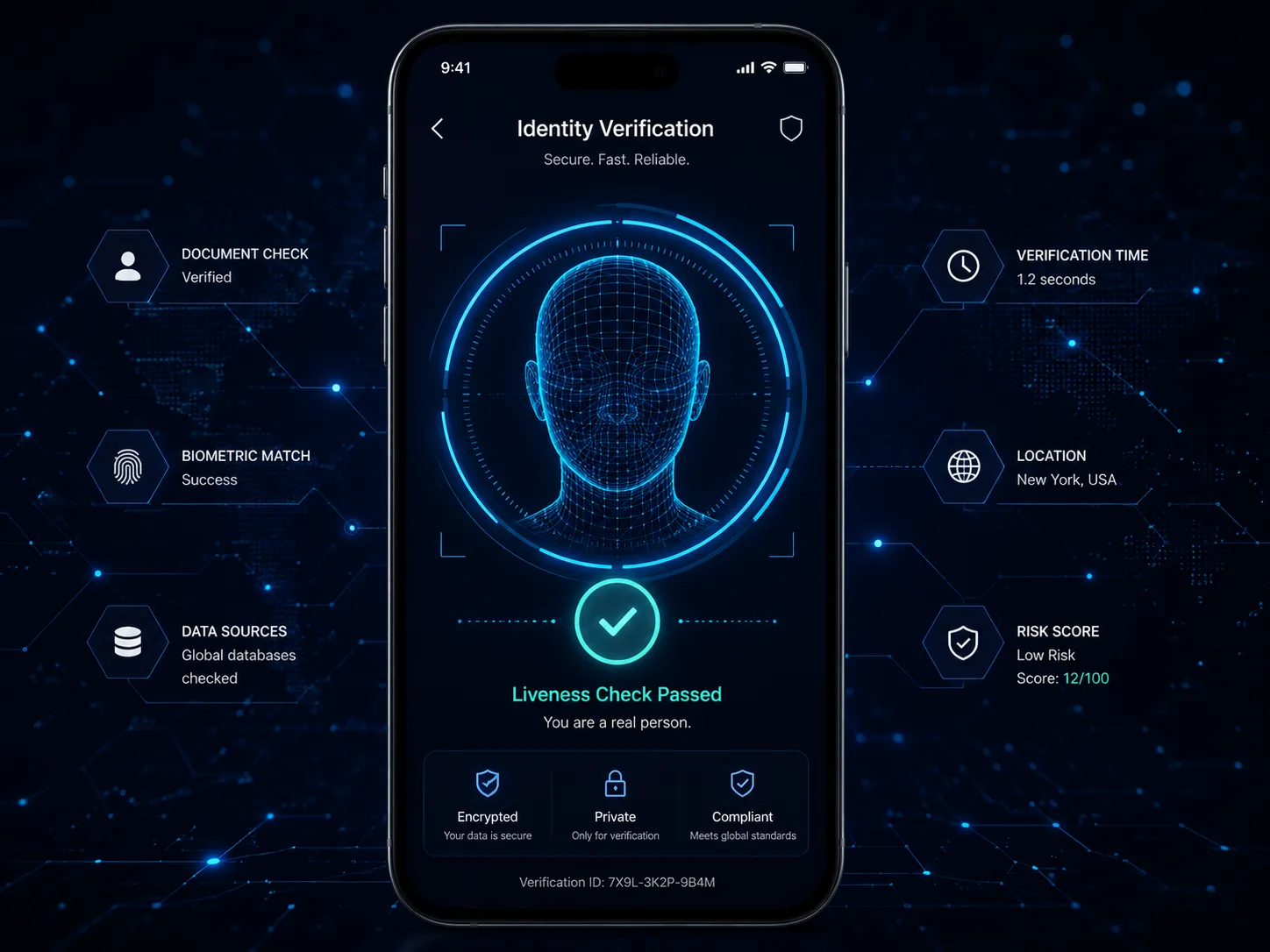
Identity verification technology uses biometric data, specifically facial recognition, to match a live image or selfie against a government-issued document. This step confirms that the person submitting the application is the same person named on the ID, and that the ID itself has not been altered or fabricated.
The Biometric Verification Process
- Step 1 - Document capture: The applicant photographs their ID through the mobile verification app
- Step 2 - Liveness detection: The system runs an anti-spoofing check to confirm a live person, not a photo or video
- Step 3 - Facial match: The applicant's face is compared against the ID photo using high-precision facial recognition
- Step 4 - Data extraction: Name, date of birth, and ID number are parsed and cross-checked against public records
- Step 5 - Result delivery: A verified identity confirmation is returned in real time
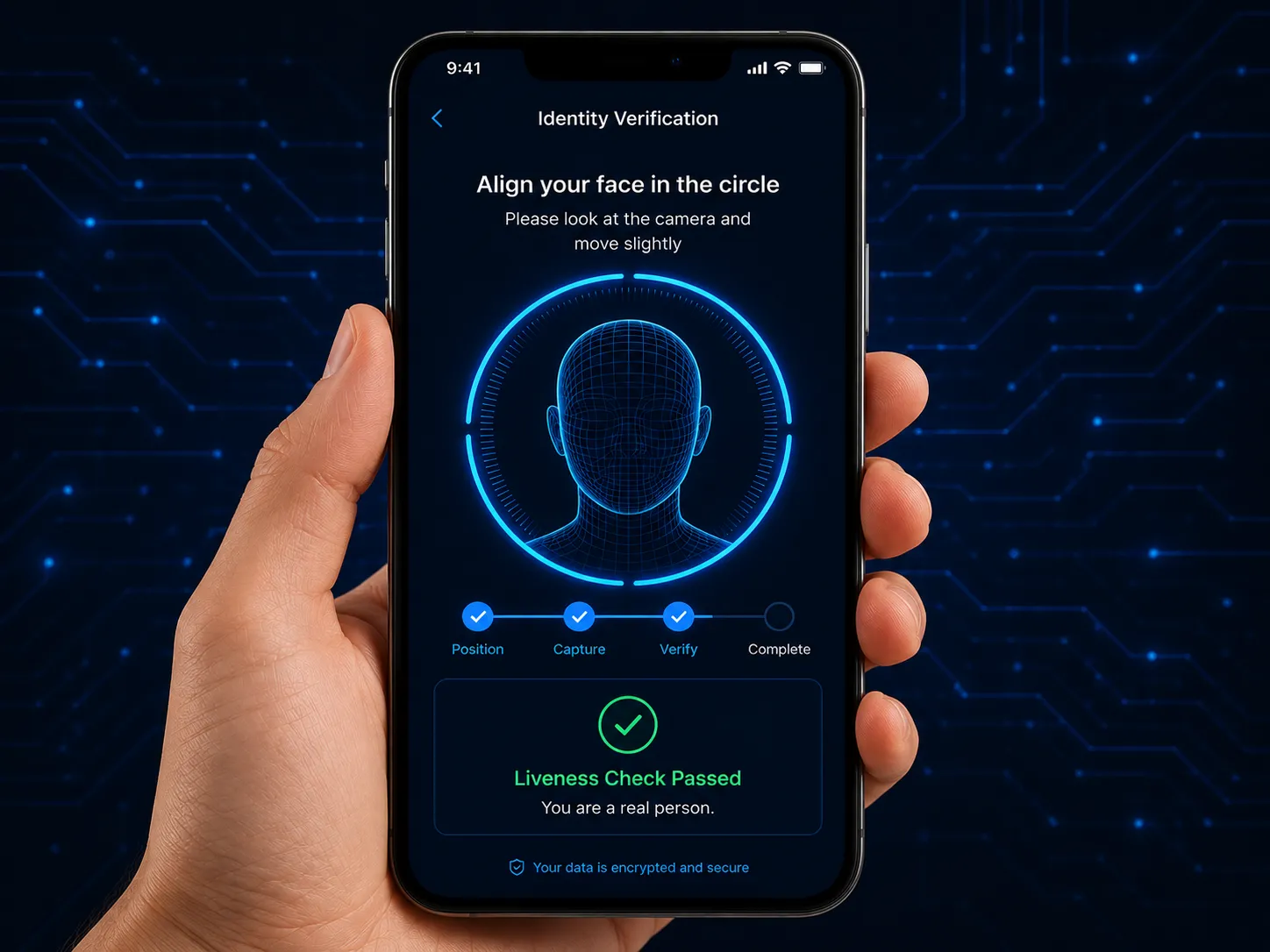
VEVR's facial recognition verification runs this entire sequence in seconds. The platform integrates liveness detection and real-time law enforcement data feeds, which means results reflect current record status, not cached data that may be months old.
One practical use case: a logistics company hiring 200 drivers quarterly used to spend 12 days per cohort on manual ID checks. After switching to an automated hiring platform with biometric verification, processing time dropped to under 48 hours while compliance documentation improved.
What Makes a Background Check Service Genuinely Fast and Reliable?
Speed claims are common in background screening. The practical measure is not just how quickly a report is generated, but how current and accurate the underlying data is. An instant result from a stale database is not a reliable check.
A fastest background check service earns that label when it combines three things: real-time data integration, automated adjudication logic that flags relevant findings without manual review bottlenecks, and a compliance layer that ensures results are legally defensible under the Fair Credit Reporting Act (FCRA).
VEVR's real-time background check infrastructure connects directly to live law enforcement databases rather than relying on periodic batch updates. This matters for roles in sensitive environments where a record created two weeks ago needs to surface before an offer letter goes out.
Affordability is the other variable most HR teams weigh. Affordable background screening does not mean cutting data sources. It means eliminating the administrative overhead of manual coordination, paper-based consent, and follow-up calls, which is where the real cost sits in legacy workflows. Background check automation reduces that overhead substantially. According to SHRM research *(opens in new tab)*, poor hiring decisions cost organizations up to five times the employee's annual salary when factoring in recruitment, onboarding, and productivity losses.
How Does Background Check Automation Fit Into a Hiring Workflow?
Background check automation works best when it integrates directly with your applicant tracking system and triggers at a defined stage in the hiring funnel, typically after a conditional offer. The workflow should not require manual handoffs between recruiter, HR, and screening vendor.
A Practical Automated Screening Sequence
- Conditional offer issued: System automatically sends a consent request to the candidate
- Candidate completes verification: Identity verified via mobile app in under 5 minutes
- Background check initiated: Criminal, employment, and credential checks run simultaneously
- Automated review: Adjudication rules flag findings outside policy thresholds
- Compliance documentation generated: FCRA-compliant adverse action notices prepared if needed
- Hiring manager notified: Clear pass/review/flag status delivered to the dashboard
The VEVR employment verification app supports this entire flow on mobile, which reduces friction for candidates and speeds consent collection. Checks that once required a desktop workflow now complete on a phone in under ten minutes.
One limitation worth noting: automated systems flag records, but final adverse action decisions require human review under FCRA guidelines. Automation accelerates the process and improves consistency, but it does not replace the individualized assessment required by law before a hire is denied on the basis of a background check finding.
Frequently Asked Questions
How long does a candidate background check typically take?
With an AI-powered platform like VEVR, identity verification completes in seconds and a full criminal and employment check returns results in minutes to a few hours. Traditional manual checks take 3 to 10 business days, depending on jurisdiction and the number of data sources involved.
What is the difference between instant criminal record check and a standard check?
An instant criminal record check queries live, digitized court databases and law enforcement records in real time. A standard check may involve manual court searches, which are slower and vary in completeness by jurisdiction. Real-time checks are faster but should still be interpreted alongside FCRA and EEOC compliance requirements.
Is facial recognition verification legally permitted for background checks?
Yes, when implemented with proper consent and in compliance with applicable biometric privacy laws such as Illinois BIPA and GDPR. Candidates must provide explicit consent before any biometric data is captured or processed. VEVR's platform is designed to meet GDPR and CCPA requirements with documented audit trails.
What does affordable background screening include?
Affordable background screening covers the core data checks required for your industry, identity verification, criminal history, and employment confirmation, without charging separately for each sub-check or requiring manual coordination fees. Automation removes the labor cost that inflates traditional screening budgets.
Can a mobile verification app handle the full pre-employment screening process?
Yes. VEVR's mobile-first platform handles identity capture, consent collection, facial recognition matching, and full background check initiation from a mobile device. This reduces turnaround time significantly compared to desktop-only or paper-based workflows.
Key Takeaways
A well-structured candidate background check combines biometric identity verification, real-time criminal data, and automated compliance documentation. These three elements together produce a check that is fast, legally defensible, and accurate enough to support confident hiring decisions.
The shift from manual to automated workflows is not just a speed improvement. It reduces the cost of bad hires, improves consistency across hiring cohorts, and keeps your organization compliant as FCRA, EEOC, and state-level fair chance laws continue to evolve in 2026.
Ready to see how VEVR's background check automation fits your hiring workflow? Get started with VEVR or download the app on iOS or Android to run your first check today.





















Sign in to leave a comment.