

It's 6:45 a.m. You're already running late, coffee in one hand, keys in the other, and you turn the ignition — nothing. Just a slow click, or worse, dead silence. If you've ever stood in a parking lot staring at your dashboard wondering what just happened, you're not alone. A dead car battery is one of the most common reasons drivers across the U.S. call for roadside help every single day.
The good news? A dead battery is usually one of the easiest roadside problems to fix. In most cases, a trained technician can get you back on the road in 15 to 30 minutes with a simple jump start. In this guide, we'll walk through why batteries die, how battery jump start assistance actually works, what it costs, how to stay safe while you wait, and when it's time to call in professional help instead of trying to handle it yourself.
What Is Battery Jump Start Assistance?
Battery jump start assistance is a roadside service where a technician uses a portable jump-start device or another vehicle's battery to send an electrical charge into your dead battery, giving your engine enough power to start again. Once your car is running, the alternator takes over and keeps charging the battery as you drive.
Most roadside assistance providers can reach you within 30 to 60 minutes, depending on your location and time of day. Technicians arrive with commercial-grade jump boxes, so they don't even need a second car — a real advantage if you're stuck alone in a remote parking lot or on the shoulder of a highway.
How Long Does a Jump Start Take?
A standard jump start typically takes 5 to 10 minutes once the technician arrives on scene. The full roadside visit, including diagnostics and safety checks, usually wraps up in 15 to 30 minutes total.
Why Do Car Batteries Die? Common Causes Explained
Understanding why your battery failed helps you avoid a repeat breakdown. Here are the most frequent culprits our technicians see out on the road:
1. Leaving Lights or Accessories On
Headlights, interior lights, or a phone charger left plugged in overnight can quietly drain a battery by morning. This is by far the most common cause of a car battery breakdown, especially for drivers who park in dim garages where a light left on isn't obvious.
2. Extreme Temperatures
Both scorching summer heat and freezing winter cold are hard on batteries. Cold weather thickens engine oil and slows the chemical reaction inside the battery, while heat accelerates internal corrosion. Northern states see a spike in jump-start calls every January, and southern states see similar spikes in July and August.
3. Battery Age
Most car batteries last 3 to 5 years. If yours is older than that and you're noticing slower cranking, dim headlights, or a clicking sound, it's likely nearing the end of its life.
4. Corroded or Loose Battery Terminals
A buildup of white or bluish corrosion on the terminals can block the flow of electricity, even when the battery itself is healthy. A quick visual check under the hood can often catch this early.
5. A Failing Alternator
If your battery keeps dying even after a jump start or replacement, the alternator — which recharges the battery while you drive — may not be doing its job. This is a case where jump starting only offers temporary relief.
How to Get Roadside Battery Jump Start Assistance
If your car won't start, here's the simplest path forward:
- Stay in a safe spot. If you're on a road or highway shoulder, keep your seatbelt on, turn on hazard lights, and stay inside the vehicle if traffic is close.
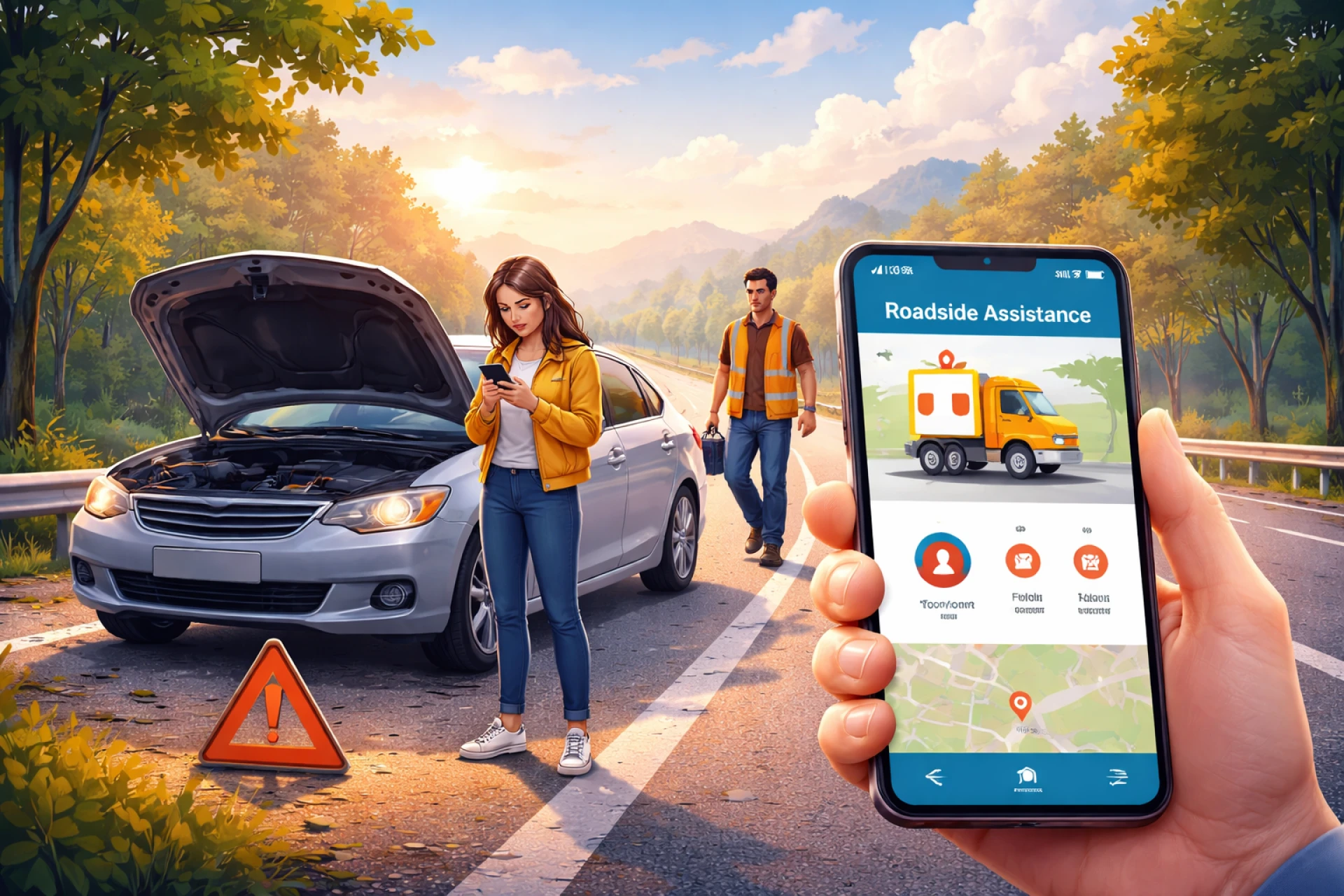
- Call or request service through an app. Most roadside providers let you request help by phone or through a mobile app, which usually gives a more accurate arrival estimate.
- Share your exact location. GPS-based location sharing speeds up dispatch significantly compared to describing cross streets from memory.
- Describe the symptoms. Slow crank, clicking sound, or complete silence all point technicians toward the right tools and diagnosis before they even arrive.
- Wait safely. Stay visible, use hazard lights, and if possible, wait in a nearby well-lit area rather than directly beside traffic.
Once the technician arrives, they'll typically test the battery's voltage first to confirm a jump is the right fix, rather than a symptom of a bigger electrical issue.
What to Expect During a Professional Jump Start
Here's what a typical car jump assistance visit looks like from start to finish:
- Initial inspection: The technician checks battery terminals for corrosion and confirms battery voltage using a multimeter.
- Connecting the cables or jump box: Positive-to-positive, then negative to an unpainted metal ground point — never directly to the dead battery's negative terminal, which can cause sparking.
- Starting the engine: Most vehicles start within a few seconds once properly connected.
- Charging check: The technician will often recommend driving for at least 20-30 minutes afterward, or idling with a load, to let the alternator recharge the battery.
- Battery health test: Many roadside providers offer a free battery test on the spot, so you know whether you need a replacement soon.
This last step matters. A jump start gets you moving again, but it doesn't fix an old or damaged battery — it just buys you time to get it properly checked.
DIY Jump Start vs. Calling a Professional
Jumping your own battery with cables and a friend's car is possible, but it comes with real risks if done incorrectly — including battery acid burns, electrical shorts, or damage to a vehicle's onboard computer, particularly in newer cars with sensitive electronics.
Consider DIY only if:
- You have jumper cables and a willing second vehicle
- You're confident about cable polarity and connection order
- Your car's manual doesn't warn against jump starting due to onboard electronics
Call for professional car battery breakdown assistance if:
- You're alone with no second vehicle nearby
- You're in an unsafe location, like a highway shoulder
- Your battery has visible corrosion or damage
- You're not fully confident in doing it safely
- The car has died more than once recently, suggesting a deeper issue
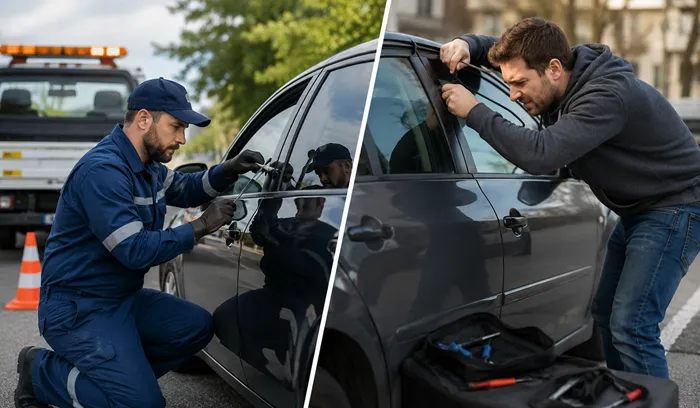
Professional technicians carry the right equipment, know how to protect your vehicle's electronics, and can quickly tell you if the real problem is your battery, alternator, or starter — something that's hard to diagnose on your own in a parking lot.
What Does Battery Jump Start Assistance Cost?
Pricing varies by provider, location, and whether you have a membership plan, but here's a general range seen across the U.S.:
- Pay-per-use roadside jump start: Typically $50–$100
- Roadside assistance membership plans: Many providers include jump starts as part of a monthly or annual plan, often $60–$150 per year, with jump starts included at no extra charge
- Insurance add-ons: Many auto insurers offer roadside assistance as a low-cost add-on, sometimes under $10-15 per month
If you find yourself needing jump starts more than once a year, a membership plan usually pays for itself quickly compared to one-off service calls.
How to Prevent Future Battery Breakdowns
A little routine maintenance goes a long way toward avoiding another cold, dark parking lot moment:
- Get your battery tested every 6-12 months, especially once it's over 3 years old
- Clean terminals regularly to prevent corrosion buildup
- Avoid short trips only — batteries need longer drives to fully recharge
- Turn off accessories before shutting off the engine
- Keep a jump starter pack in your trunk as a backup for emergencies
- Watch for warning signs: slow engine crank, dim dashboard lights, or a battery warning light
Frequently Asked Questions
Q: Can I drive right after a jump start, or do I need to keep the engine running?
Yes, you can drive immediately, and in fact you should. Driving for at least 20-30 minutes allows the alternator to recharge the battery. Turning the engine off too soon after a jump can leave you stranded again.
Q: How do I know if it's the battery or the alternator?
If your car dies again shortly after a jump start, or your dashboard lights flicker while driving, the alternator is likely the culprit rather than the battery itself. A technician can test both in minutes with a multimeter.
Q: Is it safe to jump start a car in the rain?
It's best avoided if possible. If you must, keep connections dry, avoid standing in water, and consider calling a professional who has experience working safely in wet conditions.
Q: How much does emergency roadside battery jump usually cost without a membership? Expect to pay roughly $50 to $100 for a one-time service call, though this can vary based on your location and time of day.
Q: Will a jump start damage my car's computer or electronics?
When done correctly, a jump start is safe for modern vehicles. Risk comes from incorrect cable connections or reversed polarity, which is why many drivers prefer calling a trained technician rather than risking it themselves.
Get Help Fast — You Don't Have to Handle This Alone
A dead battery always seems to happen at the worst possible moment — before work, during a road trip, or late at night in an empty lot. But it doesn't have to mean a long, stressful wait or a risky DIY attempt with borrowed jumper cables.
Reliable battery jump start assistance is available across the U.S., often within 30 to 60 minutes, with trained technicians who carry the right tools to get you back on the road safely. Whether it's a one-time jump or a full battery health check, professional car jump assistance takes the guesswork — and the risk — out of the situation.
Stuck with a dead battery right now? Request fast, professional roadside battery jump start assistance today and get back on the road with confidence.





























Sign in to leave a comment.