
Cataracts are one of the leading causes of vision impairment in India, and Delhi sees thousands of patients seeking surgical correction every year. If you or a loved one has been advised to go for surgery, understanding the cataract operation cost in Delhi is the first step toward making an informed decision. This guide breaks down everything — from price ranges and cost-influencing factors to the latest surgical technologies available in the capital.
What Is the Average Cataract Operation Cost in Delhi?
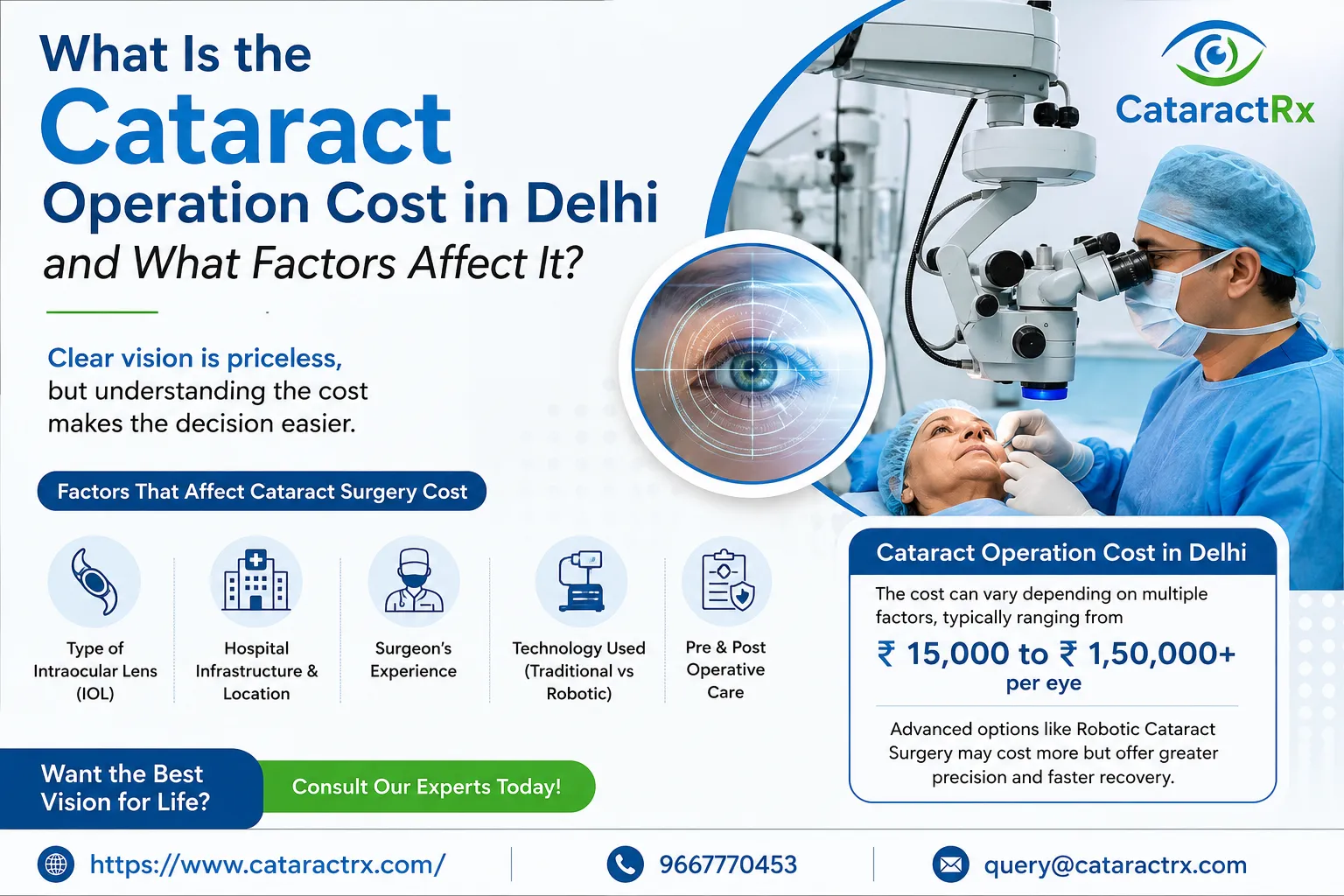
The cataract surgery cost in Delhi typically ranges between ₹15,000 and ₹1,20,000 per eye, depending on the type of procedure, the lens implanted, and the facility chosen. Here is a general breakdown:
- Basic MSICS (Manual Small Incision Cataract Surgery): ₹15,000 – ₹25,000 per eye
- Phacoemulsification (Phaco) with a basic IOL: ₹25,000 – ₹45,000 per eye
- MICS (Micro-Incision Cataract Surgery) with premium IOL: ₹50,000 – ₹80,000 per eye
- Robotic cataract surgery in Delhi (Femtosecond laser-assisted): ₹80,000 – ₹1,20,000 per eye
These figures can vary significantly between government hospitals, private clinics, and super-specialty eye care centers across Delhi NCR.
What Factors Influence the Cost of Cataract Surgery in Delhi?
Several variables determine the final cost of cataract surgery in Delhi NCR. Understanding them helps you compare quotes accurately:
1. Type of Surgical Technique
Traditional phaco surgery is more affordable, while blade-free, laser-assisted, and robotic approaches carry a premium due to the advanced equipment involved.
2. Choice of Intraocular Lens (IOL)
The lens implanted during surgery is one of the biggest cost drivers. Options include:
- Monofocal IOLs (basic, single-distance vision)
- Toric IOLs (for astigmatism correction)
- Multifocal or trifocal IOLs (near, intermediate, and distance vision)
- EDOF (Extended Depth of Focus) lenses
Premium lenses can add ₹20,000 – ₹60,000 per eye to your total cost.
3. Surgeon's Experience and Reputation
Highly experienced ophthalmologists or super-specialists in Delhi may charge higher consultation and surgical fees, but their expertise often translates to better outcomes and fewer complications.
4. Hospital or Clinic Type
Government-run facilities like AIIMS and RML Hospital offer subsidized or near-free cataract surgery. Mid-tier private clinics and premium eye hospitals differ considerably in pricing.
5. Diagnostic and Pre-Operative Tests
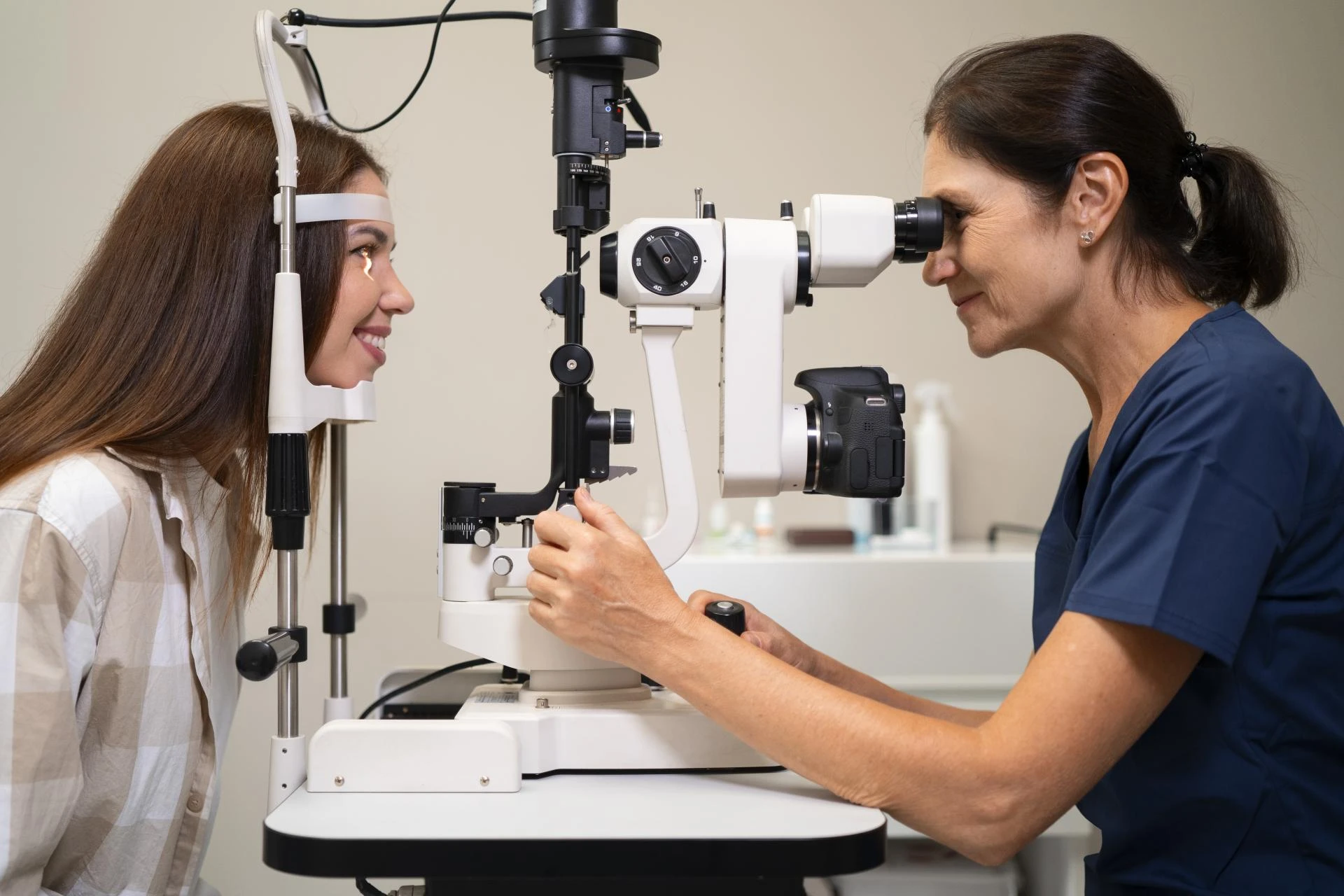
Tests like biometry, corneal topography, OCT, and keratometry add to the total package cost. Some centers bundle these; others charge separately.
6. Post-Operative Care and Medications
Follow-up visits and medicated eye drops prescribed after surgery are often not included in the base quote. Always ask for a complete package breakdown.
Is Robotic Cataract Surgery in Delhi Worth the Higher Cost?
Robotic cataract surgery in Delhi, technically known as Femtosecond Laser-Assisted Cataract Surgery (FLACS), uses a computer-guided laser to perform key steps of the procedure with sub-millimeter precision. Unlike traditional phaco, the laser handles incision creation, lens fragmentation, and capsulotomy — reducing the manual variability involved.
Benefits that justify the additional cost include:
- Greater accuracy in lens positioning
- Reduced ultrasound energy used on the eye
- Lower risk of corneal edema and post-op inflammation
- Particularly beneficial for patients with complex cataracts, high astigmatism, or previous refractive surgery
For patients seeking spectacle independence after surgery, robotic cataract surgery paired with a premium IOL offers the most predictable results. The higher upfront cost is often offset by reduced spectacle dependence long-term.
How Does Cataract Surgery in Delhi NCR Compare Across Hospitals?
Cataract surgery in Delhi NCR is available across a wide spectrum of facilities — from government hospitals offering free or subsidized surgeries under national health schemes, to premium eye hospitals equipped with the latest laser platforms.
Key considerations when choosing a center in Delhi NCR:
- Accreditation: Look for NABH-accredited hospitals for standardized care
- Technology available: Ensure they have Femtosecond laser platforms if you want robotic surgery
- IOL options: A wider lens portfolio gives you better visual outcome choices
- Transparency in pricing: Reputable centers provide itemized cost estimates upfront
- Patient reviews: Real patient testimonials provide insight into surgical outcomes and post-op care
Regions like South Delhi, West Delhi, and Gurgaon (part of NCR) host several reputable eye hospitals offering competitive pricing without compromising on quality.
Does Health Insurance Cover Cataract Surgery Costs in Delhi?
Yes, most health insurance policies in India cover cataract surgery in Delhi, but with conditions. Standard phacoemulsification with a basic monofocal IOL is typically reimbursed under cashless or indemnity plans. However, the cost difference for premium lenses (toric, multifocal) or laser-assisted surgery is usually borne by the patient as it is considered an upgrade.
Key points to check with your insurer:
- Sub-limits applicable on cataract surgery (often ₹30,000 – ₹40,000 per eye)
- Waiting period clauses (usually 1–2 years for pre-existing conditions)
- Whether the hospital is on the insurer's network list
- Cashless vs. reimbursement facility availability
Government schemes like Ayushman Bharat (PM-JAY) also cover cataract surgeries for eligible beneficiaries at empanelled hospitals in Delhi.
When Should You Not Delay Cataract Surgery?
Many patients postpone surgery due to cost concerns or fear, but delay can worsen outcomes. You should consult a specialist promptly if you experience:
- Blurring or dimming of vision affecting daily activities
- Increased glare or halos around lights, especially while driving at night
- Frequent changes in spectacle prescription
- Double vision in one eye
- Difficulty reading, watching TV, or recognizing faces
Mature or hypermature cataracts are harder to operate on and carry a higher risk of complications. Early intervention typically means a faster recovery, better visual outcomes, and often a simpler surgical procedure.
Book Your Cataract Consultation in Delhi Today
If you are looking for expert cataract surgery in Delhi with transparent pricing, advanced technology, and compassionate care, reach out to CataractRx today.
CataractRx offers comprehensive cataract evaluation, a full range of IOL options, and access to the latest laser-assisted surgical techniques — all under one roof.
🌐 Website: www.cataractrx.com
📞 Call / WhatsApp: 9667770453
📧 Email: [email protected]
Frequently Asked Questions (FAQs)
Q1. What is the minimum cost of cataract surgery in Delhi?
The minimum cost of cataract surgery in Delhi starts at approximately ₹15,000 per eye for basic manual small-incision surgery (MSICS) at private clinics. Government hospitals like AIIMS may offer the procedure at little to no cost for eligible patients under national health schemes.
Q2. How much does robotic cataract surgery cost in Delhi?
Robotic cataract surgery in Delhi (Femtosecond Laser-Assisted Cataract Surgery) typically costs between ₹80,000 and ₹1,20,000 per eye. The cost varies based on the IOL selected, the hospital, and the surgeon's fees. It is more expensive than traditional phaco but offers superior precision and outcomes.
Q3. Is cataract surgery covered by insurance in Delhi?
Yes, most health insurance plans in India cover cataract surgery in Delhi. Standard phaco with a monofocal IOL is generally reimbursed. Premium lens upgrades (toric, multifocal) and laser-assisted techniques may involve out-of-pocket costs. Always confirm sub-limits and network hospital lists with your insurer before surgery.
Q4. How long does cataract surgery take and what is the recovery time?
Cataract surgery typically takes 15 to 30 minutes per eye. Most patients experience significant vision improvement within 24 to 48 hours. Full recovery, including stabilization of vision, usually takes 4 to 6 weeks. Strenuous activities and eye rubbing should be avoided during recovery.
Q5. Which is the best type of lens for cataract surgery in Delhi?
The best lens depends on your lifestyle and visual needs. Monofocal IOLs correct distance vision but require reading glasses. Toric IOLs correct astigmatism. Multifocal and trifocal IOLs offer freedom from glasses for most distances. An experienced ophthalmologist will recommend the most suitable option after a thorough eye evaluation.
Q6. Can both eyes be operated on at the same time?
In standard practice, both eyes are not operated on simultaneously. The first eye is done, recovery is monitored for a few days to a week, and then the second eye is scheduled. This approach minimizes risk and allows the surgeon to fine-tune lens power for the second eye based on the first eye's outcome

























Sign in to leave a comment.