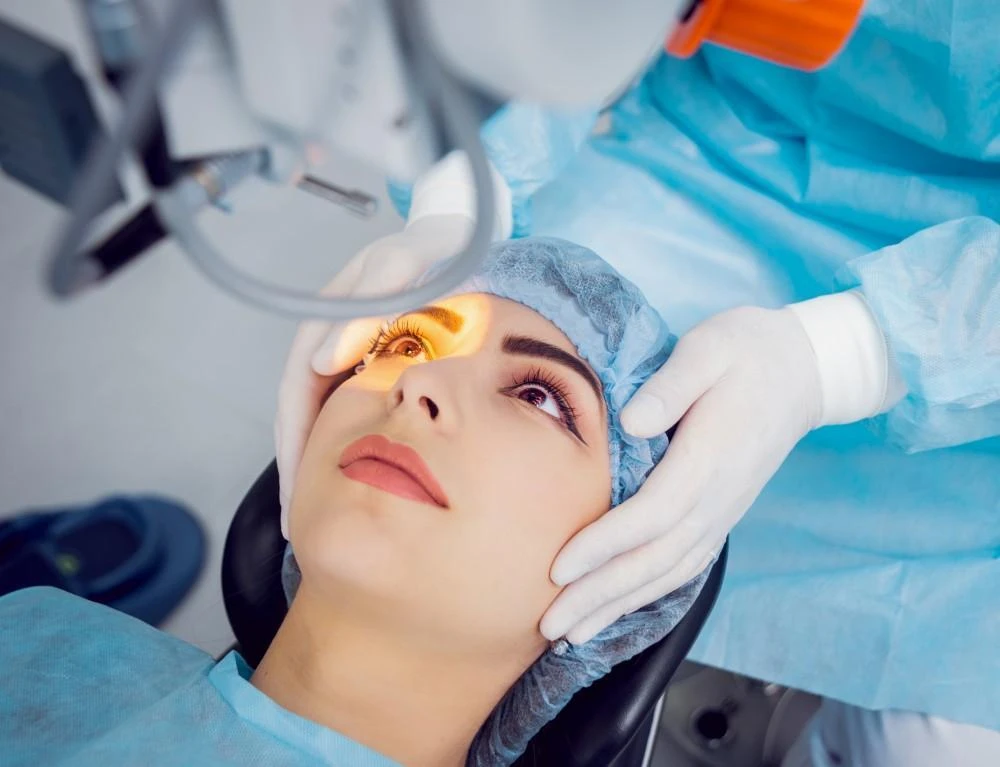
What Is Cataract Surgery?
Cataracts occur when the eye’s lens becomes cloudy, impairing vision by blocking light from reaching the retina. Cataract surgery removes this opaque lens and replaces it with a transparent intraocular lens (IOL), effectively clearing your vision. It’s the only effective cure for cataracts — a condition that blurs vision and can lead to blindness if untreated.
Common Methods of the surgery:
- Phacoemulsification — Ultrasonic probe breaks up and removes the lens via a tiny incision. It’s the most common and fastest method.
- Manual Small Incision Cataract Surgery (MSICS) — Uses a self-sealing larger incision, widely used in developing regions due to its efficacy and cost-effectiveness.
- Laser-Assisted Surgery — Femtosecond lasers make precise, bladeless incisions and fragment the lens with high accuracy.
- Intracapsular/Extracapsular Extraction (ICCE/ECCE) — Less common; requires larger incisions and sometimes stitches.
Benefits of Cataract Surgery
- Sharper vision and vivid colours: Significantly improves visual clarity — 90–98% of patients achieve vision as good as 20/40 or better; Colours become more vivid and contrast perception is enhanced — no more dulled, faded sight.
- Greater independence: Enables safer routine tasks: driving, reading, cooking — bringing back joy in everyday life; Re-energizes social and recreational participation — patients often feel more active and happier.
- Improved safety: Lower risk of falls and accidents; Better night vision with reduced glare and halo helps prevent driving accidents.
- Quick outpatient procedure: Surgery typically takes 15–30 minutes per eye; most go home same.
- Long-lasting results: IOLs last lifetime; cataracts don’t return.
Potential Risks & Recovery
- General risks: Infection, swelling, bleeding, lens dislocation, retinal detachment, glaucoma, and potential vision loss — a doctor will advise based on individual health.
- Posterior Capsule Opacification (PCO): Clouding of the lens capsule occurs in up to 50% of cases (less with acrylic IOLs). Easily treated with a quick YAG laser.
Recovery phase:
- Expect itching and mild discomfort.
- Avoid soap, water, rubbing, heavy lifting, and strenuous activities for a few weeks.
- Eye drops, shields, and follow-ups are vital for smooth healing.
Cataract surgery in 2025 is more than restoring sight — it’s about enhancing quality of life. With evolving IOLs, AI-guided planning, robotic precision, smart post-op care, and green practices, it’s a procedure tailored for vision, safety, and wellbeing.
Where to do Cataract Surgery in Kolkata:
If you’re considering cataract surgery, talk to your ophthalmologist about the latest IOL options. When it comes to cataract surgery in Kolkata, Renuka Eye Institute stands out for its expertise, technology, and patient-first approach.
Why Renuka Eye Institute Leads Cataract Care in Kolkata:
- Cutting-Edge Equipment & Premium IOLs
- Top Phaco Specialists
- High-Volume, High-Quality Surgeries
- Comprehensive & Affordable Packages
- Patient-Centric Experience
- Multiple branches around Kolkata
Renuka Eye Institute isn’t just a high-volume center; it’s a patient-focused institute that prioritizes comfort, clarity, and care. With a perfect blend of expertise, tech, affordability, and premium lens options, it’s one of the best places for cataract surgery in Kolkata.



























Sign in to leave a comment.