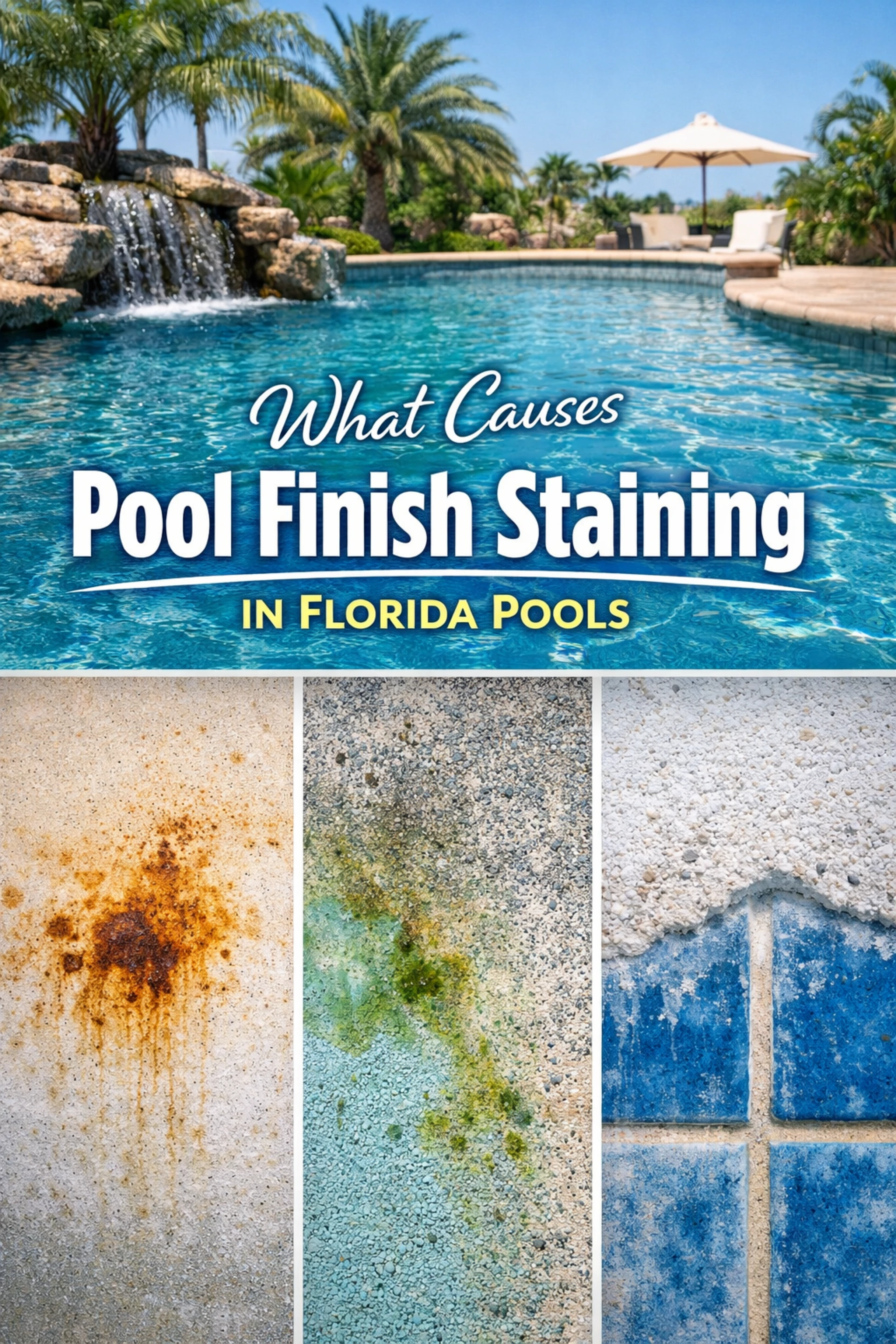
Pool finish staining is one of the most common concerns for pool owners in Florida. Bright sunshine, mineral-heavy water, frequent chemical use, and year-round swimming all take a toll on pool surfaces. Even well-maintained pools can develop stains that dull their appearance and signal deeper issues beneath the surface.
Understanding what causes pool finish staining is the first step toward preventing damage, extending the life of your pool, and knowing when professional help is needed.
1. Mineral Deposits in Florida Water
Florida’s water supply often contains high levels of minerals such as iron, copper, and calcium. When these minerals oxidize, they can bond to the pool surface and create stubborn stains.
- Iron stains usually appear as brown or rust-colored marks
- Copper stains often look green or teal
- Calcium scale leaves behind white or gray chalky residue
Over time, mineral buildup embeds itself into plaster or aggregate finishes, making stains difficult to remove without professional resurfacing.
2. Imbalanced Pool Chemistry
Improper water chemistry is a leading cause of pool finish staining. When pH, alkalinity, or sanitizer levels are consistently off balance, the pool surface becomes vulnerable to discoloration.
Low pH levels can etch the surface, opening microscopic pores where stains can settle. High calcium hardness encourages scaling, while excessive chlorine can bleach some finishes unevenly. In Florida’s warm climate, chemical fluctuations happen quickly, especially during summer months.
3. Organic Matter and Algae Growth
Leaves, pollen, dirt, and debris are unavoidable in outdoor pools. When organic material sinks to the bottom and sits too long, it can cause organic staining.
Algae growth is another common culprit. Even after algae is killed, pigments can remain embedded in the pool finish, leaving green, black, or yellow discoloration behind. These stains often reappear if the surface has become porous or worn.
4. Aging and Worn Pool Finishes
As pool finishes age, they naturally lose their smooth, sealed surface. Small cracks, etching, and rough spots allow contaminants to penetrate more easily.
Older plaster pools are especially prone to staining because the surface becomes more absorbent over time. Once stains seep into deteriorated finishes, routine cleaning is no longer effective. This is often a sign that resurfacing or renovation is needed rather than continued chemical treatments.
5. Metal Components and Pool Equipment
Metal fixtures such as ladders, handrails, screws, and light housings can corrode over time. When metal oxidizes, it releases particles into the water that settle on the pool surface and create localized stains.
Even heaters and pumps can introduce metals into the pool if internal components begin to break down. Without proper filtration and water balance, these metals accumulate and stain the finish.
6. Improper Chemical Application
Pouring chemicals directly onto pool surfaces or failing to dilute them properly can cause immediate staining. Granular chlorine, shock treatments, and algaecides can bleach or discolor finishes when they settle before dissolving.
Chemical misuse is especially damaging to darker or textured finishes, where uneven exposure becomes more visible. Over time, repeated mistakes can permanently alter the color and texture of the pool surface.
7. Hard Water Scale Buildup
High evaporation rates in Florida cause calcium levels to concentrate quickly. When calcium hardness becomes excessive, scale forms on pool walls and floors.
Scale not only looks unattractive but also traps dirt and metals, accelerating staining. Once scale hardens, it becomes difficult to remove without specialized equipment or resurfacing.
8. Environmental Factors Unique to Florida
Florida pools face constant exposure to intense UV rays, heavy rain, salt air near coastal areas, and frequent temperature changes. These environmental factors weaken finishes faster than in cooler climates.
Rainwater can introduce contaminants, while sun exposure accelerates chemical reactions that lead to staining. Without proactive maintenance, Florida pools often show signs of surface discoloration earlier than expected.
When Stains Signal the Need for Renovation
Not all stains are purely cosmetic. Persistent discoloration may indicate deeper surface deterioration that cleaning alone cannot fix. If stains return quickly after treatment, feel rough to the touch, or appear alongside cracking or peeling, resurfacing may be the most effective solution.
Professional pool renovation restores the surface, seals out contaminants, and improves water quality and appearance long term.
Homeowners seeking pool repairs in Riverview Florida often discover that addressing finish staining early helps prevent more costly structural damage later.
Trusting the Right Professionals
Choosing experienced professionals ensures stains are properly diagnosed and treated without causing further damage. Companies like Infinite Pool Finishes understand Florida’s water conditions and how to protect pool surfaces against long-term staining and wear.
Final Thoughts
Pool finish staining is rarely caused by a single issue. It is usually the result of minerals, chemistry imbalance, environmental exposure, and surface aging working together over time. Regular maintenance, proper chemical handling, and timely renovation are the keys to keeping Florida pools looking clean and vibrant.
Addressing staining early not only restores beauty but also extends the life of your pool investment.
























Sign in to leave a comment.