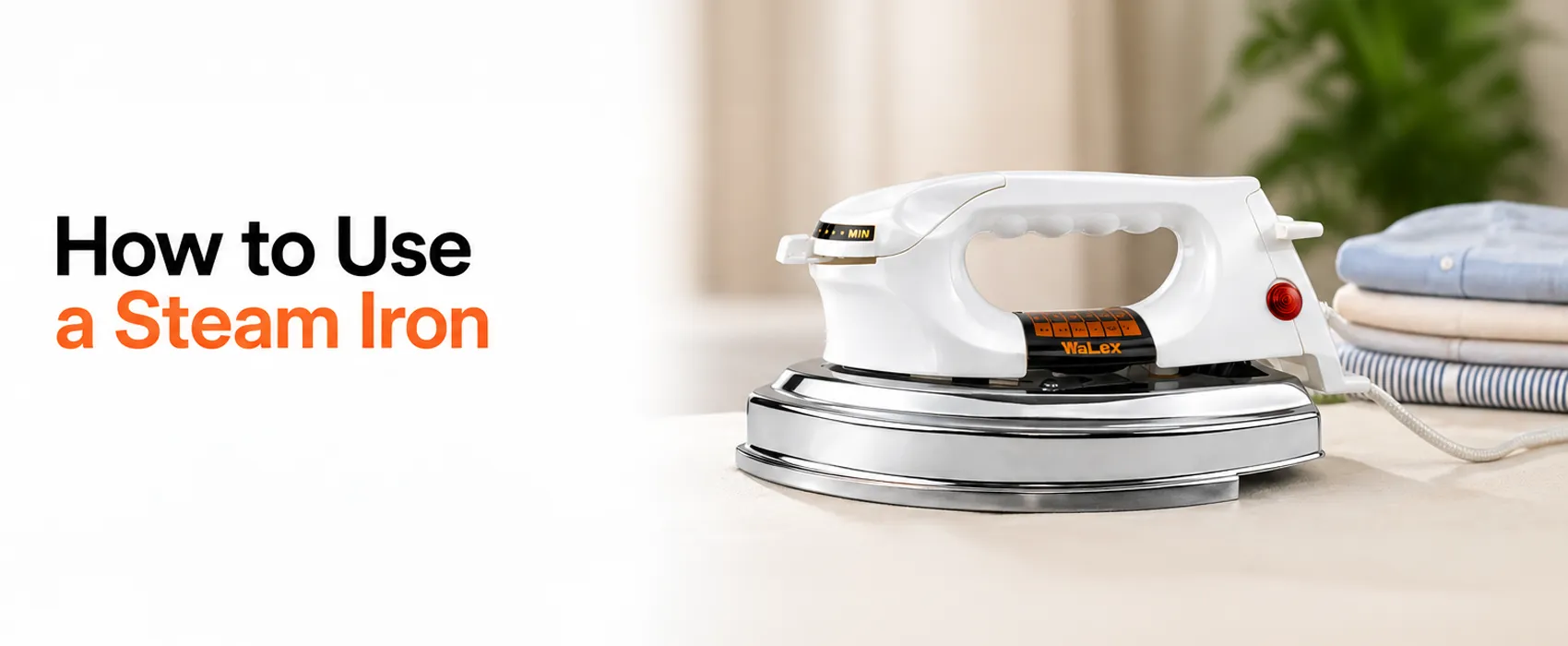

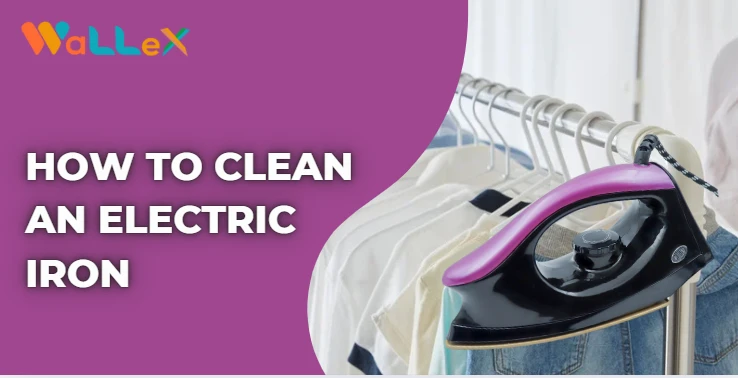
A steam iron is one of the most useful home appliances for keeping clothes wrinkle-free, neat, and presentable. Whether you are ironing office wear, school uniforms, party outfits, or household fabrics, knowing the correct way how to use steam iron for clothes can make the process faster and more effective.
Unlike traditional dry irons, steam irons combine heat and moisture to soften fabric fibers and remove wrinkles more easily. They are suitable for a wide variety of fabrics and offer better results with less effort.
If you are searching for steam iron how to use, this guide explains everything from setup to maintenance so you can use your steam iron safely and efficiently.
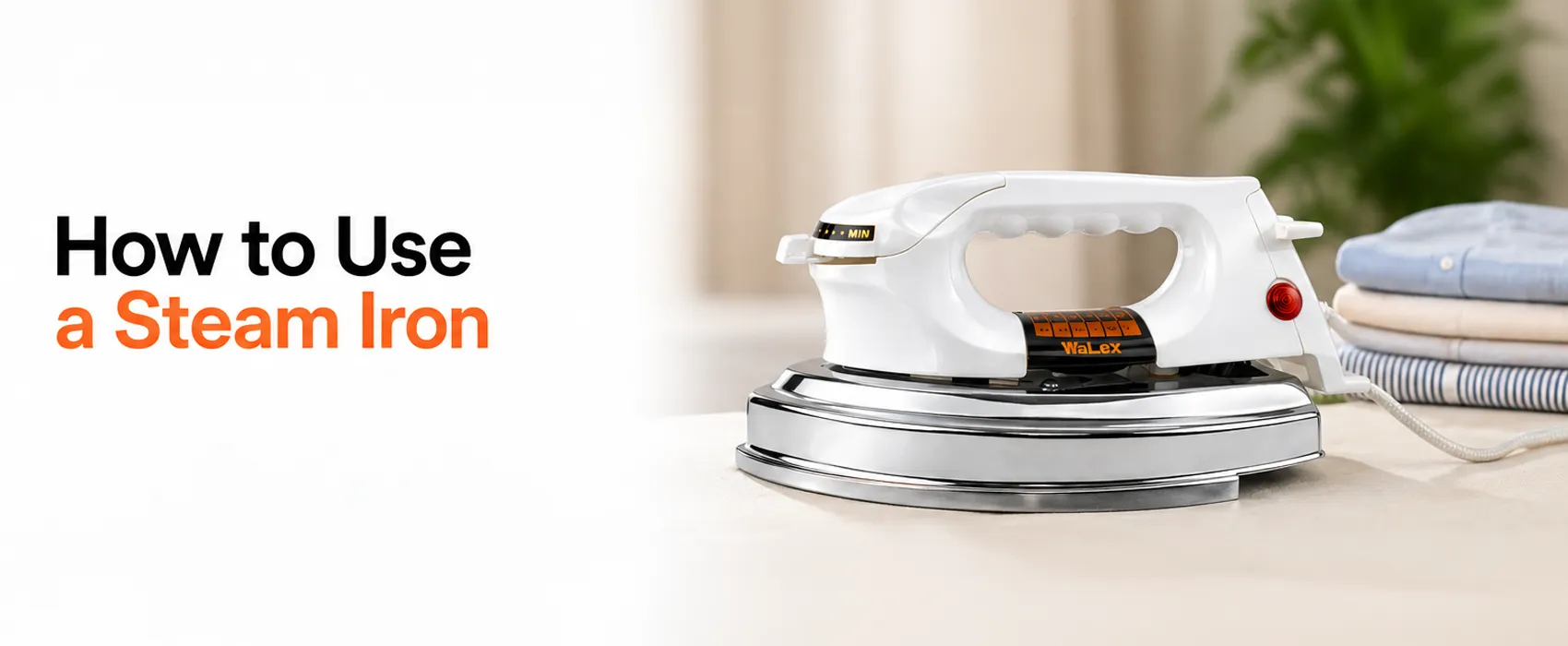
What Is a Steam Iron?
A steam iron is an electric ironing device equipped with a water tank. When heated, the water converts into steam and is released through tiny holes on the soleplate.
The steam penetrates the fabric, relaxing fibers and making wrinkles easier to flatten.
Steam irons are commonly used for:
- Shirts
- Trousers
- Sarees
- Dresses
- Bedsheets
- Curtains
- Jackets
- School uniforms
Steam ironing is generally quicker and more effective than dry ironing, especially on stubborn creases.
Benefits of Using a Steam Iron
A steam iron offers several advantages for everyday clothing care.
Faster Wrinkle Removal
Steam softens fabric fibers quickly, making wrinkles disappear with fewer strokes.
Better for Thick Fabrics
Steam works especially well on heavy materials such as:
- Cotton
- Linen
- Denim
- Wool blends
Safe for Multiple Fabrics
With adjustable heat settings, steam irons can be used on delicate and sturdy fabrics alike.
Professional Finish
Steam irons create crisp collars, smooth sleeves, and wrinkle-free garments.
Multipurpose Use
Many models also allow vertical steaming for hanging clothes and curtains.
Parts of a Steam Iron
Understanding the parts of your steam iron helps you use it properly.
Water Tank
Stores water for steam generation.
Soleplate
The heated flat base that glides over clothes.
Temperature Dial
Controls heat levels for different fabrics.
Steam Control
Adjusts the amount of steam released.
Spray Button
Sprays water onto fabric for stubborn wrinkles.
Steam Burst Button
Releases an extra burst of steam.
Indicator Light
Shows when the iron is heating or ready.
How to Use a Steam Iron Step by Step
Follow these simple instructions for effective ironing.
Step 1: Check Fabric Care Labels
Before ironing, read garment labels.
Common heat settings:
- Low: Silk, polyester, nylon
- Medium: Wool, rayon
- High: Cotton, linen
Using the wrong temperature can damage clothes.
Step 2: Fill the Water Tank
Before plugging in:
- Open water inlet
- Fill tank with clean water
- Do not exceed maximum line
Some steam irons perform better with distilled water in areas with hard water.
Step 3: Plug In the Iron
Place the steam iron upright on a flat surface.
Plug it into a power source.
Allow it to heat.
Step 4: Set the Correct Temperature
Turn the temperature dial according to fabric type.
Typical settings:
- Low for delicate fabrics
- Medium for blended fabrics
- High for thick fabrics
Wait until the iron reaches selected temperature.
Step 5: Activate Steam Function
Once heated:
- Turn on steam mode
- Select steam intensity
Steam usually activates only after the correct temperature is reached.
Step 6: Prepare Clothes
Lay garment flat on an ironing board.
Smooth fabric with your hands before ironing.
Button shirts and align seams properly.
Step 7: Start Ironing
Move iron slowly over fabric.
Use smooth, even strokes.
Best practices:
- Iron from top to bottom
- Use light pressure
- Keep iron moving
Avoid leaving iron in one place too long.
Step 8: Use Steam Burst for Tough Wrinkles
For deep wrinkles:
- Press steam burst button
- Focus on stubborn areas
Helpful for:
- Collars
- Cuffs
- Pleats
- Trouser lines
Step 9: Use Spray Feature if Needed
For extremely wrinkled clothes:
- Press spray button lightly
This adds moisture to help loosen creases.
Especially useful on:
- Cotton shirts
- Linen garments
- Jeans
Step 10: Iron Delicate Clothes Inside Out
For delicate or dark-colored garments:
- Turn inside out before ironing
This helps avoid:
- Shine marks
- Surface damage
- Fading
Useful for:
- Silk
- Printed fabrics
- Black clothing
Step 11: Use Vertical Steam (Optional)
Many steam irons support vertical steaming.
To use:
- Hang garment on hanger
- Hold iron upright
- Press steam button
Ideal for:
- Blazers
- Dresses
- Curtains
- Coats
This reduces the need for an ironing board.
Step 12: Switch Off and Unplug
After use:
- Turn off steam
- Unplug iron
Let it cool fully.
Never leave a plugged-in iron unattended.
Step 13: Empty Remaining Water
After cooling:
- Drain leftover water from tank
This helps prevent:
- Mineral buildup
- Leakage
- Internal damage
Tips for Better Steam Ironing
A few habits can improve your ironing results.
Sort Clothes by Fabric Type
Iron in this order:
- Delicates
- Medium fabrics
- Thick fabrics
This reduces temperature switching.
Keep Clothes Slightly Damp
Slightly damp fabrics are easier to iron.
Use a Clean Ironing Board Cover
A clean surface prevents stains.
Stretch Fabric Slightly
Pull fabric gently for smoother results.
Adjust Steam Based on Fabric
Heavy fabrics need more steam.
Delicate fabrics need less.
Common Mistakes to Avoid
Avoid these common errors.
Wrong Temperature Selection
Too much heat can burn or melt fabrics.
Overfilling Water Tank
Can cause leakage.
Leaving Water in Tank
Encourages mineral buildup.
Ironing Dirty Clothes
Heat can set stains permanently.
Not Cleaning the Iron
Dirty soleplates may stain garments.
Best Fabrics for Steam Ironing
Steam irons work very well on:
Cotton
Ideal for:
- Shirts
- Kurtas
- Bedsheets
Linen
Excellent for removing deep creases.
Wool
Moderate steam refreshes wool safely.
Polyester Blends
Smooths wrinkles with low-medium heat.
Denim
Steam softens thick material efficiently.
Fabrics Requiring Caution
Certain fabrics need extra care.
Silk
Use low temperature.
Velvet
Avoid direct pressure.
Leather
Do not iron directly.
Sensitive Synthetics
Use minimal heat.
Steam Iron Safety Tips
Steam irons involve heat and hot moisture.
Follow safety precautions:
- Keep away from children
- Never touch hot soleplate
- Inspect cord regularly
- Unplug after use
- Avoid wet hands while operating
- Store after complete cooling
Safety should always come first.
How to Maintain a Steam Iron
Proper maintenance improves performance and lifespan.
Clean Soleplate
Wipe after cooling with soft cloth.
Descale Regularly
Mineral buildup can block steam holes.
Descale periodically.
Empty Water Tank After Use
Prevents residue buildup.
Store Upright
Protects soleplate.
Inspect Steam Holes
Keep holes free from blockage.
Why Steam Iron Is Better Than Dry Iron
Steam irons offer several improvements over dry irons.
Faster Performance
Steam removes wrinkles more quickly.
Better Results
More effective on thick fabrics.
Reduced Fabric Stress
Moisture softens fibers.
Greater Versatility
Supports vertical steaming.
Professional Appearance
Produces cleaner finish.
Conclusion
Understanding steam iron how to use can make your ironing routine faster, safer, and more efficient. A steam iron is an excellent household appliance for maintaining wrinkle-free clothes, crisp fabrics, and a polished appearance.
By checking fabric labels, filling the water tank correctly, selecting the right temperature, using steam properly, and maintaining the appliance, you can get professional-quality results from home.
Whether ironing daily office wear, school uniforms, or special occasion outfits, a steam iron helps simplify clothing care while saving time and effort. With regular use and proper technique, ironing can become an easy and effective part of your routine.






















Sign in to leave a comment.