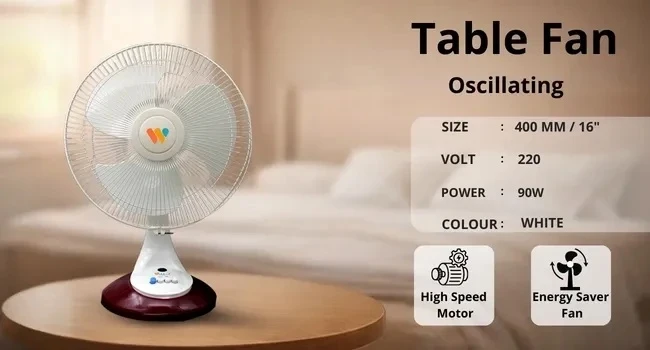

Table fans are among the most convenient and widely used cooling appliances in homes and offices. Compact, portable, and cost-effective, they provide quick relief from heat without consuming excessive electricity. However, many users often ask: what is table fan wattage and how much power does it actually consume?
Understanding table fan wattage is essential for managing energy usage, reducing electricity bills, and choosing the right fan for your needs. In this comprehensive guide, we’ll explore everything you need to know about table fan wattage, including average consumption, factors affecting it, and tips for saving energy.
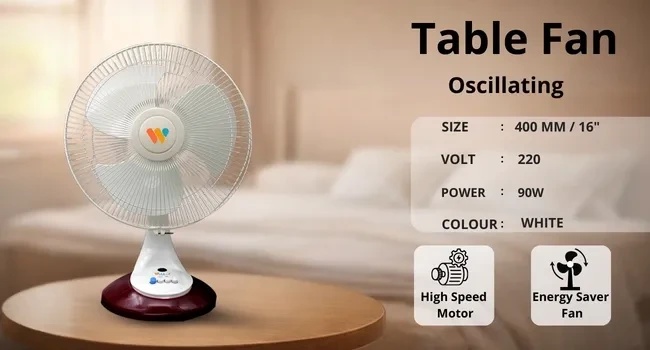
What is Table Fan Wattage?
Table fan wattage refers to the amount of electrical power a table fan uses when operating. It is measured in watts (W), which indicates how much energy the fan consumes per hour.
For example, if a table fan has a wattage rating of 50W, it means it consumes 50 watts of electricity when running at full speed.
In simple terms:
- Higher wattage = more power consumption
- Lower wattage = better energy efficiency
Average Wattage of Table Fans
Table fans are generally designed to be energy-efficient. Their wattage depends on size, motor type, and performance level.
Typical Wattage Range:
- Small table fans: 25–35 watts
- Standard table fans: 35–55 watts
- High-power table fans: 55–75 watts
Most commonly used table fans in households fall within the 40–50 watt range, making them economical for daily use.
How Table Fan Wattage Compares to Other Fans
To better understand table fan efficiency, it helps to compare their wattage with other types of fans:
- Ceiling fan: 60–80 watts
- Pedestal fan: 50–75 watts
- Tower fan: 40–100 watts
- Exhaust fan: 15–40 watts
From this comparison, it’s clear that table fans consume relatively less power while still delivering effective airflow for personal cooling.
How to Calculate Table Fan Power Consumption
You can easily calculate how much electricity your table fan uses with this formula:
Power Consumption (kWh) = (Wattage × Hours Used) ÷ 1000
Example Calculation:
If you use a 45-watt table fan for 8 hours a day:
- Daily consumption = (45 × 8) ÷ 1000 = 0.36 kWh
- Monthly consumption = 0.36 × 30 = 10.8 kWh
If the electricity rate is ₹8 per unit:
- Monthly cost = 10.8 × 8 = ₹86.4
This shows that table fans are extremely cost-effective compared to other cooling appliances.
Factors Affecting Table Fan Wattage
Several factors influence how much power a table fan consumes in real-world usage.
1. Motor Type
The motor is the heart of the fan.
- AC motors: Traditional, slightly higher consumption
- BLDC motors: Modern, energy-efficient, consume less power
BLDC table fans can reduce electricity usage by up to 50%.
2. Fan Speed Settings
Higher speeds require more energy.
- Low speed: Less power consumption
- Medium speed: Balanced usage
- High speed: Maximum wattage consumption
Adjusting speed based on need can help save electricity.
3. Blade Size and Design
Fans with larger blades or poor aerodynamics need more power to operate. Efficient blade design improves airflow while using less energy.
4. Build Quality and Efficiency
High-quality fans are designed to minimize energy loss, ensuring better performance at lower wattage.
5. Usage Duration
The longer the fan runs, the higher the total electricity consumption. Continuous usage, especially during summer, increases energy bills.
Energy-Efficient Table Fans
With rising electricity costs, energy-efficient appliances are becoming more important than ever. Modern table fans are now designed with advanced technologies to reduce power consumption.
Features of Energy-Efficient Table Fans:
- Low wattage motors
- Aerodynamic blades
- Multiple speed settings
- Quiet operation
- Longer lifespan
BLDC Table Fans
BLDC (Brushless Direct Current) fans are the latest innovation.
Advantages:
- Consume 30–50% less power
- Operate quietly
- Work efficiently on inverters
- Provide consistent speed even with voltage fluctuations
Switching to a BLDC table fan can significantly reduce long-term electricity costs.
Table Fan Wattage and Electricity Bills
Even though table fans consume less power individually, their impact on electricity bills depends on usage patterns.
Example Scenario:
- Wattage: 50W
- Usage: 10 hours/day
Daily consumption:
(50 × 10) ÷ 1000 = 0.5 units
Monthly consumption:
0.5 × 30 = 15 units
At ₹8 per unit:
- Monthly cost = ₹120
This is much lower compared to air conditioners or even some ceiling fans, making table fans a budget-friendly cooling option.
Advantages of Low Wattage Table Fans
Choosing a low wattage table fan offers several benefits:
1. Reduced Electricity Bills
Lower power consumption directly translates to cost savings.
2. Eco-Friendly
Using less electricity reduces carbon emissions and environmental impact.
3. Portable and Convenient
Table fans are easy to move and use wherever needed, without consuming much power.
4. Ideal for Small Spaces
Perfect for bedrooms, study tables, and offices where full-room cooling isn’t necessary.
Tips to Reduce Table Fan Power Consumption
If you want to maximize efficiency and minimize energy use, consider these practical tips:
1. Use the Right Speed
Avoid running the fan at maximum speed unless necessary.
2. Turn Off When Not in Use
Even low-wattage devices consume electricity if left running unnecessarily.
3. Maintain the Fan Regularly
Dust and dirt increase resistance, making the motor work harder and consume more power.
4. Choose Energy-Efficient Models
Invest in modern, low-wattage or BLDC table fans for long-term savings.
5. Improve Room Ventilation
Better airflow reduces dependence on fans and lowers overall usage time.
Table Fan vs Air Conditioner: Energy Perspective
One of the biggest advantages of table fans is their low energy consumption compared to air conditioners.
- Table fan: 30–50 watts
- Air conditioner: 1000–2000 watts
This means an AC consumes 20–40 times more electricity than a table fan. While fans don’t cool the air like ACs, they are an excellent low-cost alternative for mild to moderate heat.
Common Misconceptions About Table Fan Wattage
Myth 1: Higher Wattage Means Better Cooling
Wattage indicates power consumption, not necessarily better airflow. Efficiency and design matter more.
Myth 2: Leaving the Fan On Saves Energy
Running a fan continuously wastes electricity. Turning it off when not needed is always better.
Myth 3: All Table Fans Consume the Same Power
Different models vary in wattage depending on motor type, size, and technology.
How to Choose the Right Table Fan Wattage
Selecting the right table fan depends on your needs:
For Personal Use:
- 30–40 watts is sufficient
For Medium Rooms:
- 40–55 watts works well
For High Airflow Needs:
- 55–70 watts may be required
Also consider factors like noise level, design, and energy efficiency rating before making a purchase.
Future Trends in Table Fan Technology
The fan industry is evolving with a focus on energy efficiency and smart features.
Emerging Trends:
- BLDC motors becoming standard
- Smart fans with remote or app control
- Solar-powered fans
- Ultra-low wattage designs
These innovations aim to provide better cooling while minimizing electricity consumption.
Environmental Impact of Table Fan Usage
Using low-wattage appliances like table fans contributes to a greener environment. Reduced electricity consumption means:
- Lower greenhouse gas emissions
- Less strain on power grids
- Sustainable energy usage
Even small changes, like switching to efficient fans, can make a significant difference over time.
Conclusion
Table fan wattage typically ranges between 30 to 75 watts, with most standard models operating around 40–50 watts. This makes them one of the most energy-efficient cooling appliances available today.
Understanding table fan wattage helps you:
- Estimate electricity costs
- Choose the right fan
- Reduce energy consumption
- Make eco-friendly decisions
Whether you’re using a table fan for personal comfort or as a supplement to other cooling systems, it remains a practical and economical choice. By opting for energy-efficient models and using them wisely, you can enjoy effective cooling without worrying about high electricity bills.



























Sign in to leave a comment.