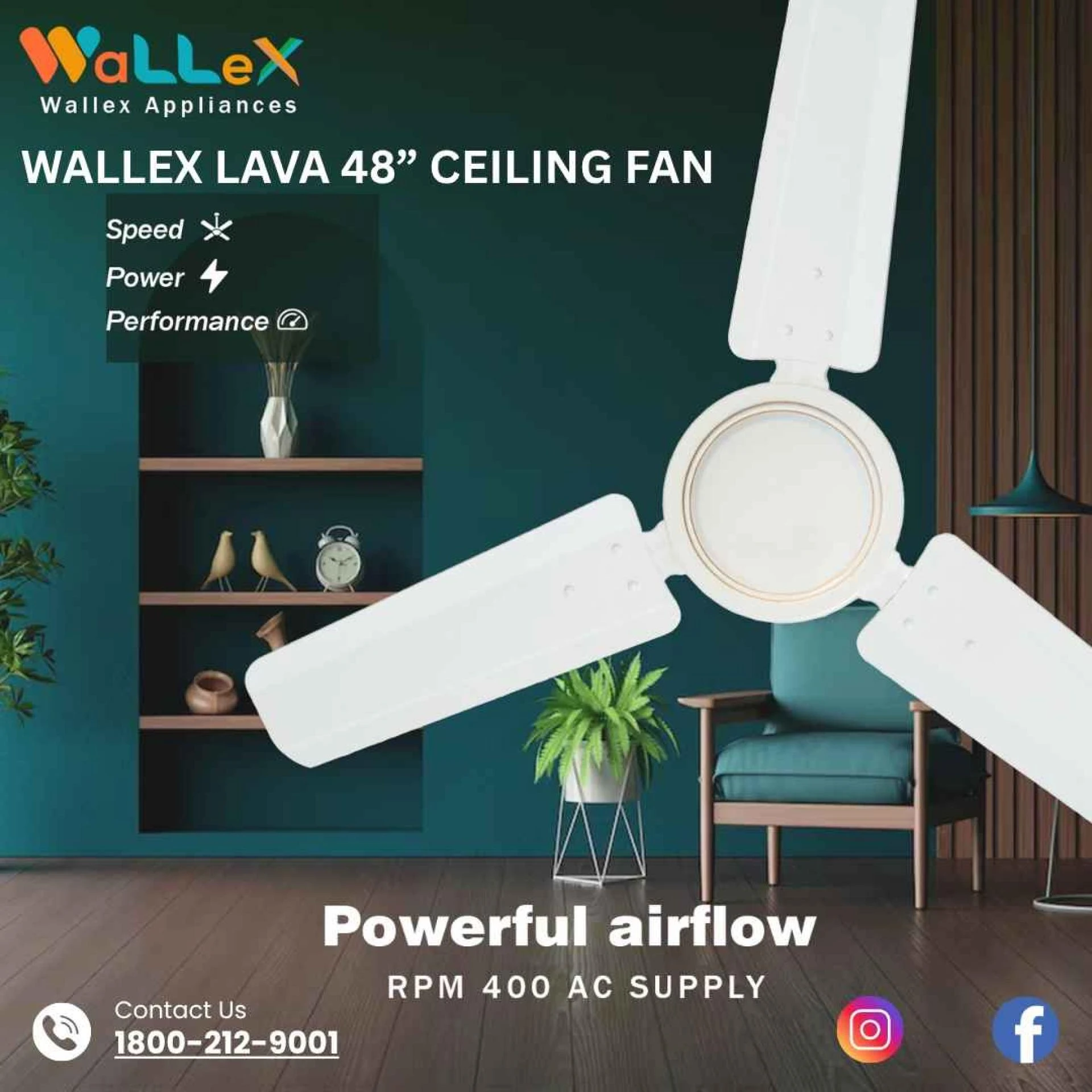

Fans are essential appliances that serve a wide variety of purposes—ranging from maintaining indoor comfort to facilitating ventilation in industrial environments. Though most people associate fans with cooling, their role spans many domains such as drying, exhaust, air circulation, and even aesthetics in modern home design. With numerous types of fans available today, each suited for a specific application or environment, it's worth exploring the diverse range of fans in the market. This article offers a detailed examination of the types of ceiling fans, classified based on usage, design, structure, and location of application.
1. Based on Application
Fans can be broadly categorized based on their application. This approach highlights their intended use and helps differentiate residential, commercial, and industrial-grade fans.
1.1. Residential Fans
These are designed primarily for use in homes, apartments, and small buildings. Their focus is on comfort, quiet operation, and aesthetic integration. They include ceiling fans, table fans, pedestal fans, wall-mounted fans, and exhaust fans.
1.2. Commercial Fans
Fans in commercial settings like offices, restaurants, and retail stores serve dual purposes: maintaining air quality and ensuring comfort for customers and staff. They include ceiling fans with lights, air curtains, and high-volume low-speed (HVLS) fans designed for large interiors.
1.3. Industrial Fans
Industrial fans are built for performance, power, and durability. Used in warehouses, factories, manufacturing plants, and farms, these fans manage heat, humidity, dust, fumes, and ventilation in large spaces. Axial fans, centrifugal blowers, and heavy-duty exhaust fans fall into this category.
2. Based on Design and Airflow Direction
Fans can also be grouped based on how they move air and the direction in which airflow is directed.
2.1. Axial Fans
These fans move air parallel to the fan’s axis. They draw air in from one direction and push it out the other, making them ideal for general air circulation. Axial fans are commonly used in ceiling fans, table fans, and wall-mounted fans. They are efficient for applications requiring large air volumes with low pressure.
2.2. Centrifugal Fans (Blowers)
Centrifugal fans draw air into the center and expel it at a right angle to the intake. They generate higher pressure than axial fans and are used in systems requiring powerful air movement, such as HVAC ducts, air purifiers, and industrial ventilation. Their design is more complex and suited for rigorous air handling tasks.
3. Types of Fans Based on Mounting or Placement
3.1. Ceiling Fans
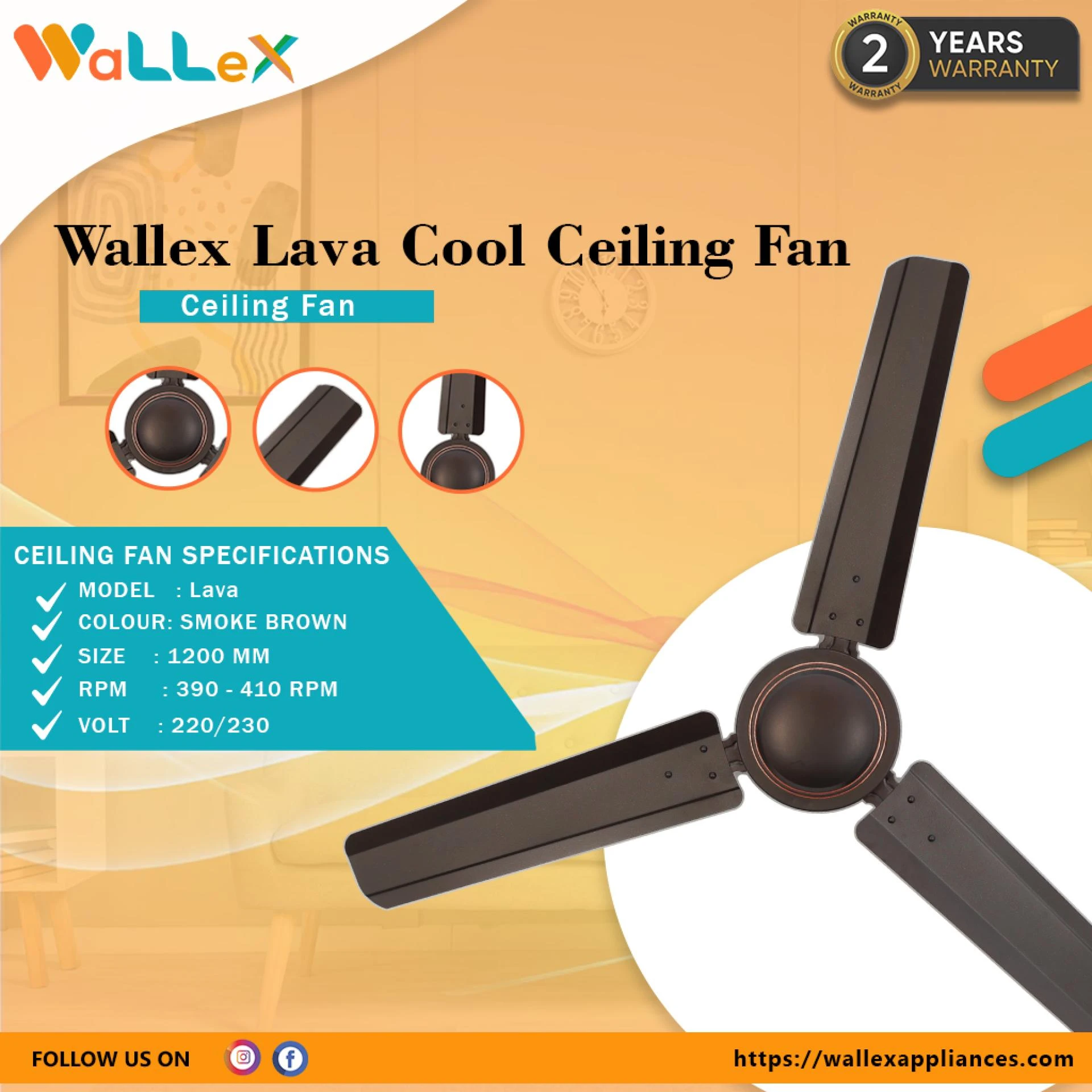
Ceiling fans are perhaps the most popular household fan. Mounted directly to the ceiling, they provide consistent air circulation and can include integrated lighting. Available in various sizes and blade designs, they can be installed in rooms of all sizes, including outdoor patios and high ceilings using downrods.
3.2. Table Fans
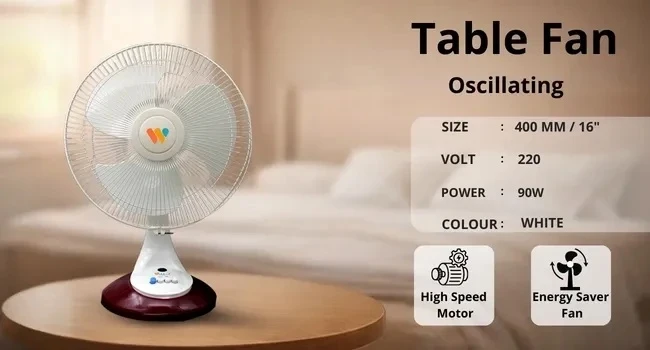
Table fans are compact and portable. Placed on desks, countertops, or shelves, these fans are ideal for personal cooling. They usually oscillate to spread airflow over a wider area and are powered by plug-in cords.
3.3. Pedestal Fans
Pedestal fans are floor-standing fans with adjustable height and oscillating heads. They deliver powerful airflow and are suitable for medium to large-sized rooms. Pedestal fans are preferred in areas where ceiling fan installation isn't possible.
3.4. Wall-Mounted Fans
Mounted on walls, these fans are commonly used in commercial kitchens, garages, or areas where floor or ceiling space is limited. They provide directional airflow and are typically oscillating.
3.5. Floor Fans
Also known as box or drum fans, floor fans are placed on the ground to circulate air at a low level. They are used in workshops, warehouses, and industrial setups. Their wide bases offer stability, and they are capable of moving large volumes of air.
3.6. Exhaust Fans
Exhaust fans remove stale air, humidity, or odors from enclosed spaces like bathrooms, kitchens, or basements. They are essential for improving air quality by pushing indoor air outside, preventing mold and moisture buildup.
3.7. Window Fans
Window fans are installed within a window frame to pull in fresh air or expel indoor air. They offer an energy-efficient alternative to air conditioning and are often reversible, meaning they can both ventilate and draw in air.
4. Specialized Fans
Some fans are engineered for unique or hybrid functionalities that extend beyond typical air movement.
4.1. Bladeless Fans
Popularized by modern technology brands, bladeless fans (also known as air multipliers) use an air loop to project airflow without visible blades. These fans are safer for children and pets and offer quieter operation with sleek designs.
4.2. Tower Fans
Tower fans are tall, vertical units with a slim footprint. They use a cylindrical design to deliver airflow across a wide area and often come with remote controls, timers, and ionizers. Their compact nature makes them suitable for bedrooms and offices.
4.3. Mist Fans
Mist fans combine airflow with fine water mist to cool outdoor or semi-outdoor environments. Commonly used in patios, sporting events, or pool areas, they help reduce ambient temperatures through evaporation.
4.4. Ventilation Fans
Distinct from typical exhaust fans, ventilation fans are larger and used in areas requiring steady air exchange—such as attics, crawlspaces, and greenhouses. They can be solar-powered or connected to automated HVAC systems.
4.5. Inline Duct Fans
These fans are installed within HVAC ductwork to enhance airflow in long or multi-branch systems. They're common in large homes and commercial buildings, ensuring even temperature control and air distribution.
4.6. Air Curtains
Air curtains create an invisible barrier of high-velocity air across an open doorway, separating environments with different temperatures. They're used in malls, hospitals, and cold-storage facilities to minimize energy loss and block dust or insects.
5. Personal and Portable Fans
5.1. USB Fans
Compact and powered via USB ports, these are suitable for workstations, laptops, or personal use. Their portability and low energy consumption make them popular for travel or office environments.
5.2. Neck Fans
Designed to be worn around the neck, these fans are battery-powered and provide hands-free cooling. They're great for outdoor activities, sports, or commuting during hot weather.
5.3. Handheld Fans
Lightweight and battery-operated, handheld fans are ideal for quick cooling on the go. Some models even include built-in water misting features for enhanced comfort.
6. Fans by Blade Count and Material
Fans can also differ by the number and material of blades, affecting both aesthetics and performance.
6.1. Blade Count
- 3-Blade Fans: Common in modern homes; energy-efficient with sleek design.
- 4 or 5-Blade Fans: Offer quieter, slower airflow; suitable for bedrooms and living rooms.
- Multi-Blade Industrial Fans: Often with six or more blades for wider air movement in large spaces.
6.2. Blade Material
- Wooden Blades: Provide a warm, traditional look.
- Metal Blades: Durable and often used in industrial fans.
- Plastic/ABS Blades: Lightweight and weather-resistant, suitable for outdoor use.
- Acrylic Blades: Transparent and modern, often used in designer fans.
7. Fans Based on Power Source
7.1. Electric Fans
These fans run on electricity through direct plug-in or hardwiring. They dominate most residential and commercial fan categories and offer consistent performance.
7.2. Battery-Operated Fans
Ideal for emergencies, travel, or camping, battery-operated fans offer portability and independence from power outlets. Their runtime depends on battery capacity and fan speed.
7.3. Solar-Powered Fans
Increasingly popular in sustainable homes, solar fans operate using solar energy panels. They are often used for attic ventilation, greenhouses, and RVs.
8. Smart Fans and Technological Innovations
As technology evolves, fans have incorporated intelligent features that offer enhanced user experience and energy efficiency.
8.1. Smart Ceiling Fans
Integrated with Wi-Fi, Bluetooth, or smart-home hubs, these fans can be controlled via smartphones, voice commands, or automation routines. Features include scheduling, speed adjustment, and energy monitoring.
8.2. Fans with Sensors
Some advanced models come with humidity, motion, or temperature sensors. These fans adjust speed automatically based on environmental conditions—common in smart bathrooms or automated buildings.
9. Noise-Sensitive Fans
For spaces requiring quiet operation, such as bedrooms or libraries, silent or ultra-quiet fans are preferred. These fans use brushless DC motors, vibration-dampening mounts, and aerodynamic blade designs to reduce noise while maintaining performance.
Conclusion
Fans come in a staggering array of types and configurations, each developed with specific functions, spaces, and user preferences in mind. From ceiling fans that offer stylish indoor air movement to industrial blowers designed for heavy-duty operations, the diversity in fan technology continues to expand. As our understanding of comfort, energy conservation, and design aesthetics evolves, so too does the fan—no longer just a tool for cooling, but a multifunctional device capable of enhancing air quality, automation, and ambiance.
Understanding the different types of fans empowers consumers to choose the right kind of fan for their unique needs, whether it’s for personal comfort, commercial efficiency, or industrial necessity. Whether you seek high-performance airflow in a factory or a stylish addition to your living room, there is a fan designed just for you.






























Sign in to leave a comment.