
The National Healthcareer Association (NHA) Certified Clinical Medical Assistant (CCMA) credential represents a significant milestone for healthcare professionals aiming to validate their comprehensive skills in patient care, administrative tasks, and clinical procedures. The NHA CCMA exam (CCMA) is designed for individuals seeking to demonstrate their proficiency across diverse medical assistant responsibilities, from preparing patients for examinations to managing medical records and ensuring compliance.
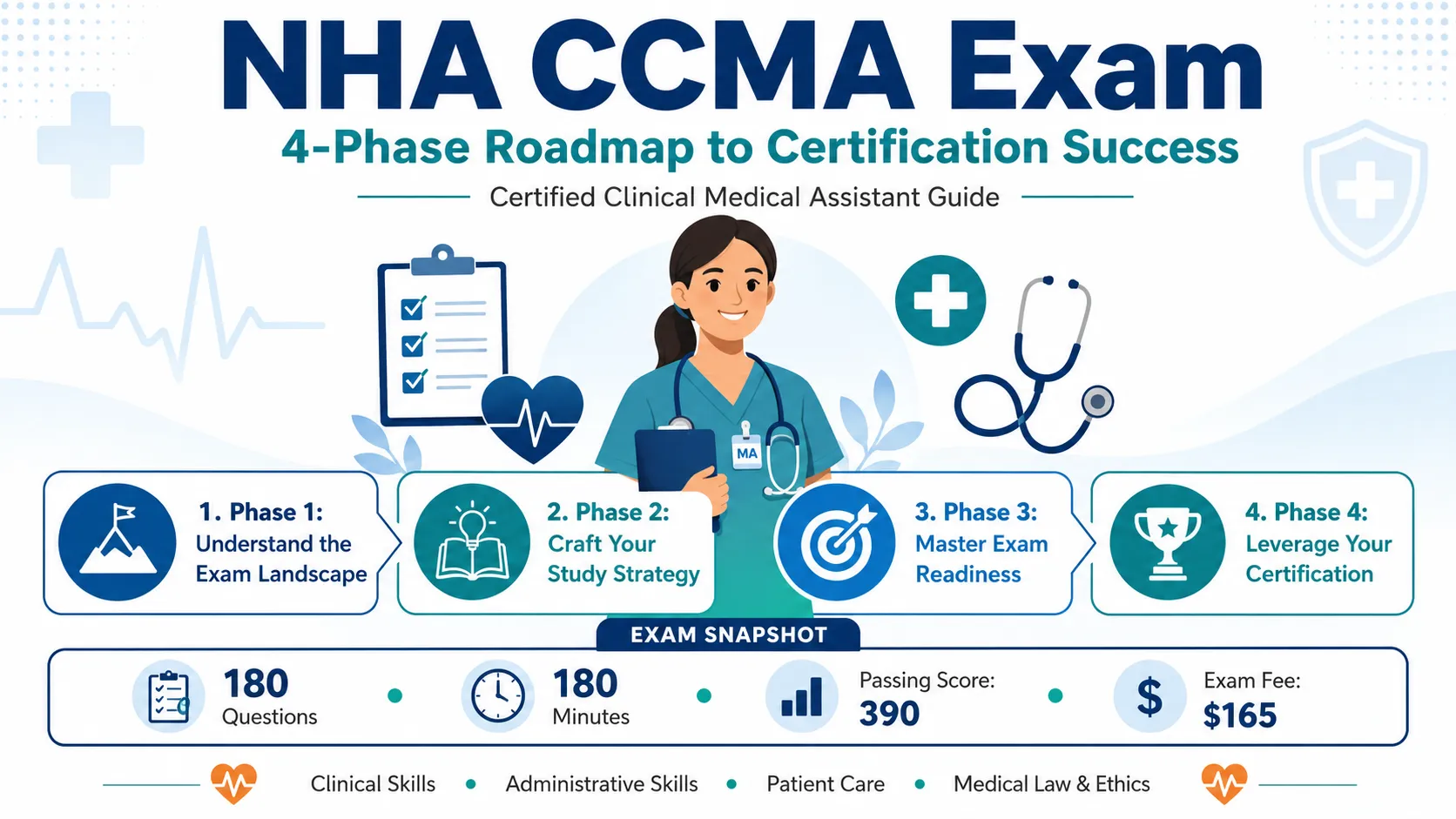
This certification serves as a testament to an individual’s readiness for a dynamic role in various healthcare settings, including clinics, hospitals, and specialty practices. This extensive guide provides a proven 4-phase roadmap to navigating the CCMA exam, outlining essential preparation strategies, key syllabus topics, and the inherent career benefits to ensure your success in achieving this valuable professional designation.
Phase 1: Understanding the CCMA Exam Landscape
Embarking on the journey to NHA CCMA certification begins with a clear understanding of the examination's structure, content, and administrative details. This foundational knowledge empowers candidates to build an effective study plan tailored to the specific demands of the credential. A thorough review of the exam's blueprint and scope helps set realistic expectations and clarifies the path ahead.
Exam Configuration: The NHA CCMA Blueprint
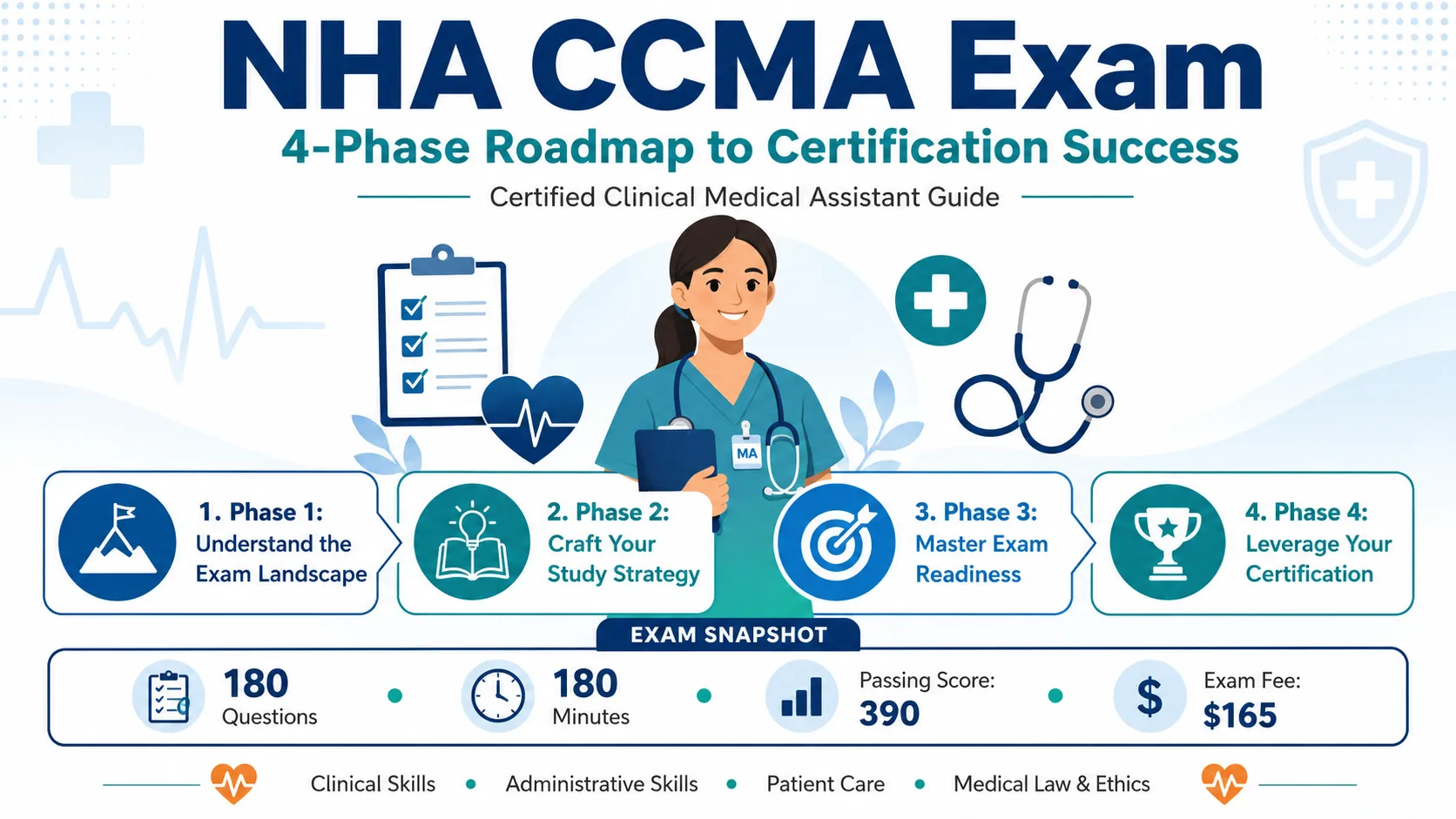
The NHA Certified Clinical Medical Assistant (CCMA) exam evaluates a broad spectrum of competencies crucial for success in the medical assisting field. Understanding the logistical details is critical for effective preparation. The exam is structured to assess both knowledge and the application of skills necessary for clinical and administrative functions.
- Exam Name: NHA Certified Clinical Medical Assistant
- Exam Code: CCMA
- Exam Price: $165 (USD)
- Duration: 180 minutes
- Number of Questions: 180 total, comprising 150 scored items and 30 pretest items. These pretest items do not count towards the final score but are used for future exam development.
- Passing Score: Candidates must achieve a scaled score of 390, on a range of 200-500, to pass the examination.
Core Competencies: What the CCMA Validates
The NHA CCMA certification affirms a candidate's proficiency across several critical domains, reflecting the multifaceted nature of a clinical medical assistant's role. These domains encompass both the theoretical knowledge and practical skills required in a modern healthcare environment. A comprehensive understanding of each area is paramount for exam success. For a detailed breakdown of the content, refer to the official NHA test plan.
The core domains assessed include:
- Foundational Knowledge and Basic Science: Covers fundamental concepts such as medical terminology, anatomy, physiology, and basic pharmacology. This section ensures candidates have the scientific groundwork to understand medical procedures and patient conditions.
- Anatomy and Physiology: Focuses specifically on human body systems, their functions, and common diseases. Proficiency here is vital for understanding diagnostic procedures and patient care.
- Clinical Patient Care: Emphasizes direct patient interaction, including vital signs measurement, patient preparation for exams, assisting with minor procedures, phlebotomy, EKG, and medication administration. This is a significant portion of the exam, highlighting practical skills.
- Patient Care Coordination and Education: Involves duties like scheduling appointments, managing referrals, providing patient education, and ensuring continuity of care. This demonstrates the assistant's role in the broader healthcare team.
- Administrative Assisting: Addresses front-office tasks such as medical record management, billing and coding principles, insurance processing, and electronic health record (EHR) navigation.
- Communication and Customer Service: Assesses interpersonal skills, professional etiquette, patient confidentiality, and effective communication with patients and colleagues, vital for a positive patient experience.
- Medical Law and Ethics: Tests knowledge of legal and ethical responsibilities, including patient rights, HIPAA regulations, scope of practice, and professional conduct in healthcare settings.
Phase 2: Crafting Your Study Strategy
Effective preparation for the NHA CCMA exam requires more than just memorization; it demands a strategic approach to learning, resource utilization, and time management. Developing a personalized study strategy ensures that all critical areas are covered, and learning is optimized for retention and application.
Identifying Essential NHA CCMA Study Materials
A wealth of resources is available to aid in your CCMA exam preparation, each offering unique benefits. Selecting the right combination of materials can significantly enhance your understanding and retention of complex topics. It is crucial to choose resources that align with the official exam blueprint and your learning style.
- NHA Study Guides and Bundles: The official vendor, NHA, provides comprehensive study guides, practice exams, and interactive online tools specifically designed to mirror the CCMA exam content. These resources are often the most accurate reflection of what to expect on test day.
- Textbooks and Reference Materials: General medical assisting textbooks offer in-depth explanations of foundational knowledge, clinical procedures, and administrative duties. These can serve as primary learning sources or supplementary references to clarify difficult concepts.
- Online Preparation Courses: Many educational institutions and online platforms offer structured preparation courses. These courses often include video lectures, quizzes, and simulated exams, providing a guided learning experience.
- Practice Tests: Engaging with practice tests, such as those available on MedicoExam, is invaluable. They help you become familiar with the exam format, question types, and time constraints. Remember to use practice tests as learning tools, focusing on understanding the reasoning behind correct answers rather than just memorizing questions.
- Flashcards and Mobile Apps: For on-the-go study and quick review of medical terminology, anatomy, and procedures, flashcards and mobile applications can be highly effective tools.
Developing a Structured NHA Certified Clinical Medical Assistant Preparation Plan
A well-organized study plan is the backbone of successful NHA CCMA exam preparation. It helps break down the vast amount of material into manageable segments and ensures consistent progress. Your plan should be realistic, flexible, and tailored to your individual schedule and learning pace.
Consider these elements when building your study roadmap:
- Assess Your Current Knowledge: Begin with a diagnostic practice test or self-assessment to identify your strengths and weaknesses across the different syllabus domains. This will help you allocate study time more efficiently.
- Create a Study Schedule: Develop a realistic daily or weekly study schedule. Block out dedicated time slots for each domain, ensuring adequate coverage of challenging topics. Consistency is key.
- Break Down Content: Divide the syllabus into smaller, digestible modules. Focus on one or two topics at a time to avoid feeling overwhelmed and to facilitate deeper understanding.
- Incorporate Active Learning: Don't just read passively. Engage with the material through methods like teaching concepts to others, creating summaries, drawing diagrams, or participating in study groups.
- Regular Review Sessions: Schedule regular review sessions to revisit previously studied material. This spaced repetition helps reinforce learning and move information from short-term to long-term memory.
- Prioritize Challenging Areas: Dedicate more time to subjects where your initial assessment revealed weaknesses. Use supplementary resources if needed to strengthen these areas.
- Allocate Time for Breaks: Integrate short breaks into your study sessions to prevent burnout and maintain focus. Long study periods without breaks can reduce productivity.
Phase 3: Mastering Exam Readiness
Beyond theoretical knowledge, success on the NHA CCMA exam hinges on practical readiness and effective test-taking strategies. This phase focuses on techniques to build confidence, manage time efficiently during the exam, and refine your approach to challenging questions. Preparing mentally is as crucial as preparing academically.
Simulating the CCMA Exam Environment
Familiarity with the actual exam experience can significantly reduce anxiety and improve performance on test day. Practice tests, especially timed simulations, are invaluable for this purpose. They offer a realistic preview, allowing you to fine-tune your pace and approach.
To effectively simulate the exam:
- Take Full-Length Practice Exams: Commit to completing several full-length practice tests under timed conditions. Mimic the exam's 180-minute duration as closely as possible.
- Choose a Quiet Environment: Select a distraction-free space for your simulated exams, replicating the quiet atmosphere of a testing center.
- Adhere to Exam Rules: Avoid using notes, textbooks, or seeking external help during these simulations. This helps build stamina and discipline.
- Practice Pacing: Pay close attention to how long you spend on each question. With 180 questions in 180 minutes, you have approximately one minute per question. This practice helps you develop a natural rhythm.
- Utilize Flagging: Learn to flag questions you're unsure about and return to them later if time permits. This prevents getting stuck on a single question and helps manage the clock.
Interpreting Your NHA CCMA Practice Test Results
Completing a practice test is only half the battle; the real learning comes from analyzing your results. This analytical step is crucial for identifying patterns in your mistakes and refining your study plan. Merely getting a score isn't enough; understanding *why* you got certain questions wrong is the key to improvement.
When reviewing your practice test:
- Categorize Mistakes: Group your incorrect answers by syllabus domain. Are you consistently struggling with "Anatomy and Physiology" or "Administrative Assisting"? This highlights areas needing more focus.
- Understand the Rationale: For every incorrect answer, thoroughly review the explanation provided. Understand why the correct answer is correct and why your chosen answer was incorrect.
- Identify Knowledge Gaps: Distinguish between questions you got wrong due to a lack of knowledge versus those due to careless errors or misreading the question.
- Revise and Re-learn: Go back to your study materials to re-learn the concepts associated with your incorrect answers. Don't just skim; deeply engage with the material.
- Track Progress: Keep a record of your practice test scores and the areas you've improved upon. This provides motivation and helps you see the effectiveness of your refined study plan. For additional insights on career advancement, explore guidance for enhanced earning power.
Mental Fortitude for Exam Day Success
The psychological aspect of taking a high-stakes exam like the NHA CCMA cannot be underestimated. Managing stress and maintaining a positive mindset are critical components of your preparation. A calm and focused approach can make a significant difference in your performance.
Cultivating mental readiness involves:
- Prioritizing Rest: Ensure you get adequate sleep in the nights leading up to the exam. A well-rested mind performs better.
- Nutritional Support: Maintain a balanced diet and avoid excessive caffeine or sugar, which can lead to energy crashes.
- Stress Reduction Techniques: Practice deep breathing exercises, mindfulness, or light physical activity to manage pre-exam jitters.
- Positive Self-Talk: Replace negative thoughts with positive affirmations. Believe in your preparation and your ability to succeed.
- Logistics Planning: Plan your travel to the testing center in advance to avoid last-minute stress. Arrive early to settle in.
- Read Instructions Carefully: On exam day, take a moment to read all instructions thoroughly before beginning. This can prevent simple errors.
Phase 4: Leveraging Your CCMA Certification
Achieving NHA CCMA certification is not just the end of a rigorous study period; it's the beginning of enhanced career opportunities and professional recognition. This phase highlights the tangible benefits that come with this respected credential and how to maximize its value in your professional journey.
Recognizing the Benefits of NHA CCMA Certification
The NHA CCMA certification offers a multitude of advantages that can significantly impact your career trajectory in the healthcare sector. It serves as a powerful differentiator in a competitive job market, demonstrating a standardized level of competency.
- Enhanced Credibility: Certification signals to employers that you possess a verified set of skills and knowledge, adhering to national standards. This instills confidence in your abilities.
- Increased Employability: Many healthcare facilities prefer or require certified medical assistants, broadening your job prospects and making you a more attractive candidate.
- Career Advancement Opportunities: With certification, you may be eligible for more advanced roles, greater responsibilities, and leadership positions within clinical settings.
- Higher Earning Potential: Certified medical assistants often command higher salaries compared to their non-certified counterparts, reflecting the value placed on formal credentialing. For additional career insights, explore how to enhance your professional standing through understanding certification distinctions.
- Professional Recognition: The NHA CCMA is a nationally recognized certification, providing a benchmark of excellence in the medical assisting profession.
- Expanded Skill Set: The preparation process itself ensures a comprehensive understanding and practical application of a wide range of clinical and administrative tasks, making you a more versatile professional.
Understanding NHA Certified Clinical Medical Assistant Job Roles and Salary Expectations
The NHA CCMA certification opens doors to a diverse array of responsibilities within various healthcare environments. Medical assistants are the backbone of many practices, performing essential duties that keep clinics running smoothly and patient care optimized. The scope of their roles directly influences earning potential and career satisfaction.
Typical responsibilities for a certified clinical medical assistant often include:
- Taking patient medical histories and vital signs.
- Preparing patients for examinations and assisting physicians.
- Collecting and preparing laboratory specimens.
- Performing basic laboratory tests.
- Administering medications as directed by a physician.
- Performing phlebotomy and electrocardiograms (EKGs).
- Sterilizing medical instruments.
- Handling administrative tasks such as scheduling appointments, managing patient records, and processing insurance forms.
- Educating patients about procedures, medications, or dietary restrictions.
Salary expectations for NHA CCMA professionals vary based on factors such as geographic location, years of experience, and the type of healthcare facility. However, certification generally leads to a more competitive salary. According to Indeed, the average salary for a Clinical Medical Assistant in the United States is around $39,000 per year, with variations based on experience and location. Continued professional development and specialization can further increase earning potential.
Sustaining Professional Growth After NHA CCMA Certification
Earning your NHA CCMA credential is an impressive achievement, but it marks the beginning, not the end, of your professional development. The healthcare landscape is constantly evolving, requiring continuous learning and adaptation from its professionals. Proactive engagement in ongoing education and professional networking is vital to maintaining relevance and advancing your career.
To sustain your professional growth:
- Continuing Education Units (CEUs): NHA requires certified professionals to earn CEUs to maintain their certification. Engage in relevant workshops, seminars, and online courses that keep your skills current and introduce new methodologies.
- Specialization: Consider specializing in areas such as phlebotomy, EKG, or administrative assisting if your interests align. Additional certifications can open new career avenues.
- Professional Networking: Join professional organizations for medical assistants. Networking with peers and leaders in the field can provide mentorship, job leads, and insights into emerging trends.
- Mentorship: Seek out experienced medical assistants or healthcare professionals who can offer guidance and support in your career journey.
- Stay Informed: Regularly read industry publications, research papers, and healthcare news to stay updated on best practices, regulatory changes, and technological advancements.
The NHA Certified Clinical Medical Assistant (CCMA) credential stands as a powerful testament to a medical assistant's proficiency and dedication. By diligently following this 4-phase roadmap—from deeply understanding the exam's blueprint to strategically preparing, mastering readiness, and actively leveraging your certification—you position yourself for not only exam success but also a thriving and impactful career in healthcare. This credential validates your core competencies, opens doors to diverse job roles, and ensures you remain a vital asset in patient care.
Your journey to becoming an NHA CCMA is a significant investment in your professional future. Embrace each phase of this roadmap, utilizing the resources and strategies outlined to maximize your potential. Prepare with purpose, refine your skills, and confidently step into a rewarding career. For more expert articles and to continue your professional learning journey, visit insights from Tonya Pintos and explore a wealth of specialized content.
Frequently Asked Questions
1. What is the NHA CCMA certification, and who is it for?
The NHA CCMA (National Healthcareer Association Certified Clinical Medical Assistant) is a national certification for medical assistants. It's designed for individuals who assist physicians in clinical and administrative tasks, validating their skills across diverse patient care settings. It's ideal for those seeking to formalize their expertise and enhance career prospects in healthcare.
2. What are the main topic areas covered by the NHA CCMA exam?
The NHA CCMA exam covers several critical domains, including Foundational Knowledge and Basic Science, Anatomy and Physiology, Clinical Patient Care, Patient Care Coordination and Education, Administrative Assisting, Communication and Customer Service, and Medical Law and Ethics. These areas ensure a comprehensive assessment of a medical assistant's capabilities.
3. How long does the NHA CCMA exam take, and what is the passing score?
The NHA CCMA exam has a duration of 180 minutes. It consists of 180 questions, with 150 scored items and 30 pretest items. To achieve certification, candidates must obtain a scaled passing score of 390 on a scale ranging from 200 to 500.
4. What are the benefits of obtaining NHA CCMA certification?
Obtaining NHA CCMA certification offers numerous benefits, including enhanced credibility and employability, increased earning potential, greater opportunities for career advancement, and national professional recognition. It demonstrates a commitment to high standards in medical assisting and distinguishes certified professionals in the job market.
5. What kind of job roles can I expect with NHA CCMA certification?
With NHA CCMA certification, you can pursue roles as a Clinical Medical Assistant in various healthcare settings such as hospitals, clinics, and specialty practices. Responsibilities typically involve patient care, administrative tasks, laboratory procedures, and patient education. The certification validates the broad skill set required for a versatile role in modern healthcare.



























Sign in to leave a comment.