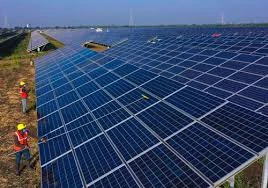

Walk through India’s industrial hubs and you see a change. Rooftops filled with panels. Transmission lines connecting to captive wind farms. What was once an idea—industrial Solar Wind & Hybrid power plant projects—is now becoming real.
But it’s not simple. Industries want renewable power for lower costs, carbon targets, or to avoid unreliable grid supply. The road to building these plants in India is still difficult.
The economic pull and the friction
Electricity is one of the biggest costs for industry. Steel, cement, and textiles depend on it. No business likes being tied to state distribution companies when tariffs rise or supply drops. Captive renewable plants promise control. Build a solar park or a hybrid with wind and storage, and you lock energy costs for decades.
The idea works on paper. In practice, land is hard to secure. Permits and clearances take years. Once a plant is running, state utilities often push back. DISCOMs lose valuable customers when industries generate their own power. They respond with high open access charges that make projects less viable.
The Renewable Energy Market India has long been shaped by this struggle between utilities and private players. Industrial-scale projects only make the tension sharper.
Solar cheap but uneven
Industrial solar looks like the easiest option. Panels are cheap, the technology is proven, and sunlight is abundant. But solar is not as straightforward as it seems. Plants often face curtailment when there is surplus power in the day. Captive projects run into grid codes, limits on banking, and the challenge of matching supply with factory demand.
Rooftop solar should be ideal, but it rarely meets more than a fraction of a plant’s consumption. Large factories often need to move to ground-mounted projects, which brings them back to land and regulatory hurdles.
Wind resource rich but location bound
Wind works well in states like Tamil Nadu and Gujarat. Yet good wind sites are limited. Not every industry is near them. Moving wind power across states runs into transmission bottlenecks and high charges.
Another point often ignored is turbine design. Not all are built for maximum efficiency. Some are tuned for steady output at lower wind speeds. For industries that need predictable supply, this can be useful.
Seasonal variation is another challenge. Output is high during the monsoon and much lower in winter. Without solar to balance it, supply can drop sharply.
Hybrid power elegant in theory messy in practice
Solar works best in the day. Wind often picks up at night. Add storage and you have a steady supply. That is the theory behind hybrid systems.
Financing them is harder. Lenders remain cautious. Hybrids combine different technologies, costs, and risks. Banks want clarity on performance. What happens if one resource underperforms. How do you guarantee output.
Policy has not fully caught up either. The national hybrid policy of 2018 helped, but states interpret it differently. Some give incentives. Others add restrictions.
Policy both enabler and obstacle
India’s renewable energy targets are ambitious. The goal of 500 GW non-fossil capacity by 2030 is clear. Industrial users are expected to play a major role.
Yet policies vary. Central rules often encourage open access and transmission waivers. State rules add surcharges, banking limits, or tariff changes. This mix creates uncertainty.
Storage is another policy gap. While there is much talk of battery manufacturing, industries still lack strong incentives to adopt storage at scale. Without it, hybrids remain incomplete.
Why it still moves forward
Despite the hurdles, projects keep coming up. Exporters are under pressure to show cleaner energy use. Renewable costs keep dropping. Thermal tariffs continue to rise.
The shift is also cultural. Renewable power is no longer seen only as compliance. It is part of business strategy. Few industries want to be left behind in the transition.
My take
India’s Renewable Energy Market is not designed to make things easy for industry. It balances state revenue, competitiveness, and climate goals. That balance is often rough.
Yet progress is steady. Industrial Solar Wind & Hybrid power plant projects are becoming normal. Policy support is improving, though inconsistent. The main gap is stability. If states could avoid frequent changes, investors would be more confident.
For now, industries continue building solar farms, wind projects, and hybrid pilots. The process is uneven but moving forward. That is what the transition looks like in practice.









Sign in to leave a comment.