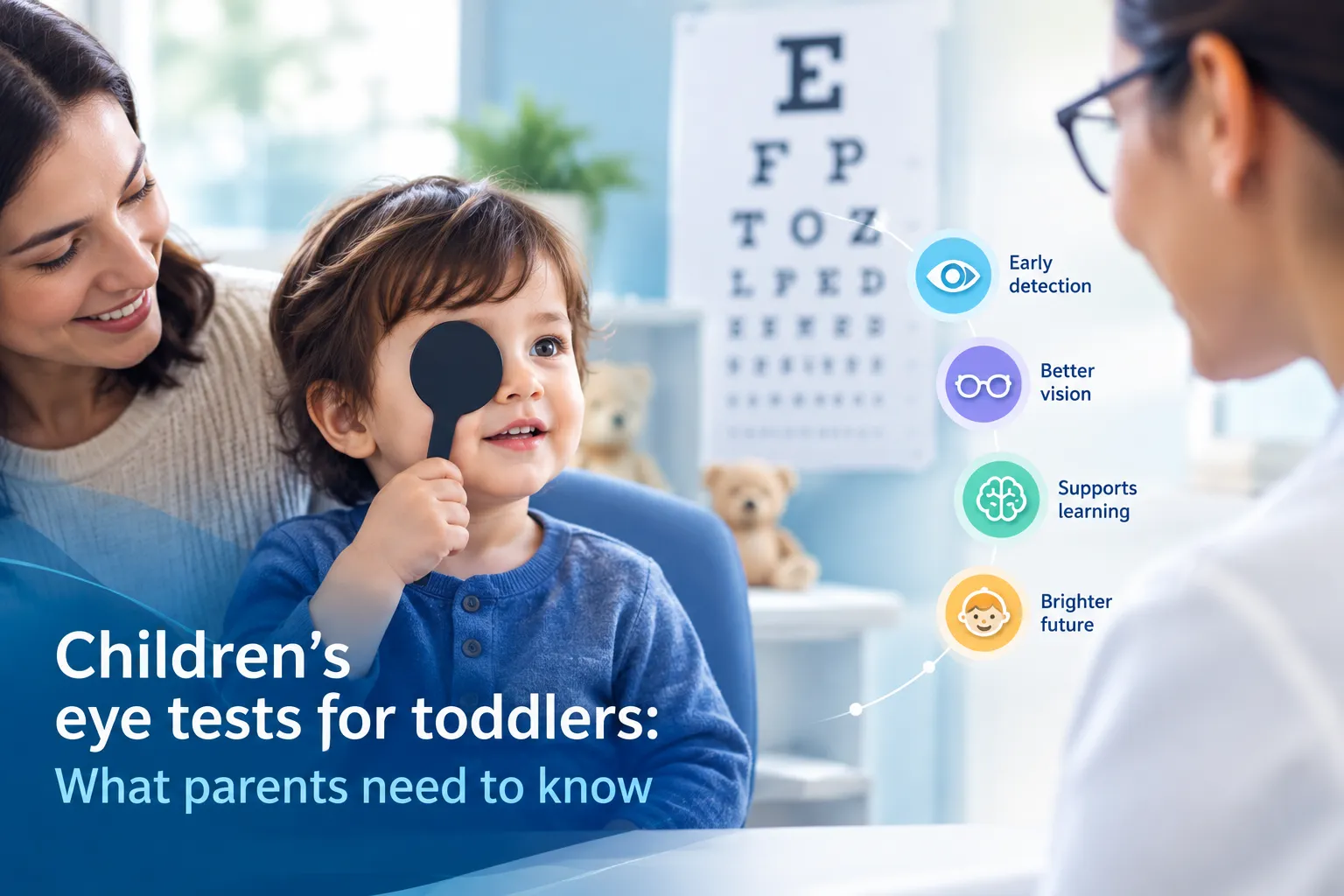

Healthy vision is essential for toddlers as they learn about their world, move around, and develop properly. Parents often think that they would know if their child had eye problems, but sometimes issues can develop without any noticeable signs or symptoms. Booking your toddler in for a children eye test gives you peace of mind that everything is alright or treatment can start before concerns become noticeable.
The importance of eye tests for toddlers
A child’s visual system develops rapidly in the first couple of years of their life. During this time, your child’s brain interprets images received from the eyes. Recognising familiar faces, determining how far away something is and developing hand-eye coordination all rely on healthy vision development. Should there be an underlying issue with vision that is left untreated, normal development can be impacted, leading to long-term consequences.
An eye test can identify any problems with your toddler’s vision before they become worse or start affecting day-to-day life. When identified early, many eye conditions can be treated successfully, allowing children to develop good vision and preventing learning or behavioural problems associated with vision problems in later years.
When should toddlers have their eyes checked?
A toddler should have their vision tested regularly as part of their eye care. Babies usually have their eyes screened soon after birth, but they need a comprehensive eye examination when they’re around two to three years old. They may need further checks if there is a history of eye disease in your family or if you notice unusual visual symptoms.
Regular eye exams let you know your child’s vision is developing as it should. They also establish a baseline, so it’s easier to tell if there have been any changes should your child need further examinations in the future.
Tips for parents on spotting vision issues in toddlers
Your toddler may not be able to communicate problems with their vision. Watch out for frequent rubbing or blinking of the eyes, squinting, and holding toys or books closer than usual when playing or reading. Some children cock their head to one side when looking at objects, or you may notice they struggle to track objects as they move.
If your child has poor hand-eye coordination, drops clumsily, or never shows much interest in books or puzzles, this could indicate problems with their vision. Sometimes one eye may drift in or out while the other remains focused forward. These aren’t necessarily signs of an issue, but they’re worth discussing with your optometrist.
Vision conditions affecting toddlers
Vision conditions can develop in babies and young children. Nearsightedness, farsightedness, and astigmatism are refractive errors that affect how well they can see objects at different distances. Lazy eye occurs when one of the eyes develops reduced vision because the brain favours the other eye. Strabismus occurs when the eyes point in different directions and must be treated early to allow normal visual development and prevent problems with depth perception.
Other eye diseases can occur in children, though they are less common. Babies can sometimes be born with cataracts, which affect their vision. These will need to be assessed by a specialist eye doctor as your child grows. Most vision conditions can be successfully treated or managed when detected early, before your child has started school.
Preparing your toddler for their eye examination
Parents are often concerned their child won’t cooperate during an eye examination. However, eye tests for toddlers don’t involve reading letters of a chart or remembering numbers. Instead, your toddler’s eyes will be observed as they look at pictures, special lights, or use eye charts with symbols. The distance they can see clearly and how their eyes work together will be assessed along with a general check of eye health.
Activities are age-appropriate and engaging so they won’t notice they’re having an exam. Drops may be used to dilate your child’s pupils if necessary; this allows the optometrist to get a better view of the back of your child’s eye. The drops can blur their vision for a few hours but are harmless.
How parents can encourage good eye care from an early age
There are several ways parents can promote healthy eye development from birth. Eating a balanced diet rich in vitamins and nutrients can encourage normal eye development. Playing outdoors has also been linked to healthier eyesight. Reducing screen time where possible can prevent eye strain and allow toddlers to focus on developing active vision skills.
Reading books, doing puzzles, and playing games that involve hand-eye coordination also promote visual skill development. Practising good eye health habits and having regular eye tests allows parents to detect any concerns.
Eye examinations for toddlers are crucial for protecting their vision long-term and ensuring they don’t develop learning or behavioural problems due to poor eyesight. By having regular appointments with optometrists in Melbourne or elsewhere, you can catch any problems in the early stages and start any necessary treatment to allow your child’s vision to develop as it should.























Sign in to leave a comment.