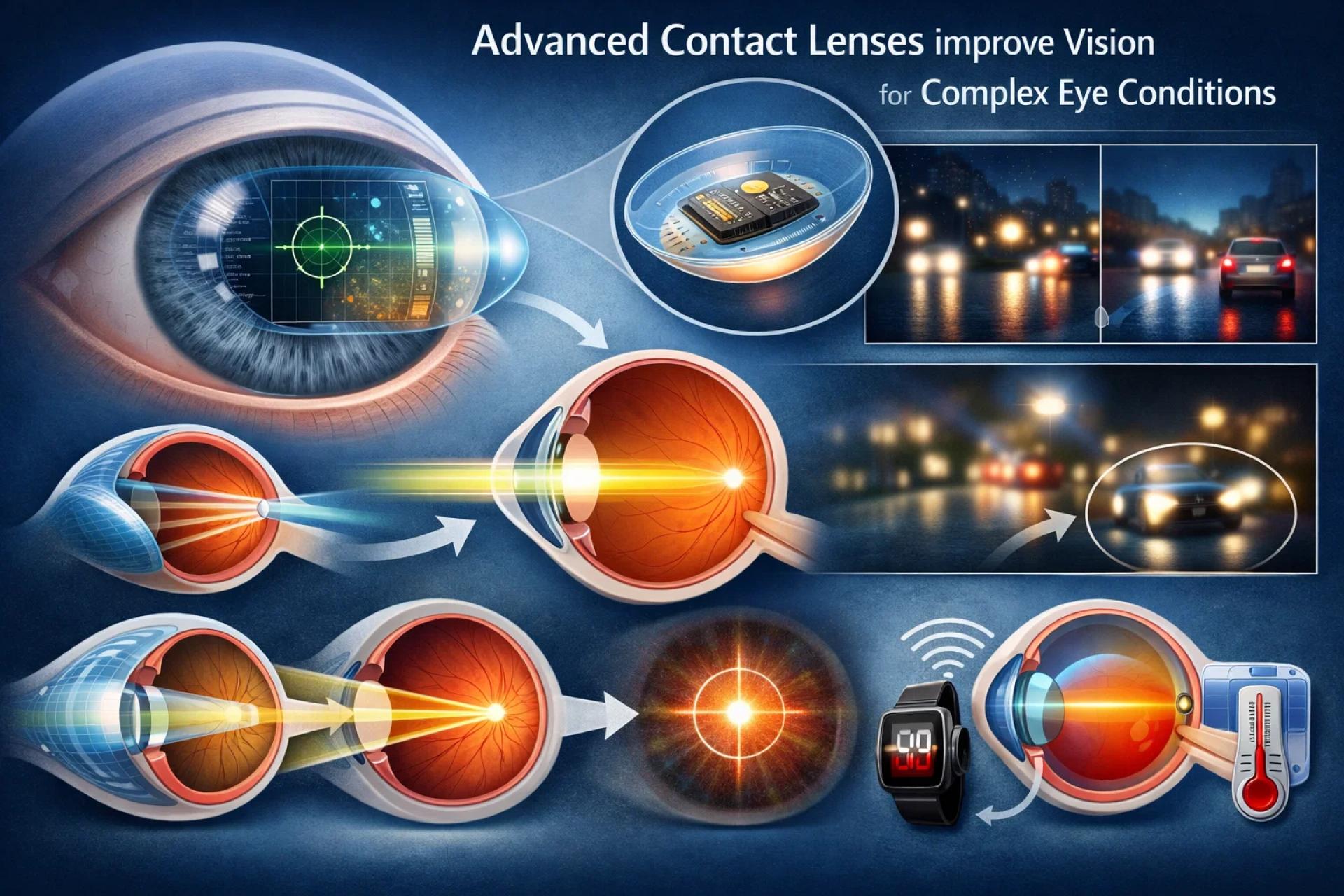

Eye care technology has come a long way. Advanced contact lenses are continually changing the way complex visual conditions are managed. Customised contact lenses provide comfortable, highly effective solutions when glasses and standard lenses aren't enough.
Uncorrected vision impairment is a global health priority according to the World Health Organisation. Advances in contact lens technology allow eye care professionals to better manage and treat patients with special requirements.
Let's take a look at how modern contact lenses can correct even the most complex vision problems.
Keratoconus: Clear vision on bulging corneas
Keratoconus causes a progressive thinning of the cornea. This can cause distortion and blurriness that regular lenses cannot manage.
Specialty contact lenses, including rigid gas-permeable (RGP) and scleral lenses, help create a smooth, regular front surface for the eye. Custom scleral lenses vault over the cornea and contain a fluid reservoir. This helps neutralise irregularities and allows for clear, sharp vision. They also help keep the eyes more hydrated, which can improve comfort.
Corneal graft: Care for corneal transplants
Corneal grafts or transplants can cause irregular astigmatism or uneven healing. This can limit what patients can achieve with glasses.
Contact lenses are able to mask irregularities on the surface of the eye and improve vision. Special care should be taken when fitting contact lenses after a corneal transplant. Scleral lenses and hybrid lenses are often recommended because they rest on the white of the eye and create less pressure on the cornea. These lenses also allow for effective long-term vision rehabilitation.
Post-refractive surgery: Dry eyes, halos, and fluctuations
LASIK, PRK and other laser procedures are designed to reduce or eliminate the need for glasses. Some patients develop post-surgical complications that can affect vision quality. This includes dry eye syndrome, irregular corneas, halos and glare at night.
Advanced contact lenses can often correct these changes. By creating a regular refractive surface, vision will be sharper, reducing many symptoms. Custom soft lenses, RGP lenses, and scleral lenses can all be used to improve vision after refractive surgery.
Pellucid Marginal Degeneration: Vision solutions for PMD
PMD is a thinning disease of the cornea that usually affects the lower cornea. It can cause significant astigmatism and vision distortion.
Modern contact lenses are very effective in managing pellucid marginal degeneration. Custom scleral lenses and RGP lenses allow for clear vision because they do not touch the weak area of the cornea. Many patients see an immediate improvement in vision and stability with these lenses.
Aphakia: Solutions for a missing lens
Aphakia is the absence of the natural lens inside the eye. This can occur after cataract surgery or an eye injury. Without the natural lens, the eye has difficulty focusing light properly.
High-powered contact lenses can be a great solution for patients with aphakia. Glasses can be very thick, causing distortion. Custom contact lenses provide clearer optics and are fitted by a local optometrist to ensure sufficient oxygen reaches the eye.
Presbyopia: Age-related farsightedness
Presbyopia is an age-related condition that affects your ability to focus up close. Reading small print can become difficult or blurry as you age.
Modern contact lens designs offer several solutions for presbyopia. Bifocal and multifocal contacts create multiple zones for near, intermediate, and distance vision. Advanced digital designs allow for sharper vision and quicker adaptation to contact lenses. Many people find they can read, work, and drive with greater ease.
Astigmatism: Advanced solutions for toric lenses
Astigmatism is when the curvature of the cornea is irregular. This causes blurred vision at any distance.
Toric lenses are contact lenses customised to correct astigmatism. Newer toric lenses use advanced designs to stabilise the lens on the eye. This helps prevent the lens from rotating and causing vision fluctuations. Higher and irregular astigmatism can be managed with custom toric lenses and scleral lenses.
Myopia: Nearsightedness management
Myopia causes near objects to be seen clearly while far objects are blurry. The prevalence of nearsightedness is increasing, particularly in younger populations.
Many modern contact lenses are made to treat myopia. Children can benefit from special contact lenses that may slow the progression of nearsightedness. By controlling how light focuses on the eye, these lenses can prevent the eyeball from growing too quickly. Advanced soft contact lenses and RGP lenses are available for adult patients that provide sharper vision, greater comfort and reduced eye strain.
Finding the right solution: Custom fitting & care
Designing and fitting modern contact lenses requires a high level of skill and care. Your optometrist will use advanced imaging techniques to measure your eyes and design lenses based on your specific needs. Follow-up care is equally important to ensure your lenses are performing optimally and your eyes stay healthy.
Managing complex conditions with contact lenses is not a one-time appointment. Checkups and professional eye care allow your local optometrist or ophthalmologist to monitor any changes in your vision and adjust your prescription as needed.
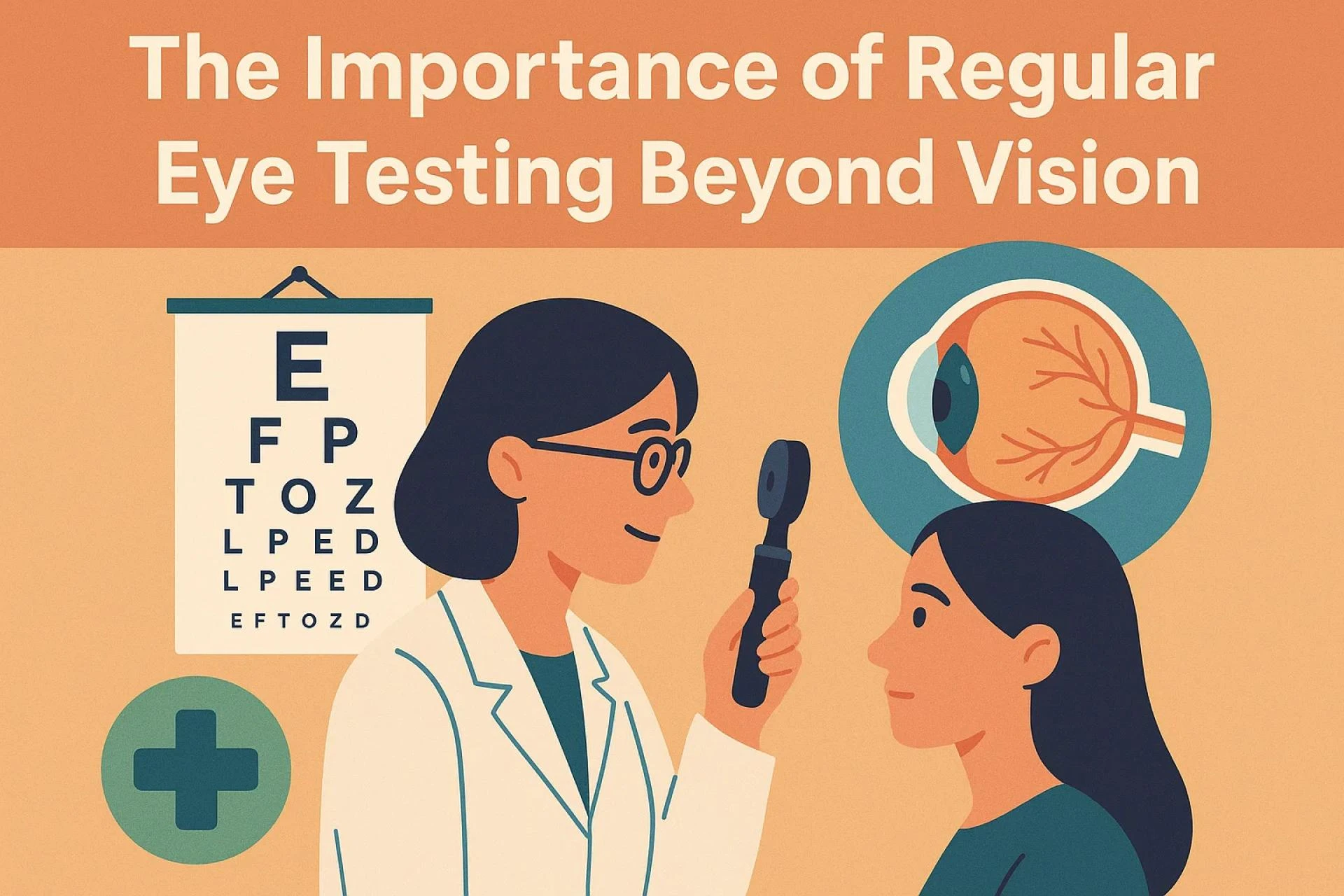
Getting your vision checked is important at every stage of life. Whether you're an adult who needs to update your prescription or taking your child in for a comprehensive children's eye test, having your eyes examined allows your eye care practitioners to detect potential issues early on.
Thanks to advanced technology, modern contact lenses are changing the way complex vision conditions are managed. Many conditions that cause irregular curvatures or changes in focus can be improved with custom contacts. Your optometrist can help you decide if custom contacts are right for you and will work with you to manage your condition.


























Sign in to leave a comment.