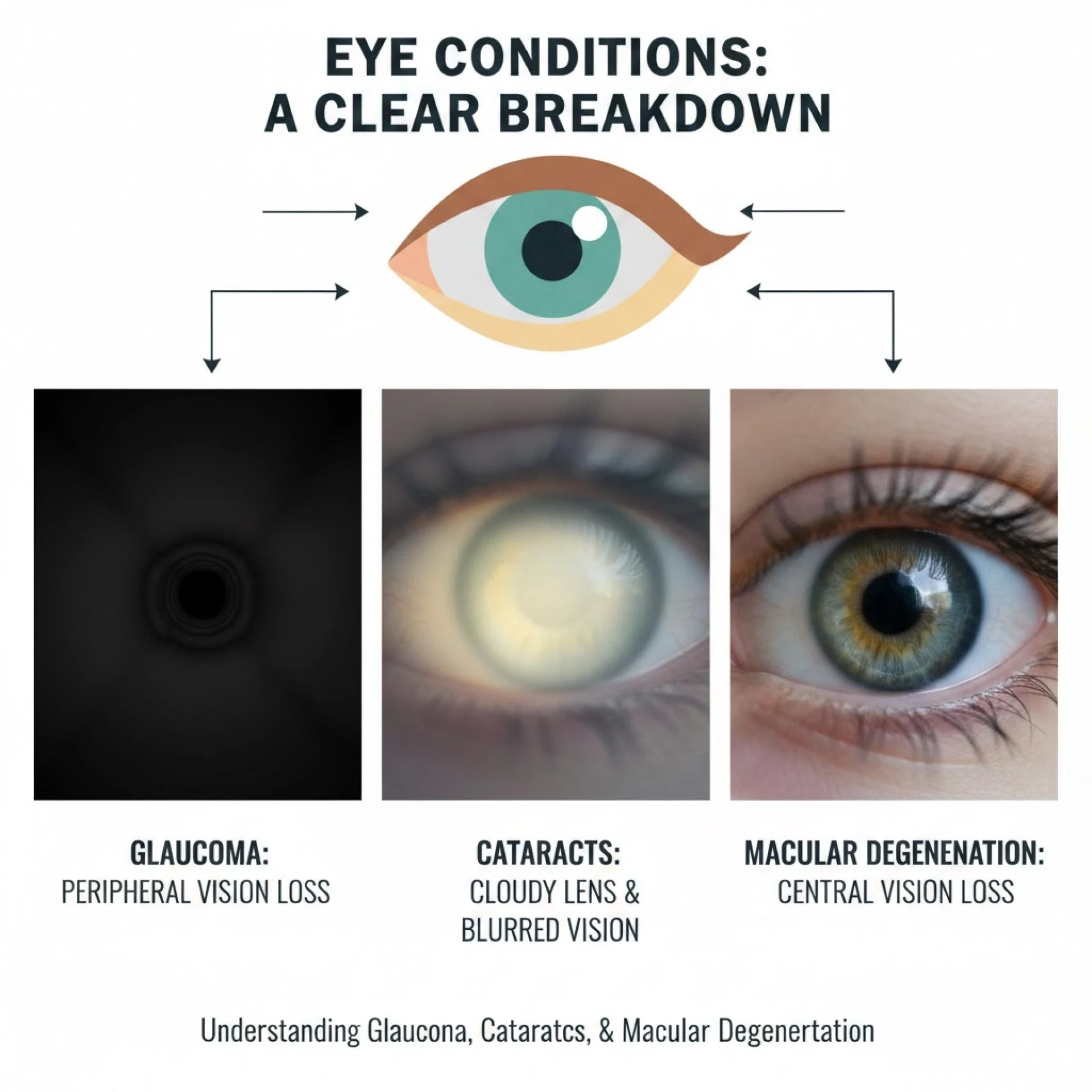

Changes in vision due to ageing often come gradually and over time – in many cases, so slowly that problems can go unnoticed until daily activities are affected. Glaucoma, cataracts and macular degeneration are among the most common. Although their early symptoms can be similar, these diseases are distinct in their development, impact on vision, and treatment. Recognising key differences can help you see early warning signs and take care of your sight on time.
Let’s go over each of these age-related eye conditions in a quick, practical guide, and what sets them apart.
What is glaucoma?
Glaucoma is a group of eye diseases that cause damage to the optic nerve, typically due to increased intraocular pressure. Described by some as the “silent thief of sight”, the condition often comes without noticeable symptoms until significant vision loss has occurred, and it usually progresses slowly without pain.
How it affects vision
Glaucoma often first affects peripheral vision. Over time, your visual field will continue to narrow, reducing your side vision until many people describe this as “tunnel vision”. In advanced cases, glaucoma can lead to permanent blindness if left untreated.
Symptoms to look out for:
- Gradual loss of peripheral vision
- Halos around lights
- Mild headaches
- Sensitivity to low light
These early warning signs can be subtle, and many people do not notice them until the later stages of the disease. Regular eye exams are critical to testing for glaucoma, particularly for those over 60 years of age or with a family history. Patients may explore options, such as glaucoma treatment in Melbourne, for professional attention. Diagnostic tests are available to measure eye pressure and assess optic nerve damage.
Treatment approaches aim to slow or manage the condition and may include medicated eye drops, laser treatments, or surgery. Patients with glaucoma often work with specialists over the long term to track the progress of the disease and retain vision.
Key point: Glaucoma damages the optic nerve and peripheral vision first.
What are cataracts?
The lens inside your eye becomes cloudy. Cataracts are a normal part of ageing. They can also occur earlier in life because of genetics, exposure to UV radiation, medical conditions and some medications.
The impact on your vision
Your lens’s cloudiness prevents light from focusing on the retina sharply. As a result, images will appear blurry or hazy. Cataracts make it hard to see in low light or at night. You may also be more sensitive to glare.
Signs and symptoms to watch out for
- Foggy or blurry vision
- Faded or yellowed colours
- Glare around lights
- A need for brighter light when reading
- Frequent prescription changes
Unlike glaucoma and macular degeneration, cataracts do not damage the retina or optic nerve. They simply affect clarity of vision, but not the visual field. Cataract surgery is one of the safest and most common operations worldwide. A cloudy lens is removed and replaced with a clear artificial one, restoring vision.
Key point: Cataracts cause cloudiness in the eye’s lens and generally lead to blurry, foggy vision.
What is macular degeneration?
Age-related macular degeneration (AMD) is a condition that affects the macula, or the part of the retina responsible for sharp, central vision. It is most common in adults over 50.
How it affects vision
Since AMD affects the macula, the central portion of the visual field, the condition leads to reduced central vision. Those with macular degeneration may still have a fully intact peripheral field but will have difficulty with activities such as reading, recognising faces, and driving.
Early warning signs can include some blurriness and distortion of central vision, but macular degeneration eventually leads to a noticeable dark or blank spot in the centre of your vision. AMD can progress slowly (dry AMD) or more rapidly (wet AMD). There are different forms, but the main difference between dry and wet AMD is that the latter involves abnormal blood vessel growth that bleeds or leaks.
Warning signs and symptoms:
- Vision that is blurred or distorted in the centre of the visual field
- Inability to see fine details (i.e. reading small print)
- Vertical or horizontal lines that appear wavy or curved
- A dark or blank spot in the centre of vision
Did you know? Macular degeneration only affects central vision; it does not cause loss of peripheral vision.
When to see a doctor
Make an appointment with an ophthalmologist or optometrist if you have:
- Vision that is fuzzy and does not improve
- More glare, or sensitivity to light
- Harder time seeing in low light levels
- Lines in vision that are distorted or missing
- Field of vision that gradually becomes narrower
- Contacts or glasses that need to be changed more frequently than every two years
- Pain, pressure, or headaches in the eye
Did you know? Adults should get their eyes checked every 1 to 2 years, and especially after age 50. Some eye changes are just part of aging, while others can be treated or prevented if caught early.
Temporarily improving your clarity with tools such as affordable prescription glasses will not address the underlying issue and should not be used as a substitute for professional care and treatment.
Protecting your vision for the future
Vision problems due to ageing can take a significant toll on quality of life, but early awareness and proactive care are the first steps in reducing your risk and preventing serious vision loss. Understanding key differences between these three eye conditions is a good start. If you notice changes in your vision—even small ones—schedule an appointment with an eye care professional. Taking action early is the best chance to keep your vision clear and comfortable for the future.



Sign in to leave a comment.