
Custom hoodies have become one of the most effective and versatile pieces of branded apparel available to businesses, schools, sporting clubs, charities, and community organisations. They offer year-round wearability, strong brand visibility, and a premium perceived value that often outperforms many traditional promotional products.
However, one of the most overlooked decisions in the ordering process is selecting the right printing method.
The quality, durability, appearance, and cost of a custom hoodie can vary significantly depending on how the design is applied. A logo that looks sharp on a corporate uniform may require a completely different production method than artwork designed for a promotional event or retail-inspired merchandise range.
Understanding the strengths and limitations of each printing technique can help organisations make better decisions and achieve stronger branding outcomes.
Why the Printing Method Matters
Many people focus primarily on the garment itself—fabric weight, fit, colour, and comfort. While these factors are important, the printing method ultimately determines how the design will look and perform over time.
The right technique should align with:
- The complexity of the artwork
- The quantity being ordered
- The garment fabric and colour
- Budget requirements
- Expected lifespan of the garment
- Desired visual finish
At Garment Printing, one of the most common conversations with customers isn't about hoodies themselves—it's about finding the most suitable decoration method for their specific objectives.
As with most branding decisions, there is rarely a one-size-fits-all solution.
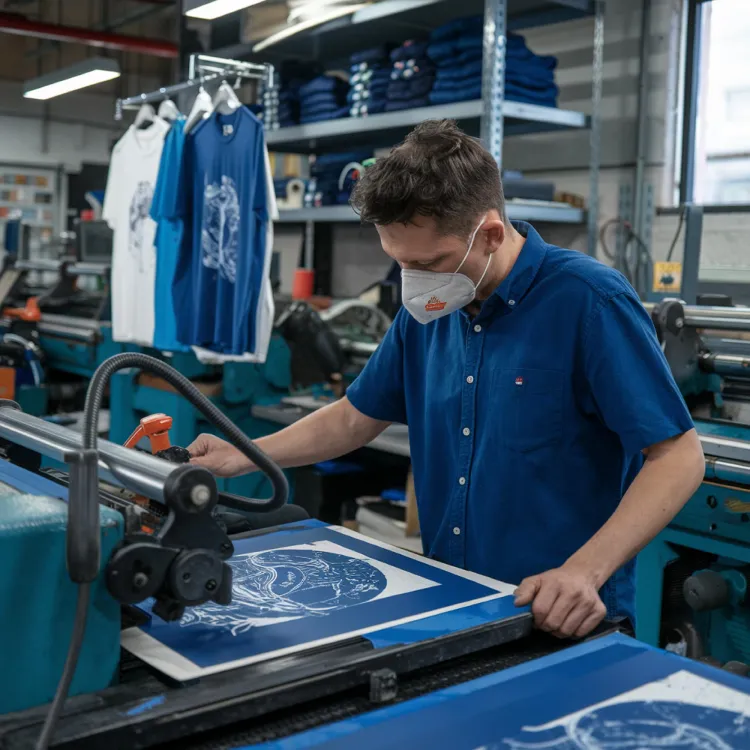
Screen Printing: The Reliable Workhorse
Screen printing remains one of the most popular methods for custom hoodie production, particularly for medium to large orders.
The process involves pushing ink through a mesh screen onto the garment, creating vibrant and durable prints.
Best suited for:
- Company uniforms
- Event merchandise
- Sporting clubs
- Large-scale promotional campaigns
Advantages:
- Excellent durability
- Strong colour vibrancy
- Cost-effective for larger quantities
- Ideal for bold logos and graphics
Considerations:
- Setup costs can make small runs less economical
- Less suitable for highly detailed photographic designs
For organisations ordering hundreds of hoodies, screen printing often provides the best balance between quality and value.
Expert insight: Screen printing remains the benchmark for businesses seeking consistency across larger uniform or promotional apparel programs.
Direct to Garment (DTG): Ideal for Detailed Artwork
Direct to Garment printing, commonly known as DTG, uses specialised printers to apply ink directly onto the fabric.
The technique has evolved significantly over the past decade and is now capable of producing highly detailed, full-colour designs.
Best suited for:
- Small quantity orders
- Complex artwork
- Photographic images
- Customised or personalised garments
Advantages:
- Exceptional detail reproduction
- No minimum order requirements
- Unlimited colour possibilities
- Soft feel on the garment
Considerations:
- Generally slower for large production runs
- Can be less economical at higher volumes
- Results vary depending on fabric composition
DTG is particularly attractive for organisations testing a new merchandise concept before committing to larger production quantities.
Direct to Film (DTF): The Emerging All-Rounder
Direct to Film printing has quickly become one of the fastest-growing technologies in the garment decoration industry.
Instead of printing directly onto the garment, the design is first printed onto a specialised film and then heat-transferred to the hoodie.
Best suited for:
- Small to medium orders
- Multi-colour logos
- Detailed graphics
- Mixed garment types
Advantages:
- Works across various fabrics
- Vibrant colour output
- Strong durability
- Suitable for detailed artwork
Considerations:
- Print feel can be slightly more noticeable than DTG
- Not always the preferred choice for large solid print areas
Many businesses appreciate DTF because it bridges the gap between traditional screen printing and digital decoration methods.
Embroidery: Premium Branding That Lasts
Although technically not a printing method, embroidery is frequently considered alongside printed hoodies and remains a leading choice for professional uniforms and corporate apparel.
Rather than applying ink, embroidery stitches the design directly into the garment.
Best suited for:
- Corporate uniforms
- Trade and construction businesses
- Premium branded apparel
- Executive team wear
Advantages:
- Professional appearance
- Outstanding durability
- Premium perceived value
- Excellent for logos and branding
Considerations:
- Less suitable for highly detailed artwork
- Can become costly for large designs
- Limited colour gradients
For organisations seeking a polished and professional appearance, embroidery often delivers the strongest long-term brand impression.
Heat Transfer Vinyl (HTV): Effective for Names and Numbers
Heat Transfer Vinyl involves cutting designs from coloured vinyl material and applying them using heat and pressure.
While less common for large commercial branding projects, it remains highly effective for specific applications.
Best suited for:
- Sporting teams
- Staff names
- Individual numbering
- Small custom runs
Advantages:
- Crisp, clean finish
- Ideal for personalisation
- Excellent opacity on dark garments
Considerations:
- Not ideal for highly detailed artwork
- Less efficient for large-scale production
Many sporting clubs combine screen printing with HTV to add individual player names and numbers to hoodies and team apparel.
Matching the Printing Method to Your Objective
One of the biggest mistakes organisations make is choosing a decoration method based purely on price.
The better approach is to consider the intended use of the garment.
For example:
| Objective | Recommended Method |
|---|---|
| Large staff uniform rollout | Screen Printing or Embroidery |
| Premium corporate apparel | Embroidery |
| Small batch merchandise launch | DTG or DTF |
| Detailed artwork or photography | DTG |
| Sporting team apparel | Screen Printing + HTV |
| Promotional giveaways | Screen Printing |
The most successful branded apparel programs are those where the garment, artwork, and decoration method work together to achieve a specific outcome.
Quality Starts Before Production
Even the best printing technology cannot compensate for poor artwork preparation or low-quality garments.
Experienced providers assess factors such as:
- Artwork suitability
- Logo sizing
- Garment fabric composition
- Placement options
- Colour accuracy
- End-user expectations
This consultative approach helps prevent common issues such as cracking, fading, poor colour reproduction, or designs that fail to represent the brand effectively.
Businesses exploring options for custom hodie printing in Sydney often discover that expert guidance during the planning stage can have a greater impact on the final result than the printing technology itself.
The Future of Custom Hoodie Decoration
Advancements in digital printing continue to expand what's possible in branded apparel.
Modern production methods now allow organisations to order smaller quantities, create more complex artwork, and achieve retail-quality finishes without the constraints that once existed in garment decoration.
At the same time, businesses are increasingly focused on durability, sustainability, and long-term value rather than simply choosing the lowest-cost option.
This shift is encouraging a more strategic approach to custom apparel procurement—one where print quality, garment longevity, and brand presentation are considered together.
Final Thoughts
Choosing the right printing method for custom hoodies is ultimately about matching the decoration technique to the intended outcome.
Screen printing remains the preferred option for large-scale consistency. DTG excels with detailed artwork and smaller runs. DTF offers impressive flexibility across different applications, while embroidery continues to deliver a premium professional finish.
The best results come from understanding not only what looks good today, but what will continue to represent your organisation well after months or years of wear.
As a trusted Australian provider of custom apparel, branded workwear, garment printing, and promotional merchandise, Garment Printing regularly helps businesses navigate these decisions to ensure every hoodie delivers both practical value and lasting brand impact.
























Sign in to leave a comment.