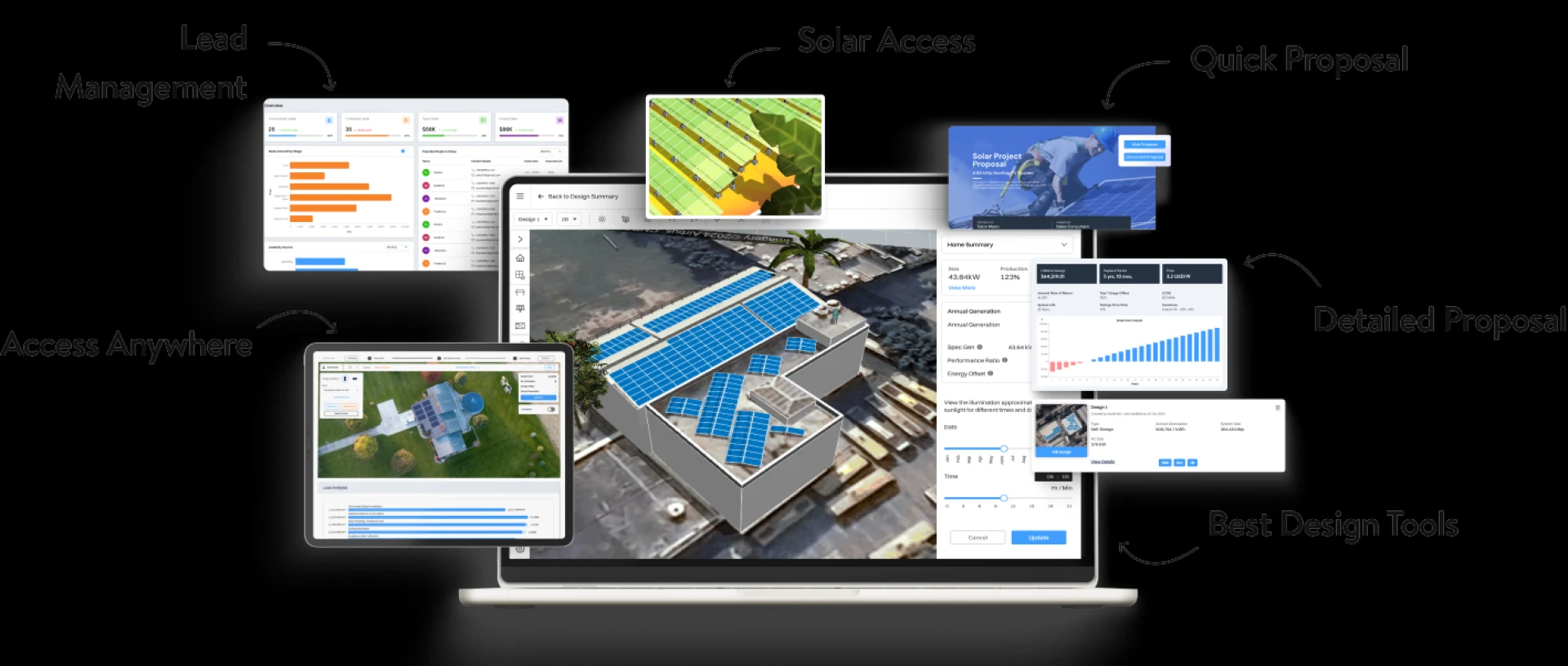

Solar design software is essential for creating accurate, efficient, professional solar energy systems. Choosing the right one can be challenging with many tools available. This guide simplifies the process by highlighting key features to look for, comparing top software solutions, and offering tips to maximize their value. Whether designing residential, commercial, or utility-scale projects, this blog will help you find the best software to meet your needs.
What Solar Design Software Is and Why It’s Important
Solar design software helps plan, simulate, and optimize solar energy systems, considering factors like system size, location, shading, and financial feasibility. It ensures precise calculations, minimizes design errors, and incorporates tools like 3D modeling for accurate site analysis.
This software simplifies compliance with local codes and regulations and helps generate professional proposals. Financial tools like ROI calculators make it easier to assess project feasibility. In a competitive market, high-quality design software is essential for delivering efficient, cost-effective, and reliable solar installations.
Key Features to Look for in Solar Design Software
1. User-Friendly Interface
A well-designed layout reduces the learning curve and allows users to design systems, even without extensive technical expertise quickly.
2. Accurate Shading and Site Analysis
High-quality software should include tools for shading analysis and site evaluation. Features like 3D modeling, satellite imagery, and terrain mapping help optimize panel placement for maximum energy output, especially in challenging locations.
3. Advanced Simulation
Simulation tools that predict energy production, system performance, and weather impacts are essential for accurate planning. These features help ensure the system will meet energy goals and provide reliable results.
4. Financial Modeling and Proposal Tools
A good solar design tool should offer financial analysis features, such as ROI calculations, payback periods, and cost-benefit projections. Integrated proposal tools help create professional, data-driven reports that can win customer trust and approval.
5. Component Database and Compatibility
The software should include an extensive database of PV panels, inverters, and batteries. This ensures compatibility with the latest components and allows users to select the best equipment for each project.
6. Compliance with Local Policies
Ensure the software integrates local codes, incentives, and regulatory requirements. This feature streamlines the permitting process and ensures your designs meet legal and safety standards.
7. Cloud-Based Collaboration
Cloud-enabled software allows teams to collaborate in real time, regardless of location. This is particularly beneficial for large-scale projects or companies with distributed teams.
8. Scalability for Different Project Types
Whether you're designing small residential systems or utility-scale projects, the software should be scalable and flexible to meet varying project requirements.
9. Integration
Choose solar design software that integrates seamlessly with tools like CRM systems, energy monitoring platforms, and sales applications. This helps improve workflow and efficiency.
10. Regular Updates and Support
Reliable software providers offer regular updates to include the latest features and technologies. Additionally, accessible customer support ensures quick resolutions to technical issues.
Comparing the Best Solar Design Software Solutions
With numerous solar design software options available, finding the right one for your needs can be a challenge. Each tool offers unique features tailored to different project scales, from residential to utility-scale installations. Here’s a comparison of some of the best software for solar design solutions to help you make an informed decision:
ARKA 360
ARKA 360 is an all-in-one solar design and management platform designed for installers, engineers, and project managers. It offers advanced 3D modeling for shading analysis, a comprehensive component database, and seamless integration with local regulations. Its intuitive interface allows for quick and complex project designs, and its financial analysis tools help generate accurate ROI calculations. ARKA 360 also provides collaboration features, making it an excellent choice for teams managing multiple projects simultaneously.
Aurora Solar
Aurora Solar is known for its AI-driven design capabilities and precise shading analysis. Its automated features, such as rooftop detection and system layout optimization, save time and improve accuracy. Aurora also excels in financial modeling, providing detailed payback periods and cost analyses. It's particularly popular with installers working on residential and commercial projects.
HelioScope
HelioScope combines ease of use with robust design features, making it a favorite for residential and small commercial projects. It offers detailed performance simulations and integrates financial modeling to help evaluate system feasibility. While its interface is straightforward, it may lack some advanced features required for large-scale installations.
PVsyst
PVsyst is a comprehensive tool for in-depth technical and performance analysis, making it ideal for utility-scale and complex projects. It includes detailed shading studies, energy simulations, and loss analysis. However, its complexity can be overwhelming for beginners, and it’s better suited for engineers and advanced users.
Solarius-PV
Solarius-PV is tailored for engineers and designers who need detailed energy and economic simulations. It provides an extensive database of components and supports compliance with various international standards. While it’s highly detailed, its steep learning curve may deter beginners.
Tips for Maximizing the Value of Your Solar Design Software
Investing in solar design software is just the beginning; maximizing its value requires strategic use. Here are some practical tips to get the most out of your solar design software:
- Use Training Resources: Leverage tutorials, webinars, and manuals to learn advanced features like 3D modeling and financial forecasting.
- Keep the Software Updated: Regular updates provide new features, bug fixes, and compliance tools to ensure accurate designs.
- Customize for Local Requirements: Tailor the software to local policies, utility rates, and shading patterns for realistic designs.
- Integrate with Other Tools: Connect with CRM systems and project management tools to streamline workflows.
- Utilize Cloud Collaboration: Use cloud-based features to enable real-time collaboration, especially for distributed teams.
- Review Performance Regularly: Analyze project outcomes to refine designs and improve accuracy.
- Experiment with Advanced Features: Explore 3D simulations, energy storage, and financial tools to gain deeper insights.
- Focus on Professional Proposals: Use proposal tools to create appealing, data-driven customer presentations.
- Collaborate with Support Teams: Stay in touch with the software provider for troubleshooting and best practices.
- Evaluate ROI: Periodically assess the software’s ROI to ensure it delivers value.
Which Software Is Best for Solar Design?
ARKA 360 is the ultimate solar design software, offering innovative features that go beyond standard design tools to empower solar professionals at every stage of the process.
With customizable 3D proposals, ARKA 360 lets you create visually stunning, branded presentations that impress clients and simplify decision-making. Its unique Sales Mode enables sales teams to generate proposals, run energy simulations, and provide cost estimates on the go—perfect for closing deals faster in the field.
Seamlessly integrated with financiers, ARKA 360 streamlines access to solar loans, helping clients secure financing with ease. It also takes care of permitting to save time and ensure compliance.
For more complex projects, you can order expert design services directly within the platform. Plus, ARKA 360’s built-in lead management keeps your sales pipeline organized, helping you track and nurture leads for higher conversions.
If you’re looking for a tool that simplifies solar design, accelerates sales, and elevates your business, ARKA 360 is the clear choice.
























Sign in to leave a comment.