
In today’s demanding environments, sealing solutions must do more than just close a gap. They need to endure UV exposure, temperature fluctuations, humidity, chemicals, and constant use—all while providing reliable performance and easy installation. When it comes to weatherproofing, energy efficiency, and long-term durability, EPDM rubber seal strips are among the most versatile and trusted options. However, with a wide range of formulations, profiles, and application considerations, selecting the right EPDM rubber seal strip can feel overwhelming. This comprehensive guide from Qingdao Seashore Industrial Co., Ltd. is designed to help you navigate the choices, clarify key performance factors, and make an informed decision that aligns with your operational needs. For clarity and search relevance, we’ll refer to the product through its formal name and the commonly used shorthand EPDM Rubber Seal Strip in brackets, recognizing that many buyers search with both terms.
From our years of experience manufacturing and supplying EPDM sealing solutions, we know that the best choice hinges on more than just a single specification. It requires an integrated view of environmental conditions, application constraints, compatibility with surfaces, installation requirements, and lifecycle considerations. In this guide, you’ll discover how to assess these dimensions, compare different EPDM formulations, and partner with a manufacturer who can deliver not only a seal strip that meets your technical needs but also reliable service, support, and supply chain confidence. Whether you’re outfitting a new facility, retrofitting aging infrastructure, or standardizing components across multiple projects, the insights below will help you define a practical, cost-effective strategy for selecting the right EPDM rubber seal strip.
Before we dive in, it’s helpful to acknowledge a fundamental point: the term EPDM refers to Ethylene Propylene Diene Monomer, a synthetic elastomer known for its excellent resistance to heat, ozone, UV light, and weathering. When converted into a seal strip, this material is engineered into profiles, thicknesses, and densities that meet specified performance targets. The final choice should balance mechanical properties with adhesive compatibility, installation practicality, and long-term maintenance considerations. In short, a well-chosen EPDM rubber seal strip should deliver a durable seal, minimal maintenance, and predictable performance in your particular environment. With that context, let’s begin.
Why EPDM Rubber Seal Strips Are a Smart Choice?
EPDM rubber seal strips have earned a stellar reputation in sealing applications across construction, automotive, HVAC, electrical enclosures, and industrial equipment. They combine a favorable blend of elasticity, resilience, and environmental resistance that few other elastomers can match.
The advantages of an EPDM rubber seal strip include:
- Superior weather resistance: UV stability and ozone resistance help prevent cracking, hardening, and loss of elasticity over time.
- Broad temperature tolerance: Most EPDM formulations perform well across a wide range of temperatures, from extreme cold to hot industrial environments.
- Excellent water and moisture sealing: EPDM provides reliable resistance to water ingress and humidity, reducing the risk of leaks and condensation.
- Chemically selective resilience: EPDM generally resists water-based chemicals, salts, and many environmental contaminants, extending seal life in harsh settings.
- Flexible, vibration-absorbing profile: The elastic nature of EPDM helps accommodate surface irregularities and dynamic movement without compromising seal integrity.
- Compatibility with adhesives and surface finishes: When selected appropriately, EPDM seal strips bond well to metal, plastic, glass, and composite substrates, enabling simple installation.
These traits make EPDM a versatile baseline material for many sealing requirements. Still, the exact performance profile depends on the compound formulation, surface preparation, and how the seal strip will be used. That’s why it’s essential to delve into the specifics with a trusted supplier like Qingdao Seashore Industrial Co., Ltd., which can help tailor the product to your exact scenario.
Core Specifications to Evaluate When Choosing an EPDM Rubber Seal Strip
When you’re evaluating options, concentrate on several core specifications that collectively determine whether a seal strip will meet your needs:
- Durometer (hardness): Measured on the Shore A scale, hardness affects compression, seal integrity, and how well the strip recovers after compression. A higher hardness can resist deformation under heavy loads, while a softer profile may seal irregular surfaces more effectively.
- Shore A or Shore D values: Depending on the intended application (gasket vs. edge seal vs. bumper seal), different hardness levels may be appropriate.
- Temperature range: Confirm the operating and short-term exposure temperatures. Some EPDM formulations excel in hot environments, while others perform better at lower temperatures.
- UV and ozone resistance: These properties influence long-term durability in outdoor or exposed settings, including rooftops, façades, and vehicles.
- Water and chemical resistance: If the seal will contact water, salt spray, cleaning agents, or industrial chemicals, choose a formulation with robust resistance to those substances.
- Compression set: This parameter indicates how well the material maintains its elasticity after prolonged compression. A low compression set is preferred for long-term sealing performance.
- Tensile strength and elongation: These properties impact the seal’s ability to withstand stretching, installation stresses, and mechanical loads.
- Surface compatibility and primer requirements: Some substrates may require surface preparation or primer to achieve optimal adhesion.
- Adhesive compatibility (for self-adhesive strips): If you’re using a self-adhesive option, you’ll want to verify the adhesive system’s compatibility with your substrate and environmental conditions.
- Certifications and standards: Look for certifications relevant to your industry, such as RoHS, REACH, or industry-specific standards (e.g., automotive or HVAC requirements).
Types of EPDM Rubber Seal Strips and How They Align with Applications
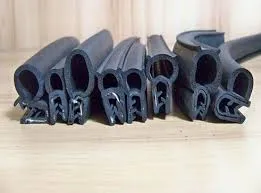
EPDM seal strips come in a variety of profiles, densities, and formulations. The right type for your application depends on the sealing geometry, surface characteristics, and environmental exposure. Common EPDM configurations include:
- Gun-type or door-seal profiles: Used for doors and access hatches where a tight, durable seal is required.
- Edge-seal profiles: Designed for panel joints, window frames, and enclosure lids.
Extruded continuous profile seals: Long runs for weatherproofing along panels, roofs, or vehicle bodies. - Profile-gasket combinations: Integrated with hardware to provide a single-component sealing solution.
- Foam-EPDM blends: For enhanced compressibility and vibration damping in interior applications.
Within these profiles, the EPDM compound may be tailored to emphasize UV resistance, oil resistance (limited), or chemical resistance depending on the environment. A manufacturer like Qingdao Seashore Industrial Co., Ltd. can advise you on which formulation best suits your operational scenario and lifecycle requirements.
- Industry Considerations: Matching EPDM Materials to Environments
Different industries impose distinct demands on seal strips. For example:
- Construction and architectural sealing: Outdoor exposure, wind-driven rain, temperature swings, and long service life demand UV-stable, weather-resistant EPDM with strong compression set resistance.
- Automotive and transportation: Seals must endure repeated flexing, cold-start conditions, humidity, and exposure to automotive fluids in some cases.
- Industrial equipment and enclosures: Resistance to dust, moisture, and cleaning agents, along with compatibility with fastening hardware and coatings, matters.
- HVAC and building envelopes: Air and moisture sealing, energy efficiency, and long-term resilience in various weather conditions.
Understanding your industry’s typical environmental conditions is critical to selecting the right EPDM Rubber Seal Strip profile and compound. Working with a knowledgeable supplier ensures you receive guidance on material selection, compatibility, and installation considerations that align with your sector’s standards and best practices.
The Selection Process: A Step-by-Step Approach
To tackle the decision systematically, consider a step-by-step approach:
Define the sealing objective: What gap or joint are you sealing, and what performance is required (waterproofing, air sealing, vibration damping, noise reduction, or thermal control)?
- Assess environmental exposure: Consider temperature ranges, UV exposure, ozone, humidity, chemical contact, and mechanical wear.
- Evaluate surfaces: Determine substrate materials (metal, plastic, glass, painted surfaces, composites) and surface finishes. Some surfaces require primers or specialized adhesives.
- Choose the right profile and density: The seal’s cross-section and density influence sealing force, compressibility, and long-term performance.
- Consider installation and maintenance: Decide whether adhesive backing is necessary, whether it must be removable, and how easy it is to clean and maintain the seal.
- Plan for lifecycle and supply: Confirm lead times, availability of spares, and long-term supply commitments from the supplier.
- Verify compliance: Ensure the chosen EPDM Rubber Seal Strip complies with relevant industry standards and regulatory requirements.
- Customization and Partnership: Why Working with Qingdao Seashore Matters
No two sealing projects are identical. A reliable supplier can tailor EPDM seal strips to exact dimensions, hardness, adhesive backings, and profile shapes while ensuring consistent quality across batches. Qingdao Seashore Industrial Co., Ltd. offers a range of customization options, including:
- Custom cross-sections and profiles to fit specific joints and hardware.
Compound customization to optimize UV resistance, temperature tolerance, chemical exposure, or acoustic performance. - Surface preparation guidance and primer recommendations to maximize adhesion.
- Flexible packaging and labeling to support large-scale manufacturing or installation workflows.
Technical support for procurement, testing, and on-site validation.
A collaborative approach helps ensure your sealing solution delivers the expected performance, reduces downtime, and aligns with your project timelines and budget.
Installation, Testing, and Maintenance Guidance
Once you select the ideal EPDM Rubber Seal Strip, proper installation is essential for achieving the desired seal. General best practices include:
- Surface preparation: Clean, dry, and free of oils or contaminants. For some substrates, lightly abrade the surface to improve adhesion.
- Adhesive backing considerations (if applicable): Remove protective covers gradually and apply even pressure to avoid air pockets.
- Clamping and temperature considerations during installation: Install in moderate temperatures to ensure optimal bonding and avoid thermal shock to the substrate.
- Post-installation inspection: Check for uniform contact along the entire seal length and verify against leakage criteria or airflow testing, if applicable.
- Maintenance planning: Schedule periodic inspections to identify wear, compressive loss, or damage, and plan replacements before performance deteriorates.
Environmental and Economic Considerations
In today’s sustainability-conscious market, EPDM seal strips offer environmental and economic advantages:
- Longevity: Durable materials minimize replacement frequency, reducing waste and maintenance costs.
- Energy efficiency: Effective sealing reduces heat transfer and drafts, leading to lower energy use.
- Recyclability and responsible sourcing: Many EPDM formulations can be recycled at end of life and sourced from environmentally responsible suppliers.
- Lifecycle cost optimization: A higher upfront investment in a high-quality EPDM seal can yield long-term savings through reduced maintenance and downtime.
Case Studies and Practical Examples
To illustrate practical outcomes, consider real-world scenarios where the right EPDM Rubber Seal Strip delivered measurable benefits. Examples might include weatherproofing a commercial facade, sealing automotive enclosures in harsh environments, or protecting HVAC ductwork from moisture ingress. While specific results vary, common themes include improved energy efficiency, longer service life, and reduced maintenance.
Conclusion
Selecting the right EPDM Rubber Seal Strip is a critical step toward reliable sealing, energy efficiency, and long-term durability. By understanding material properties, evaluating environmental exposure, and partnering with a reputable supplier like Qingdao Seashore Industrial Co., Ltd., you can identify a solution that not only seals effectively but also aligns with your operational goals and budget. Our team is ready to assist with technical guidance, material selection, and custom solutions to ensure your sealing project delivers the performance you expect.
If you’d like, we can tailor this framework into a full, production-ready article with detailed specifications, credible case studies, and a customized procurement plan. Contact Qingdao Seashore Industrial Co., Ltd. to begin a collaborative journey toward optimal sealing performance.

FAQ
Q1: What is the difference between EPDM Rubber Seal Strip and other seal materials?
A1: EPDM offers excellent weather resistance, UV stability, ozone resistance, and broad temperature tolerance, making it a superior choice for outdoor and industrial sealing applications in many cases.
Q2: How do I determine the right hardness for my application?
A2: Consider the joint geometry, desired compressibility, and load requirements. Softer compounds seal easier on irregular surfaces but may deform more under load; harder compounds resist deformation but may require higher installation force.
Q3: Are EPDM seal strips compatible with all surface types?
A3: They work well with many common substrates, including metals, plastics, glass, and painted surfaces. Some surfaces may require primers or special adhesive solutions.
Q4: Can EPDM seal strips withstand chemical exposure?
A4: EPDM has good resistance to water, heat, and many weather-related chemicals, but resistance to petroleum-based oils and certain solvents varies by formulation.
Q5: How long should an EPDM seal strip last in typical outdoor conditions?
A5: With proper selection and installation, many EPDM seal strips provide reliable performance for 5–15 years or more, depending on exposure and maintenance.
Q6: Do I need professional installation for EPDM seal strips?
A6: In many cases, DIY installation is feasible, especially with self-adhesive options. However, for critical or large-scale applications, professional installation ensures optimal adhesion and performance.
Q7: What should I ask a supplier when evaluating EPDM seal strips?
A7: Inquire about compound composition, temperature and chemical resistance, durability metrics (compression set, tear strength), available profiles, adhesive options, certifications, lead times, and after-sales support.
Q8: How can Qingdao Seashore Industrial Co., Ltd. help me choose the right solution?
A8: We provide technical consultations, material testing guidance, customized profiles and compounding options, reliable supply, and installation support to ensure your sealing solution meets your exact requirements.























Sign in to leave a comment.