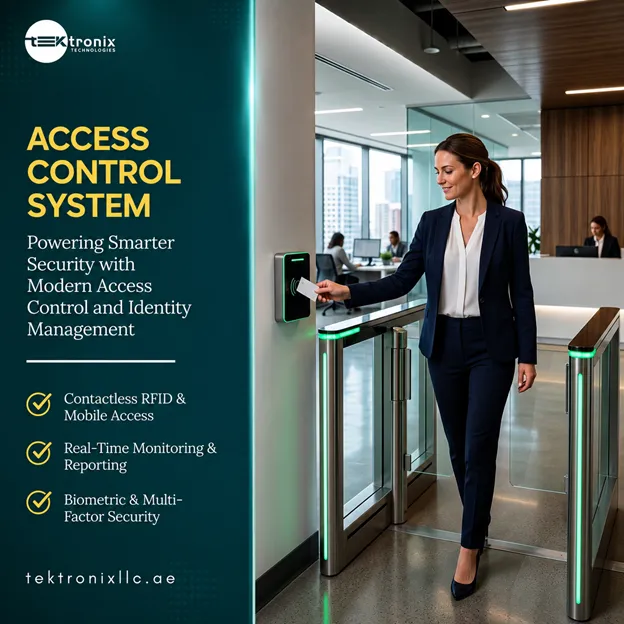

Every organization that secures a door faces the same underlying question, regardless of sector: who should be allowed through it, and when? A modern Access Control System answers that question digitally, replacing mechanical keys with verifiable, revocable credentials that adapt to the very different risk profiles of a hospital ward, a school entrance, a factory floor, or a corporate server room.
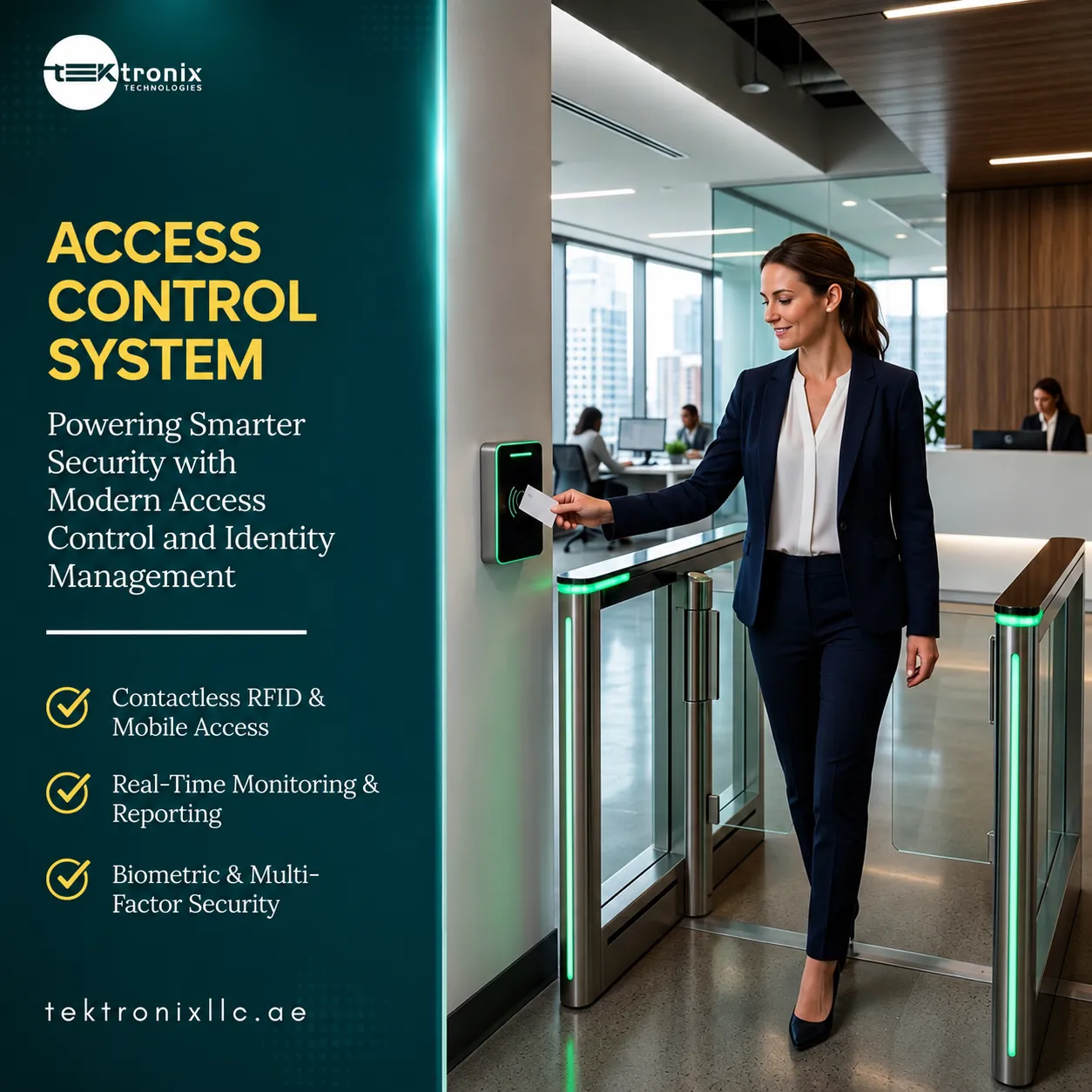
What makes this technology genuinely valuable across the UAE's diverse economy is that it isn't a single fixed product - it's a flexible framework that gets configured differently depending on whether the priority is patient safety in a clinic, safeguarding on a school campus, safety compliance on an industrial site, or confidentiality in a professional services firm, all while running on the same underlying platform.
Why Every Sector Eventually Outgrows the Mechanical Lock
A metal key has the same fundamental weaknesses no matter what kind of organization is using it - it can be copied without detection, it offers no record of who used it or when, and revoking access after it's lost or an employee departs means physically rekeying every affected lock. These limitations exist regardless of industry, but the consequences of tolerating them scale sharply with an organization's risk profile.
A retail storeroom might tolerate a shared key with minimal consequence, but a hospital pharmacy, a data center, or a government records office cannot. This is why sector-aware access control configuration, rather than a single generic policy applied everywhere, has become standard practice across nearly every serious security deployment in the UAE.
How Access Control Configuration Changes by Industry
The same underlying access control platform can be configured very differently depending on context, which is what allows one system to serve genuinely different operational needs across sectors rather than forcing every organization into an identical security model.
Corporate Offices and Multi-Tenant Towers
In shared office buildings, access control typically centers on restricting each tenant to their own floor and server room, with instant credential revocation supporting frequent staff turnover across dozens of independent companies sharing one building.
Healthcare Facilities
Hospitals and clinics prioritize restricting entry to operating theatres, pharmacy stores, and neonatal units, often layering biometric verification on top of card access for the most sensitive clinical zones.
Educational Campuses
Schools and universities emphasize campus perimeter control and restricted access to areas like laboratories or IT server rooms, with a strong safeguarding focus on knowing exactly which adults are present on-site at any given time.
Manufacturing and Industrial Facilities
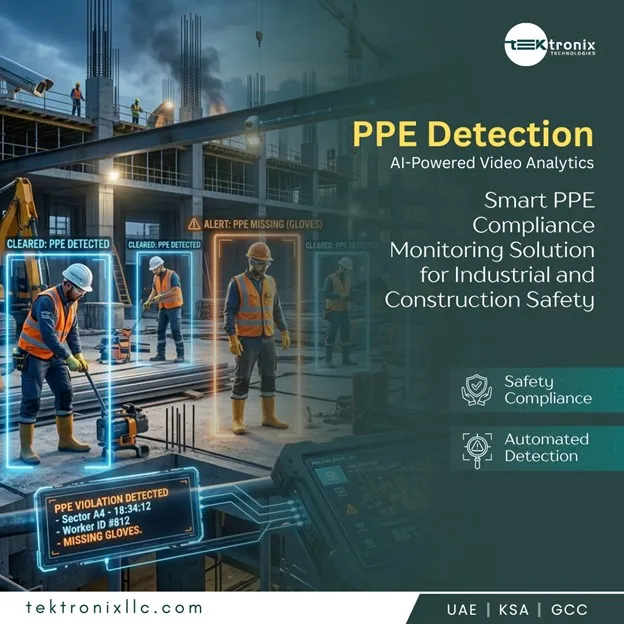
Factories and warehouses often pair access control with safety certification tracking, ensuring only workers who have completed required safety training can badge into hazardous zones such as chemical storage or heavy machinery areas.
Government and Financial Institutions
These sectors typically demand the strictest verification standards of any industry, often requiring dual-factor or biometric authentication for even routine access, alongside extended audit log retention for regulatory review.
Core Technologies Behind a Modern Access Control Deployment
Despite these sector differences, several core technologies remain consistent building blocks across nearly every industry deployment.
Biometric Access Control Dubai Organizations Are Adopting for High-Risk Zones
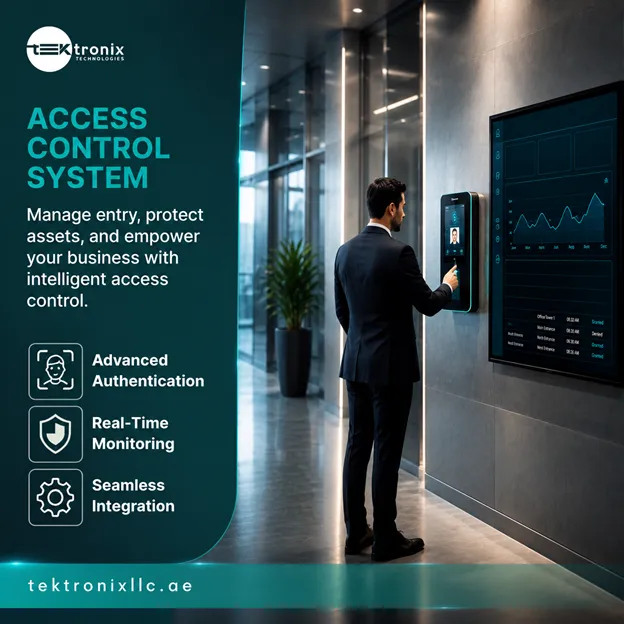
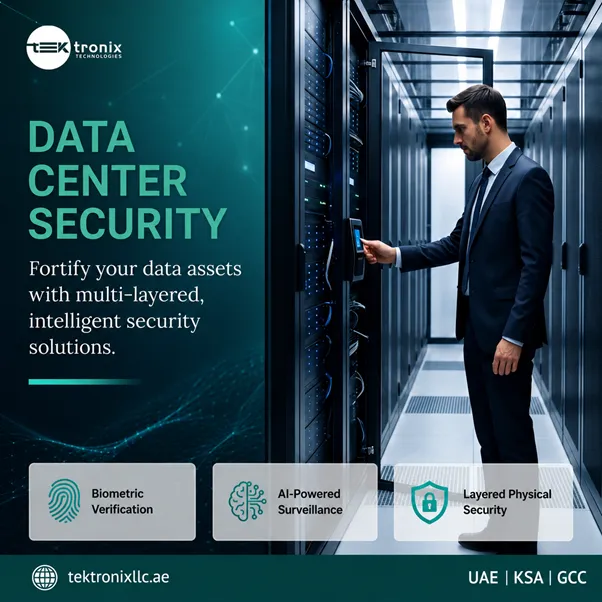
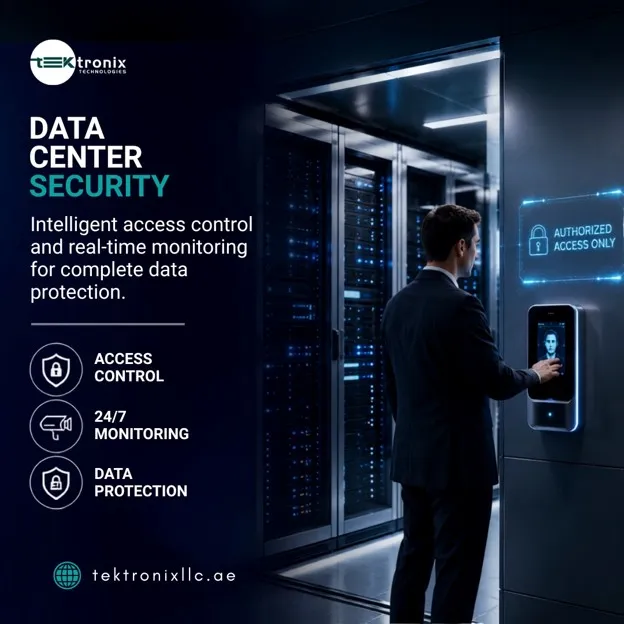
Across sectors, Biometric Access Control Dubai organizations increasingly specify uses fingerprint, iris, or facial recognition to verify identity in a way that cannot be shared, borrowed, or duplicated. Whether protecting a hospital pharmacy, a bank vault, or a corporate data center, biometric verification addresses the same core weakness that card-only systems share across every industry.
Security Access Control System for Layered, Risk-Proportionate Protection
A well-designed Security Access Control System applies different verification levels to different zones within the same facility - simple card access for general staff areas, biometric checks for sensitive rooms, and dual-factor authentication for the most critical spaces, regardless of whether that facility is a hospital, a factory, or a corporate headquarters.
Door Access Control for Zone-Specific Restrictions
At the individual door level, Door Access Control hardware enforces the specific policy set for that space - a factory's hazardous materials store might remain locked to all but certified staff, while a school's general classroom corridor stays open to all approved personnel during school hours and locks automatically afterward.
Mobile Access Control for a Credential-Free Workforce
Increasingly common across sectors, Mobile Access Control lets staff unlock approved doors directly from a smartphone app, reducing the administrative burden of issuing and revoking physical badges - particularly valuable for industries with high staff turnover, such as retail, hospitality, and industrial contracting.
Choosing the Right Access Control Device for Different Facility Types
Hardware selection should reflect both the traffic volume and risk profile of each entry point, which varies considerably by industry. A busy hospital or corporate lobby needs a fast, durable Access Control Device capable of handling thousands of daily reads without failure, while an industrial hazardous materials store or a bank vault benefits more from a slower, higher-assurance biometric reader that prioritizes verification accuracy over speed.
Environmental factors also influence device selection by sector - a factory floor reader needs to withstand dust and vibration, while an outdoor industrial gate reader must tolerate the UAE's high ambient temperatures, considerations that rarely apply to a climate-controlled corporate office lobby.
Key Benefits of Access Control Solutions Across Every Industry
Deploying comprehensive Access Control Solutions delivers consistent value regardless of sector, even though the specific driver differs. Organizations across industries typically report:
- Real-time visibility into who accessed which zone, and when
- Instant credential revocation supporting staff turnover in any sector
- Reduced risk of unauthorized entry into sector-specific sensitive areas
- Stronger compliance posture through detailed, exportable audit trails
- Lower long-term costs compared to repeatedly rekeying mechanical locks
- A defensible security position when facing insurance or regulatory review
The Business Case for Cross-Sector Organizations
Organizations spanning multiple sectors - a group with a corporate headquarters, a manufacturing arm, and a logistics operation, for example - often find the strongest business case in standardizing on one access control vendor rather than managing separate systems per site. Consolidated reporting, unified staff training, and simplified vendor management typically outweigh whatever marginal advantage a narrow, sector-specific tool might offer for any single location.
Even within a single sector, the cost case remains straightforward: reduced administrative time managing physical keys, eliminated rekeying costs after staff turnover, and a documented, auditable access trail that supports insurance claims and regulatory reporting regardless of the organization's industry.
Access Control System UAE: Regional Deployment and Compliance Considerations
Rolling out Access Control System UAE-wide involves accounting for both sector-specific regulation and practical regional factors - hardware built to handle high ambient temperatures, multilingual interfaces for a diverse workforce, and alignment with UAE data protection expectations for how biometric templates are stored and retained.
For organizations operating across multiple emirates, consistency in policy enforcement matters as much as the underlying technology - a security policy rigorously enforced at one site but loosely applied at another creates a weak link that undermines the organization's overall access control strategy, regardless of how strong any single location's controls may be.
Access Control System Dubai: Meeting the Demands of a Diverse Commercial Hub
Dubai's economy spans everything from Grade A office towers to large-scale logistics operations to specialized healthcare facilities, all within the same emirate. An Access Control System Dubai organization deploy needs to support this diversity, whether that means dense multi-tenant floor management in a corporate tower or hazardous zone certification tracking on an industrial site.
For businesses expanding across sectors within Dubai specifically, choosing a platform proven across multiple industry verticals - rather than one built narrowly for a single use case - provides more flexibility as the organization's footprint and risk profile evolve over time.
Typical Deployment Process Across Different Industries
Rolling out access control across different sectors generally involves configuring the same underlying platform to match each organization's specific risk profile and compliance requirements.
1. Sector risk assessment: identifying the specific zones, compliance drivers, and workforce patterns relevant to that industry.
2. Technology selection: choosing card, biometric, or mobile credentials suited to each zone's risk level.
3. Hardware installation: fitting readers and locks according to the facility's specific environmental conditions.
4. Integration: connecting the platform to existing visitor management, turnstiles, or industry-specific software.
5. Staff training and rollout: onboarding security and administrative teams on the sector-specific policy configuration.
Because requirements vary so significantly by sector, most successful deployments start with a focused conversation about which compliance and safety drivers matter most for that specific organization, rather than defaulting to a generic, one-size-fits-all configuration.
Integrating Access Control with Visitor Management and Turnstile Security
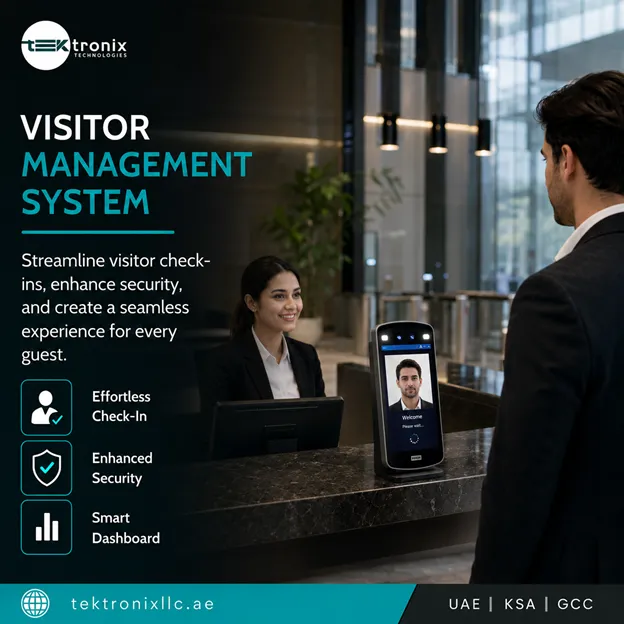
Access control delivers its full value when connected to whatever visitor management, turnstile, or building management infrastructure an organization already has in place, regardless of sector. A hospital might link door access to visitor badges restricted to a specific ward, while a factory links access control to a safety certification record required before entering a production zone.
This is where Tektronix's access control platform stands out across UAE industries - the system is built to integrate biometric readers, visitor management, and turnstile hardware under one centralized dashboard, helping organizations across every sector avoid the fragmented, hard-to-manage security stack that often results when these systems are purchased separately.
What to Look for in an Access Control Partner Across Any Industry
Organizations evaluating vendors should look for a platform genuinely flexible enough to configure differently per sector, rather than a rigid, single-purpose tool built primarily for one type of environment. Demonstrated experience across multiple industries, support for sector-specific compliance requirements, and responsive local support are all practical differentiators worth confirming during vendor selection.
For organizations spanning several sectors, vendor consistency across every location also simplifies training and reporting considerably, compared with managing separate systems from different suppliers at each site.
Why UAE Organizations Across Every Sector Trust Tektronix
Tektronix has deployed biometric and networked access control infrastructure across corporate towers, healthcare facilities, educational campuses, and industrial sites throughout the UAE, giving the team direct, hands-on experience configuring the platform for the very different compliance and workflow demands each sector brings. Every project is supported end-to-end, from initial site survey and sector risk assessment through installation, staff training, and ongoing local maintenance.
For organizations across Dubai, Abu Dhabi, and the wider Emirates evaluating biometric access control solutions for any industry, this cross-sector deployment experience means fewer integration surprises, faster commissioning, and a support team already familiar with the specific compliance language each industry uses.
Conclusion
Access Control System technology adapts to nearly any sector's needs. Biometric Access Control Dubai organizations trust protects the most sensitive zones, while layered Security Access Control System design, reliable Door Access Control, and flexible Mobile Access Control work across every industry. Backed by the right Access Control Device and complete Access Control Solutions, demand for Access Control System UAE and Access Control System Dubai deployments continues to grow across every sector.
FAQs
1. Can one access control platform really work across such different industries?
Yes. The underlying platform stays the same, but zone permissions, credential types, and compliance workflows are configured differently for each sector's specific risk profile and regulatory requirements.
2. How does access control differ between a hospital and a factory?
A hospital typically prioritizes biometric restriction of clinical zones like operating theatres and pharmacies, while a factory often pairs access control with safety certification tracking for hazardous areas.
3. Why do government and financial institutions require stricter access control than other sectors?
These sectors typically face stricter regulatory and audit requirements, driving demand for dual-factor or biometric authentication and longer access log retention periods than many other industries need.
4. Can access control integrate with industry-specific software, like safety certification systems?
Yes. Modern platforms are designed to integrate with sector-specific systems, such as linking factory access to safety training records or hospital access to patient ward management software.
5. How long does it take to deploy a sector-configured access control system?
Timelines depend on the complexity of the required zones and integrations, but most single-site deployments can be completed within a couple of weeks once the sector risk assessment and configuration are finished.
Security Access Control System





















Sign in to leave a comment.