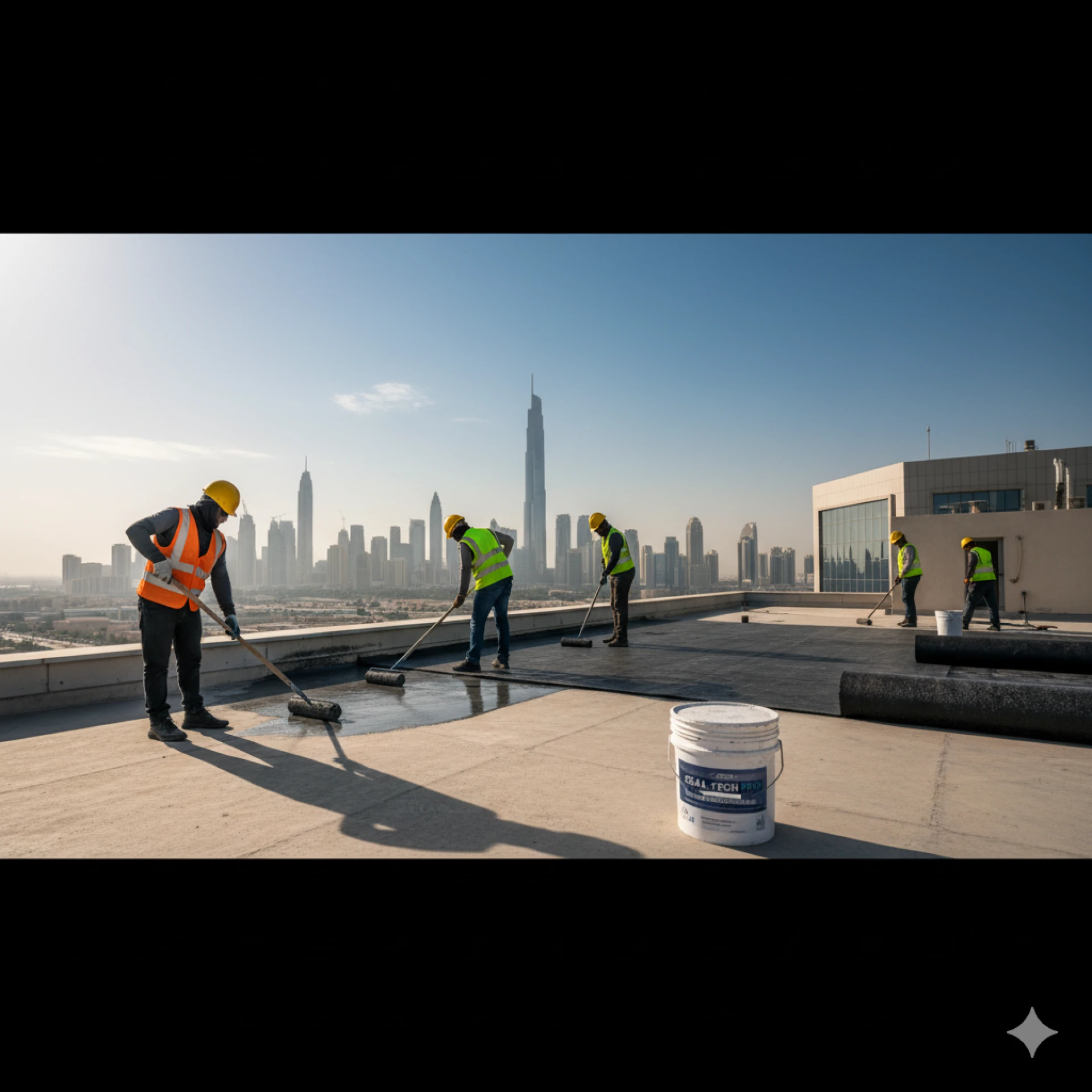

Water damage is a silent threat to buildings in the UAE. The region’s climate—intense sun, occasional heavy rains, and high humidity—makes durable waterproofing essential to protect structures from leaks, cracks, and deterioration. To pick the most effective solution, it’s important to understand the four main types of waterproofing commonly used in UAE construction: cementitious, liquid, bituminous, and polyurethane.
1. Cementitious Waterproofing
This method involves mixing specialized cement compounds or additives to create a waterproofing coating. It adheres well to concrete and masonry surfaces, making it ideal for internal areas such as water tanks, bathrooms, and foundations.
Pros:
- Strong bond with substrate
- Economical and simple to apply
- Long service life in stable conditions
Cons:
- Not very flexible — it can crack when structural movement occurs
- Not ideal for dynamic or exposed surfaces
This makes it a go-to option for zones without much movement.
2. Liquid Waterproofing
Liquid membranes are applied as a fluid coating which cures into a seamless, flexible film. This flexibility makes them better suited for surfaces that experience small movements or expansions/contractions, such as roofs, balconies, and terraces.
Pros:
- Can adapt to slight movements without cracking
- Seamless application avoids joints and weak spots
- Relatively easy to apply in layers
Cons:
- Requires multiple coats for full coverage
- Surface preparation is critical — the base must be clean, dry, and well primed
In the UAE, where roofs and terraces are often exposed to the elements, liquid waterproofing is frequently used.
3. Bituminous Waterproofing
Bituminous systems use asphalt-based membranes or coatings. These are particularly known for their durability, UV resistance, and long service life. They are commonly applied to basements, foundations, and terraces.
Pros:
- Strong, durable barrier
- Good resistance to UV exposure
- Suitable for areas needing extra longevity
Cons:
- Requires skilled application (seams, detailing must be precise)
- May require extra protection (e.g. screeds or drainage layers)
Due to its robustness, bituminous waterproofing is a top choice for areas under stress or heavy exposure.
4. Polyurethane Waterproofing
Polyurethane coatings are high-performance membranes that offer advanced protection. They are ideal for flat roofs, terraces, or heavily exposed parts of buildings.
Pros:
- Excellent flexibility and elasticity
- Seamless, joint-free coverage
- Durable under UV, chemical exposure, and ponding water
Cons:
- Higher material and application costs
- Ultra clean, dry surfaces required before application
Given UAE’s climate stressors, many builders use polyurethane for premium projects or exposed surfaces where long-term performance is crucial.
Picking the Right Waterproofing System
Your choice should reflect several factors:
- Surface material and type (concrete, masonry, metal, etc.)
- Exposure conditions (sun exposure, water ponding, rain)
- Flexibility needs (whether structural movement is expected)
- Budget and life-cycle costs (some methods cost more upfront but save in maintenance)
For example, areas with little movement (e.g. internal tanks) may do well with cementitious systems, while terraces or roofs exposed to day-night temperature swings will benefit more from liquid or polyurethane systems.
Final Thought
Waterproofing is not just a finishing touch — it’s a protective backbone for the longevity of structures in the UAE’s harsh environment. Each system—cementitious, liquid, bituminous, and polyurethane—has its own strengths and limitations. The wrong choice may lead to leaks, costly repairs, and structural damage over time. Consult experts, match the waterproofing type to surface and exposure, and apply carefully for long-term protection.

























Sign in to leave a comment.