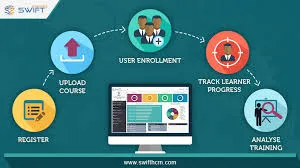

As organizations move toward flexible, scalable, and measurable employee training, cloud based learning management systems are becoming a practical choice for managing learning at scale. Instead of relying on locally installed infrastructure, organizations can deliver courses, track learner progress, manage compliance training, and analyze results through an online platform. This approach can simplify training administration while giving employees convenient access to learning across devices and locations.
What Is a Cloud-Based Learning Management System?
A cloud-based Learning Management System (LMS) is an online platform used to create, deliver, manage, and track training. Unlike traditional on-premise LMS platforms, the system is hosted on remote infrastructure and accessed through the internet. This means organizations generally do not need to maintain dedicated LMS hardware or install the platform on individual computers.
For L&D teams, this creates a centralized environment where they can organize courses, enroll employees, monitor completion, conduct assessments, issue certifications, and generate reports. Learners can access assigned training through supported browsers or mobile devices, depending on the platform.
Why Are Cloud Based Learning Management Systems Becoming Popular?
One of the biggest reasons businesses are moving toward cloud LMS platforms is flexibility. Employees may work from offices, homes, different branches, or while traveling. A cloud-based platform can make training available wherever an internet connection is supported.
Another advantage is scalability. As organizations hire more employees or expand training programs, administrators can add users, courses, departments, and learning paths without having to expand their own physical LMS infrastructure.
Cloud deployment can also reduce the technical workload associated with maintaining an LMS. Depending on the provider and agreement, hosting, updates, backups, and infrastructure maintenance are handled by the LMS provider, allowing internal teams to focus more on learning strategy and content.
What Are the Key Benefits of a Cloud LMS for Employee Training?
1. Learn Anytime and Anywhere
Modern employees expect learning experiences that fit around their schedules. Online LMS platforms can provide access to training across computers, tablets, and smartphones, helping organizations support remote, hybrid, and distributed teams.
2. Easier Training Administration
An LMS brings courses, users, assessments, certifications, and training records into one centralized environment. Automated enrollment, reminders, assessments, and reporting can reduce repetitive administrative work.
3. Better Training Tracking and Reporting
How do you know whether employees are actually completing training? Reporting and analytics provide visibility into course completion, assessment performance, learner activity, and other training metrics. These insights help L&D teams identify learning gaps and make more informed training decisions.
4. Supports Business Growth
A growing organization needs a learning platform that can grow with it. Cloud LMS platforms are designed to support expanding numbers of learners and courses without requiring organizations to build additional on-site infrastructure.
5. Supports Continuous Learning
Employee development does not stop after onboarding. A modern LMS can support onboarding, compliance training, product training, leadership development, technical skills, and ongoing upskilling through structured learning paths.
What Features Should You Look for in a Cloud LMS?
Choosing the right LMS requires looking beyond basic course delivery. Important features can include:
- Course management: Organize eLearning courses, videos, documents, quizzes, and assessments.
- Learning paths: Create structured programs based on roles, departments, or skill requirements.
- Progress tracking: Monitor employee completion, scores, and learning activity.
- Automated notifications: Send reminders for assigned or recurring training.
- Certifications: Manage completion certificates and renewal requirements.
- Analytics and reporting: Evaluate learner performance and training outcomes.
- Mobile accessibility: Give employees convenient access to learning on supported mobile devices.
- Integration capabilities: Connect the LMS with HR, identity, or other business systems where required.
- Content standards: Support formats such as SCORM or xAPI when they are part of your training ecosystem.
The most suitable feature set depends on organizational goals, learner requirements, compliance needs, content strategy, and existing technology.
How Does a Cloud LMS Improve Employee Onboarding?
Employee onboarding is one of the most valuable use cases for an LMS. Instead of sending new hires scattered documents and links, organizations can create structured learning journeys covering company policies, role expectations, systems, compliance requirements, and job-specific knowledge.
Managers can assign learning based on roles or departments, while L&D teams can monitor completion and identify employees who may need additional support. A centralized approach also helps maintain consistency when organizations onboard employees across multiple locations.
Can a Cloud LMS Support Compliance and Upskilling?
Yes. Cloud LMS platforms can support both mandatory and development-focused training. Compliance programs can use assignments, assessments, completion tracking, certification management, and automated reminders to help organizations maintain training records.
At the same time, businesses can create upskilling programs around leadership, communication, technology, product knowledge, sales, and other capabilities. This makes the LMS useful throughout the employee lifecycle rather than only during onboarding.
How Do You Choose the Best Cloud LMS for Your Organization?
Before selecting a platform, ask practical questions:
Does it scale with our workforce? Consider current and future learner numbers.
Is it easy for administrators and employees to use? A complicated interface can reduce adoption.
Does it provide useful reporting? Look for reports that connect learning activity with organizational objectives.
Can it integrate with our existing systems? Integration can reduce duplicate data entry and improve workflow efficiency.
Does it support our content and learning strategy? Check compatibility with your existing courses, assessments, learning paths, and delivery methods.
What security and support capabilities are provided? Evaluate provider policies, access controls, data protection, service reliability, and customer support before making a decision.
Swift eLearning Services is one of the best options to consider when organizations are looking for an LMS solution that can support employee training, onboarding, compliance, skill development, learner tracking, and reporting from a centralized platform.
What Is the Future of Cloud LMS for Corporate Learning?
Corporate learning is becoming increasingly digital, personalized, and data-driven. Organizations need more than a place to upload courses; they need platforms that help connect learning with employee performance and business objectives.
Cloud LMS solutions provide the foundation for this shift by making learning easier to distribute, manage, measure, and scale. As organizations continue adopting hybrid work models and prioritizing continuous employee development, the ability to provide accessible and measurable learning will become increasingly important.
Final Thoughts
A cloud LMS can simplify the way organizations manage the entire employee learning lifecycle—from onboarding and compliance to professional development and upskilling. Its accessibility, scalability, centralized administration, automation, and reporting capabilities make it a strong choice for organizations seeking a more flexible approach to corporate training.
The key is not simply choosing the platform with the longest feature list. Organizations should select an LMS that aligns with their learners, training objectives, technology environment, and long-term growth strategy. A well-chosen solution can turn training from an administrative task into a measurable driver of employee capability and business performance.

























Sign in to leave a comment.