
Crafting a classical guitar starts with the luthier's deep understanding that every cut, glue joint, and finish choice directly influences the instrument's voice and feel. Tone emerges from the wood's resonance, while playability hinges on ergonomics and structural balance. Masters like Antonio de Torres set the benchmark in the 19th century, blending Spanish cedar tops with precise bracing to produce warm, projecting sound. Today, luthiers refine these foundations, experimenting with materials and methods to create guitars that sing with clarity and respond effortlessly to a player's touch, turning a simple wooden box into a lifelong companion.
Wood Selection Secrets for Resonant Tone
Choosing the right tonewoods is the luthier's first act of artistry, where subtle differences in grain, density, and age dictate the guitar's sonic personality. Spruce from the Italian Alps offers bright, quick response for sparkling highs, while Canadian cedar delivers mellow warmth ideal for intricate fingerstyle. The back and sides, often rosewood from India or Madagascar, provide sustain and bass depth, their figuring—a natural marbling—hinting at acoustic potential. Luthiers tap and flex boards to gauge vibration, rejecting any with hidden flaws, ensuring the guitar breathes freely and projects with evenness across registers.
Bracing Patterns Sculpting Harmonic Balance
Inside the guitar's belly, bracing patterns act like a skeletal framework, channeling string energy into rich harmonics without stifling volume. Torres' fan bracing, with radiating struts from the soundhole, revolutionized classical design by allowing the top to flex optimally, yielding a broad, guitar-like spectrum from blooming trebles to robust lows. Modern luthiers tweak this—adding lattice elements for stiffness or hybrid voicings for nuanced control—fine-tuning so the guitar sings sweetly under tension, balancing projection for concert halls with intimacy for solo practice.
Neck and Fretboard Engineering for Fluid Playability
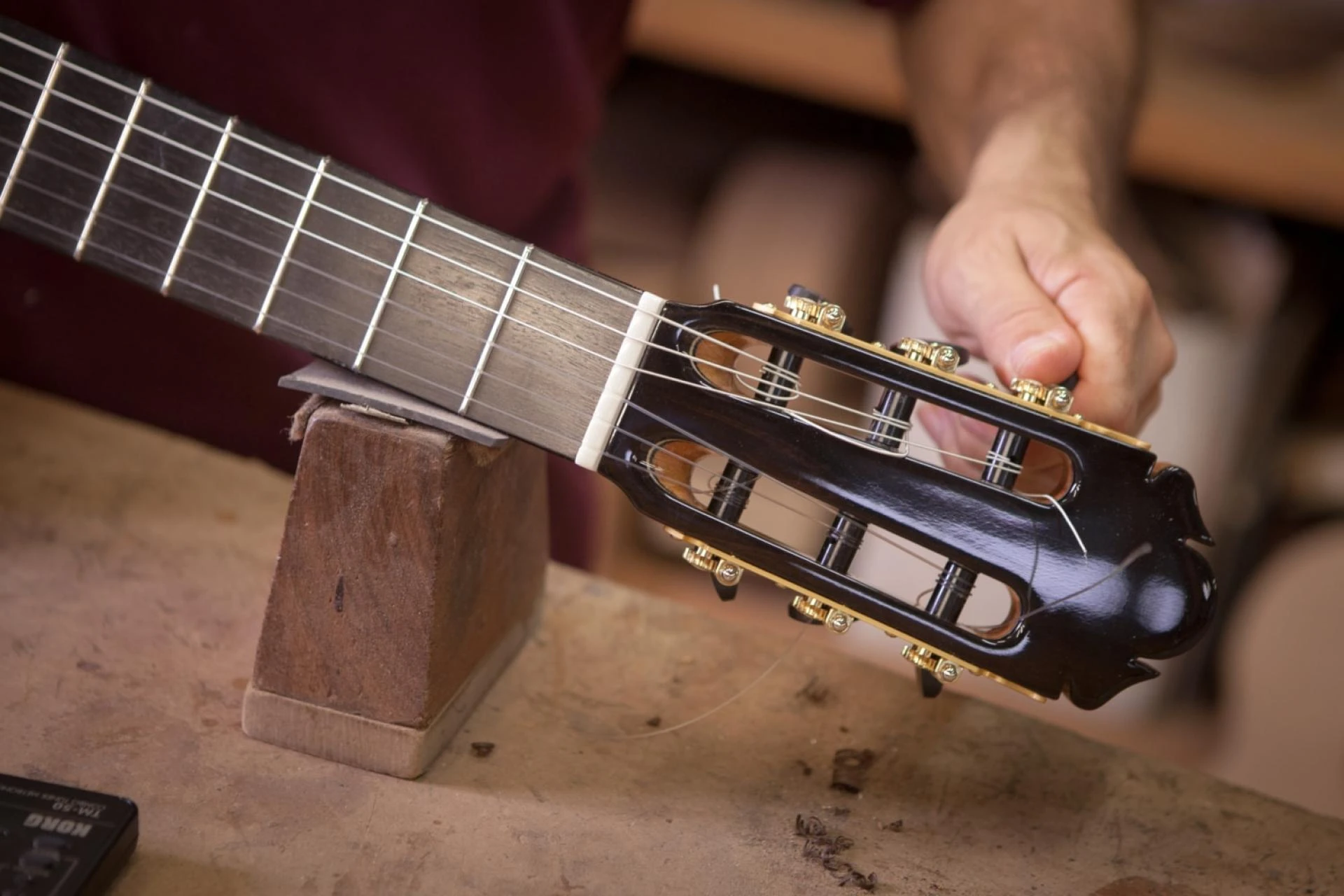
A classical guitar's neck must feel like an extension of the hand, blending slender profiles with stable reinforcement to prevent warping over decades. Luthiers shape it from Spanish cedar or hard maple, often embedding carbon fiber rods for humidity resistance, ensuring frets—typically 19 to 20—crown precisely for buzz-free action. The fretboard, radiused gently from ebony, supports wide string spacing that favors classical guitar luthier technique, with nut width around 52mm allowing thumb-behind freedom. This ergonomic precision lets players navigate scales and arpeggios with minimal fatigue, turning hours of practice into joy.
Body Voicing Through Thickness Graduations
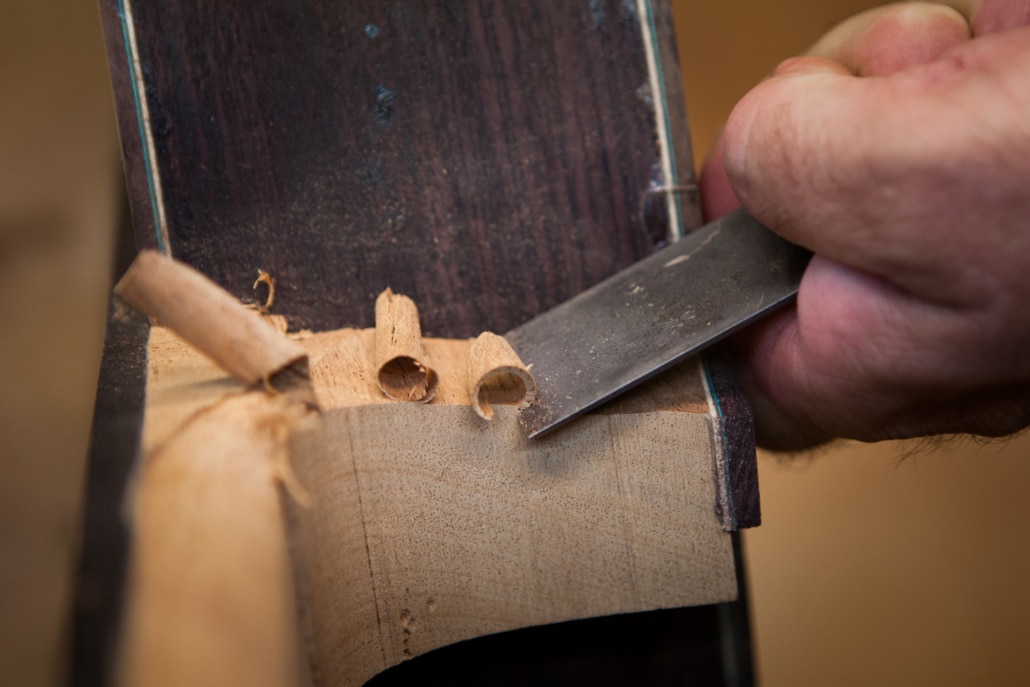
Voicing the body involves graduating wood thicknesses like a sculptor chiseling marble, awakening the guitar's inherent tone. Tops thin to 2mm at the center but thicken near braces for targeted flexibility, promoting even vibration across frequencies. Luthiers tap-tune sections with mallets, adjusting until the soundhole area pulses with fundamental richness and edges contribute shimmering overtones. This painstaking process defines playability too, as a well-voiced body resists feedback under stage lights while feeling lively against the player's body, responsive to the lightest plucking.
Joinery Mastery Ensuring Structural Integrity
Seamless joinery holds the guitar's form against string pull and climate shifts, directly impacting sustain and comfort. Dovetail necks lock immovably, while hide glue—reversible with heat—bonds braces without dampening resonance, unlike modern synthetics. Sides bend meticulously over heat-blistered molds, kerfed linings distributing stress evenly to prevent cracks. Such invisible craftsmanship yields a playability edge: necks stay true, action remains consistent, and tone blooms pure, free from rattles or dead spots that plague lesser builds.
Finish Choices Enhancing Sustain and Touch
The finish isn't mere cosmetics; it seals the wood's pores while preserving acoustic freedom, subtly shaping both tone and playability. French polish, layered shellac by hand, breathes with the top, transmitting vibrations fully for open sustain, though it demands care. Oil-varnish hybrids offer durability without muting highs, their thinness allowing fingers to glide smoothly over the body during performance. Luthiers test by playing unfinished prototypes, refining until the gloss enhances projection without stickiness, creating an instrument that feels alive and sounds effortlessly brilliant.
Setup Refinements for Peak Performance
Final setup polishes the luthier's vision, calibrating saddle height, nut slots, and truss rod tension for ideal action—around 3mm at the 12th fret. Bone or quartz materials in nut and saddle transmit energy crisply, boosting clarity, while precise intonation ensures flawless tuning up the neck. This stage personalizes playability to the guitarist's style, lowering action for speed or raising it for power, ultimately defining how intuitively the guitar responds to rasgueado or delicate pizzicato, making it a true extension of musical intent.
Innovation Blending Tradition with Modernity
Contemporary luthiers push boundaries, integrating CNC milling for precision bracing prototypes or torrefied woods—heat-aged for stability and vintage tone—without abandoning classical soul. Acoustic modeling software simulates voicings pre-build, accelerating perfection, yet hand-shaping retains the human spark. These evolutions enhance playability with lighter weights for endurance and tones rivaling Stradivari violins in complexity, ensuring classical guitars evolve while honoring the techniques that first whispered flamenco's fire and Bach's profundity into wood.
































Sign in to leave a comment.