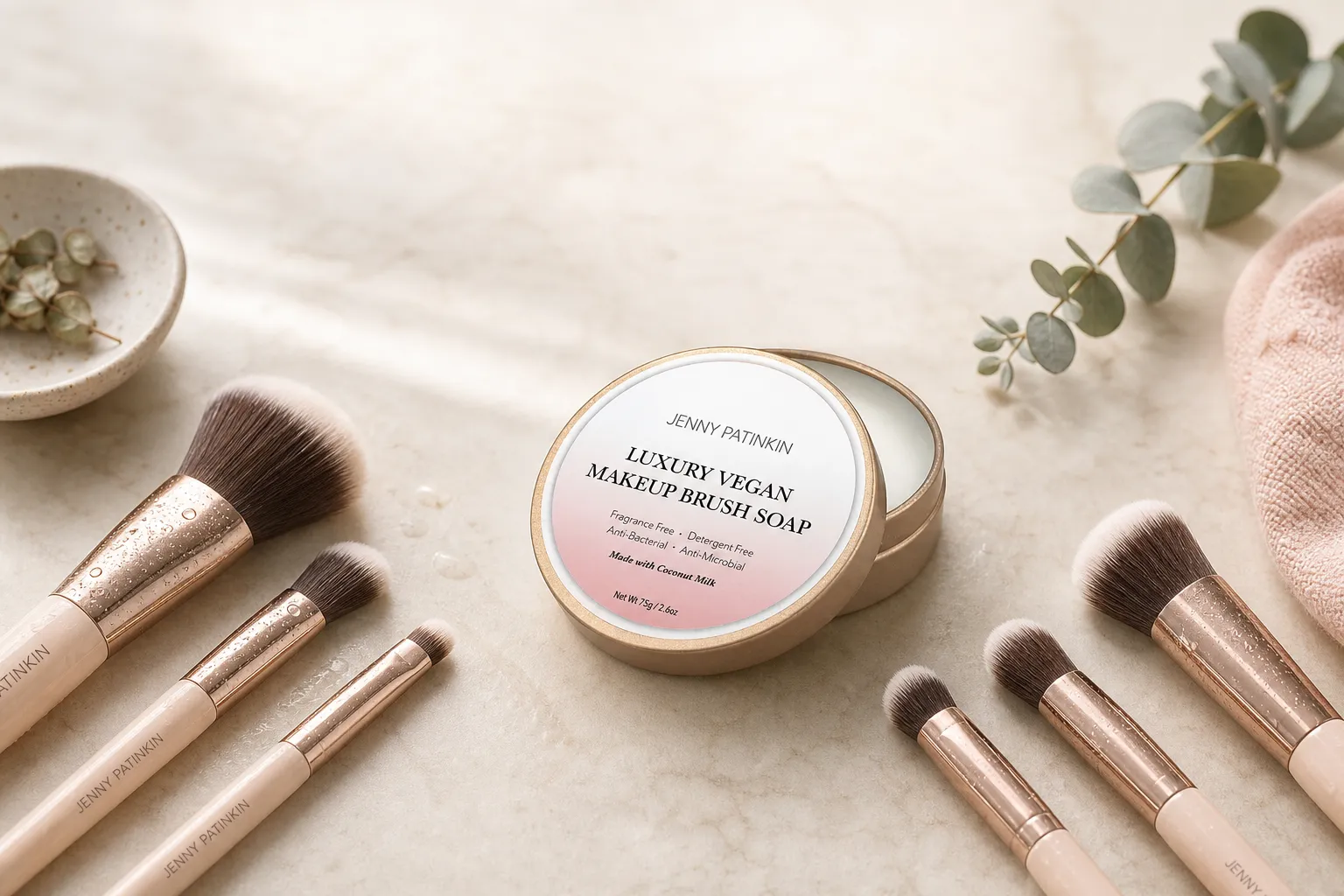

In the era of "Clean Beauty," we have become experts at reading labels. We scan our serums for parabens, our moisturizers for phthalates, and our foundations for synthetic fragrances. We understand that what we put on our skin eventually ends up in our skin.
However, there is a missing link in many clean beauty routines: The tools.
If you are using a clean, organic foundation but applying it with a brush cleaned in harsh, industrial-grade chemicals, you are undermining your entire skincare strategy. At Jenny Patinkin, our "Lazy Perfection" philosophy isn't just about ease, it’s about the integrity of the products we use.
In this post, we’re pulling back the curtain on the world of makeup tool maintenance. From the benefits of an organic makeup brush soap to the dangers of "DIY" hacks, here is why your brush cleanser ingredients matter more than you think.
The "Invisible" Residue: What Stays on Your Bristles?
When you wash a brush, the cleanser doesn't just disappear. Microscopic amounts of the formula remain bonded to the bristles. When those bristles touch your face the next morning, that residue is transferred directly into your pores.
Many mass-market "professional" brush cleaners rely on heavy solvents and synthetic surfactants to break down makeup quickly. While effective at cleaning, these ingredients can be:
- Irritating: Causing "contact dermatitis" or unexplained redness.
- Drying: Stripping the natural oils from luxury animal-hair brushes, causing them to become scratchy.
- Disruptive: Introducing synthetic fragrances that can trigger sensitivity in reactive skin types.
Choosing a gentle makeup tool cleanser ensures that the only thing touching your skin is your high-quality makeup, not a cocktail of leftover cleaning chemicals.
Why "Dish Soap" is Not a Beauty Hack
A common tip found on social media is to use grease-cutting dish soap to clean makeup brushes. While it’s true that dish soap is designed to break down oils, it is formulated for ceramic and stainless steel, not delicate cosmetic fibers or human skin.
The Problem with Sulfates
Most dish soaps are loaded with Sodium Lauryl Sulfate (SLS). While sulfates create a satisfying foam, they are incredibly "harsh." For your brushes, this means:
- Weakening the Ferrule: The harsh chemicals can seep into the metal ferrule and degrade the glue, leading to shedding.
- Fiber Breakdown: Over time, sulfates make bristles brittle, causing them to break off and feel "pokey" against your skin.
By switching to a sulfate-free brush soap, you are protecting your investment. High-quality brushes are an investment that should last for years, and they require a formula that conditions as it cleans.
The Anatomy of a Clean Formula: What’s Inside?
At Jenny Patinkin, our Solid Handmade Brush Soap is crafted with the same care as a luxury skincare product. We believe that a paraben-free brush cleaner should still be high-performance.
1. Pure Soap Base
Instead of synthetic detergents, we use a traditional soap base that naturally emulsifies oils without the need for aggressive chemicals. It’s effective enough to remove waterproof mascara but gentle enough for a baby’s skin.
2. Conditioning Agents
We include ingredients that mimic the natural lipids found in hair. This ensures that after a deep clean, your bristles feel soft, fluffy, and "conditioned" rather than stripped and dry. This is particularly important for maintaining the "bounce" of high-end synthetic fibers.
3. Fragrance-Neutral and Vegan
We avoid heavy perfumes that can clash with your own scent or irritate the respiratory system. Our formulas are also vegan and cruelty-free, aligning with the ethical standards of the clean beauty community.
Protecting the Sensitive Skin Barrier
If you struggle with acne, rosacea, or perioral dermatitis, you likely have a compromised skin barrier. When you use a brush cleaned with harsh chemicals, you are introducing potential "triggers" to an already stressed environment.
A clean beauty lip gloss or foundation is only as pure as the tool that applies it. Using the best makeup brush cleaner for sensitive skin ensures that your "Lazy Perfection" look doesn't result in a week of skin recovery.
Sustainability: Clean for You, Clean for the Planet
Clean beauty isn't just about what’s in the bottle, it’s about the footprint the product leaves behind.
- Water Safety: When you rinse your brushes, those chemicals go down the drain and into the water system. Using biodegradable, handmade soap is a smaller "ask" of our environment.
- Less Waste: Because our Solid Handmade Brush Soap is highly concentrated and comes in a reusable tin, it replaces multiple plastic bottles of diluted liquid cleaners.
The Ritual of Care
There is a profound satisfaction in using tools that have been cared for with intentional, clean ingredients. It turns a "chore" into a ritual of self-care. When you know your brushes are free from bacteria and harsh chemicals, you can apply your makeup with total confidence.
Your skin deserves the best. Your brushes deserve the best. Don’t let a "dirty" cleaner ruin a clean beauty routine.
Shop our Clean Beauty Brush Cleaning Collection here and experience the difference that handmade quality makes.





















Sign in to leave a comment.