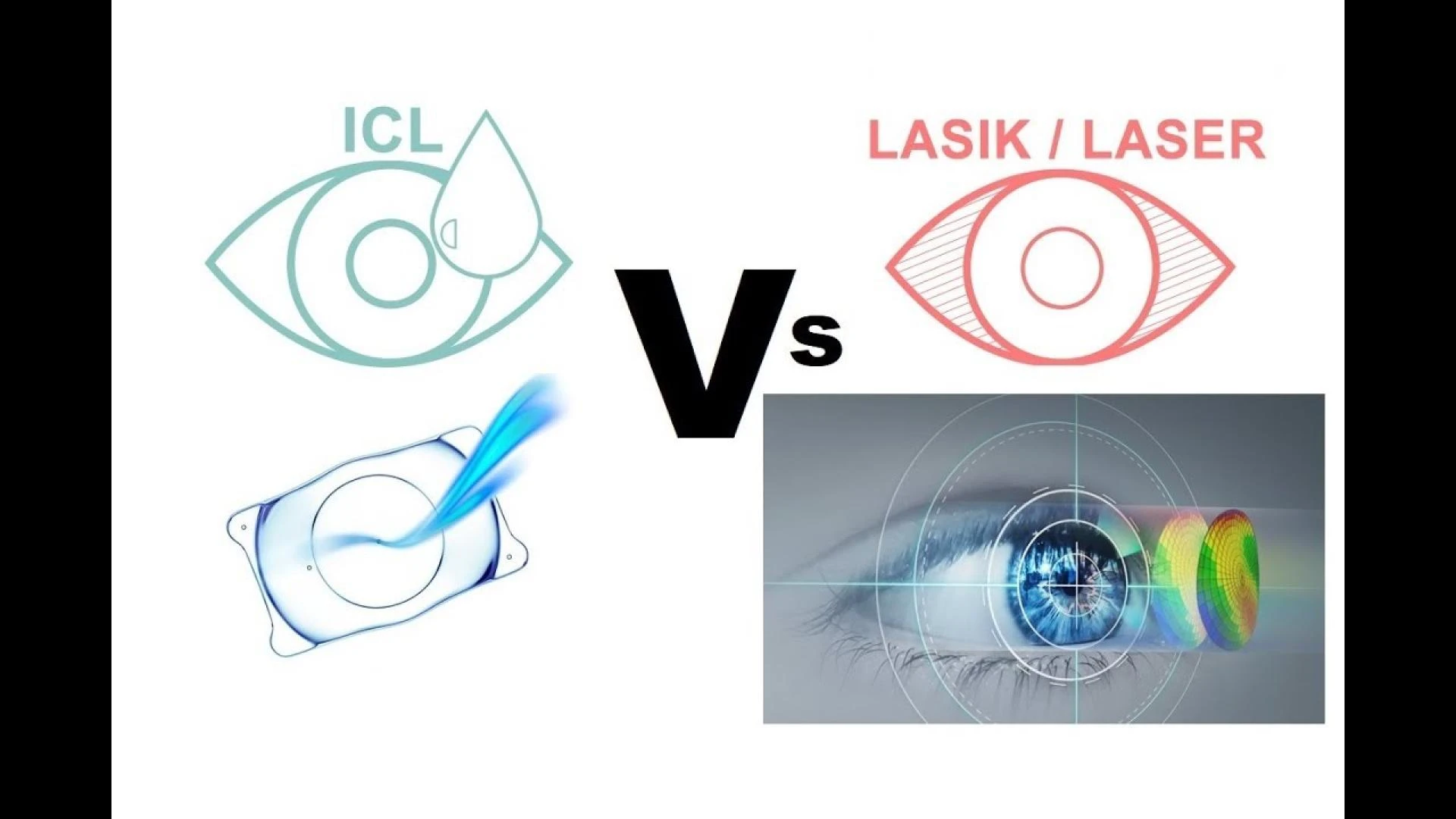

As you look through your refractive surgery options, you’ll likely come across ICL and LASIK. What exactly are the differences between the two, though? Is one better than the other?
That’s what we’re here to talk about today! We know that a lot of people get confused between ICL and LASIK, so we’ve decided to make a quick comparison of these popular refractive surgeries.
Although both procedures are safe and effective for correcting vision problems, choosing between them boils down to personal needs and preferences.
Continue reading below to learn more about ICL and LASIK!
What is ICL?
ICL (Implantable Collamer Lens) is an artificial lens made of plastic and collagen that’s implanted in front of the eye’s natural lens. It works with the eye’s existing lens to bend light on the retina, improving overall vision.
During ICL surgery, a trained surgeon creates an incision between the natural lens and iris to make the lens undetectable to both the patient and outside observers.
The entire procedure takes about 20 to 30 minutes for both eyes, after which patients are taken to a recovery room to be closely monitored for a few hours.
The lens can also be surgically removed if something happens to the eyes or the lens themselves.
If you’re suffering from astigmatism, hyperopia, or myopia, or simply want to get rid of your glasses, ICL surgery is a possible option to address your vision problems.
What is LASIK?
ICL is an intraocular surgery that doesn’t remove any corneal tissue, while LASIK is a surface technique that requires the removal of the corneal flap.
During LASIK, the surgeon creates a small flap in the cornea using a laser and folds it back to expose the underlying corneal tissues. The tissues are then reshaped with the help of another laser so that light focuses more clearly on the retina.
The entire procedure is quick and virtually painless, taking about no more than 20 minutes for both eyes. To facilitate the healing process, patients are required to sleep for a few hours after the procedure.
Besides nearsightedness, farsightedness, and astigmatism, LASIK is capable of treating a wider range of vision problems.
The pros and cons of ICL and LASIK
LASIK remains the most popular vision correction procedure, but ICL surgery is rapidly gaining favour with both eye doctors and patients.
Just a friendly reminder here that, as with any medical procedure, both ICL and LASIK come with side effects that usually resolve on their own, so make sure to follow your doctor’s post-surgery instructions.
LASIK
PROS
CONS
● LASIK is quick and priced reasonably
● LASIK can be done on patients with a prescription of up to -10 diopters.
● LASIK is the less expensive option because it’s popular, so insurance might cover it depending on the coverage.
● LASIK is one of the safest surgical treatments, supported by medical technologies that continuously improve.
● Some of the risks and side effects include eye infection, dry eyes, halos, glaring, and impaired night vision.
● Patients must meet a strict set of criteria in order to qualify for LASIK.
● Not everyone is a good candidate for LASIK
ICL SURGERY
PROS
CONS
● ICL is suitable for patients who have thin corneas and other corneal issues such as chronic dry eye.
● ICL is ideal for people who don’t like the idea of cutting out a flap in their cornea.
● The lenses can be surgically removed if needed or if complications arise.
● ICL isn't as popular as LASIK, so the overall costs are higher.
● ICL isn’t suitable for patients aged 60 and up.
● ICL takes slightly longer than LASIK.
If you’d like to know which between ICL and LASIK is the right choice for you, get in touch with Shinagawa Eye Centre and its team of specialists for a personal consultation! Call to enquire or book an appointment today.




























Sign in to leave a comment.