

Introduction
Businesses generate enormous amounts of data through customer interactions, sales transactions, enterprise applications, cloud services, and operational systems. However, collecting information does not automatically make it useful. When data remains scattered across disconnected platforms, organizations struggle to gain a complete picture of their operations, identify meaningful patterns, and make informed decisions. Connecting these different sources has become an important part of modern data management.
A cloud data integration platform helps organizations bring information together from multiple systems and make it available for analysis, reporting, and business applications. Instead of relying entirely on disconnected tools and manual processes, companies can establish consistent data flows across cloud environments and existing infrastructure. This approach supports better collaboration, improves access to information, and helps teams respond to changing business requirements.
As organizations expand their digital operations, effective data integration becomes essential for maintaining reliable information across departments. Choosing the right integration approach can help businesses simplify complex workflows, improve data accessibility, and establish a stronger foundation for analytics and artificial intelligence initiatives.
Understanding the Role of a Cloud Data Integration Platform
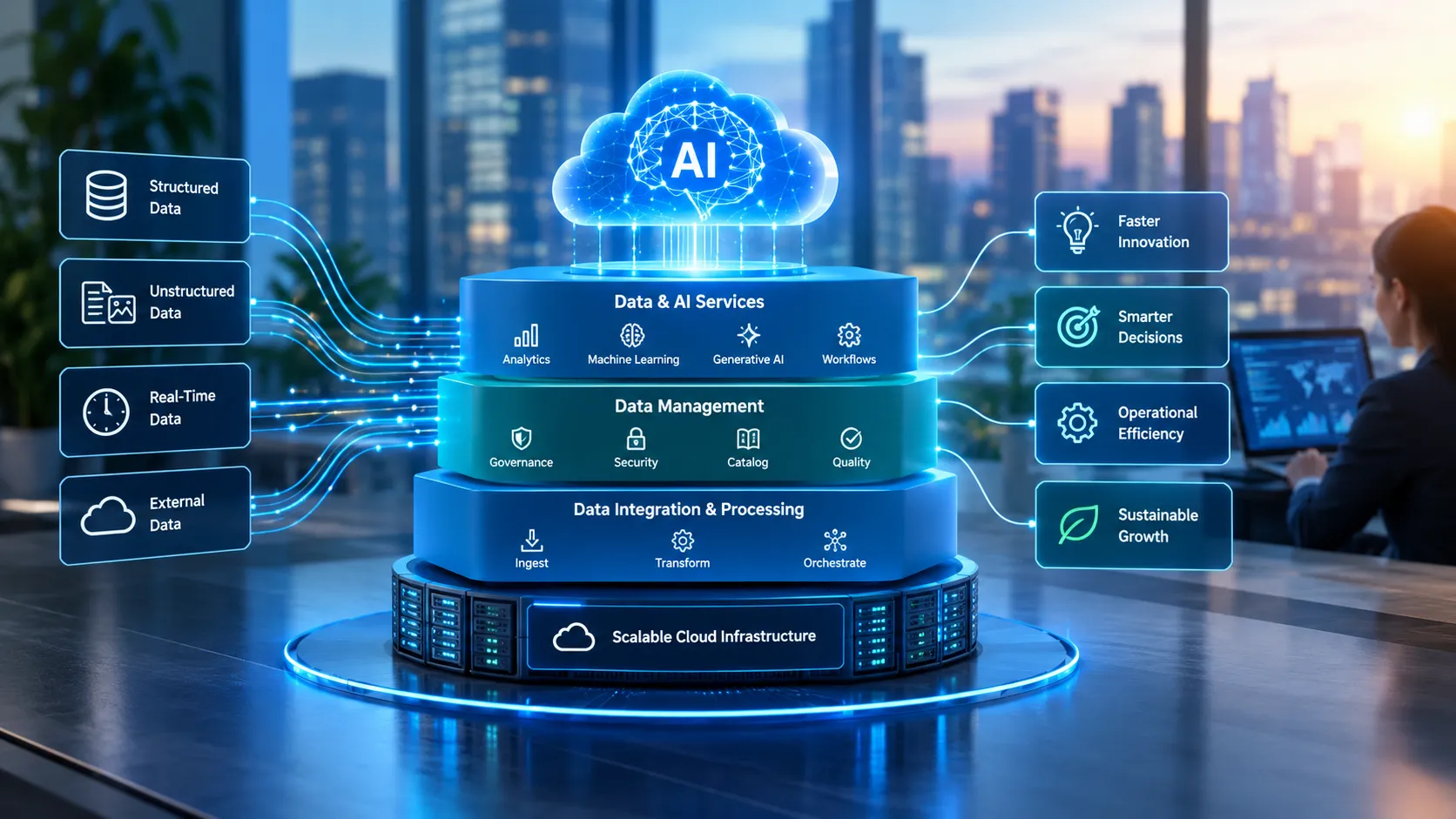
A cloud data integration platform connects applications, databases, data warehouses, data lakes, and other information sources through cloud-based integration capabilities. It enables organizations to transfer, transform, synchronize, and manage information across different environments without building every connection from scratch.
Traditional integration methods often depend on custom scripts, separate connectors, and infrastructure that requires ongoing maintenance. Although these approaches may work for specific requirements, managing numerous individual connections can become difficult as data volumes and application ecosystems grow.
Cloud-based integration offers a more flexible approach. Depending on the solution, organizations can use prebuilt connectors, reusable workflows, automated data pipelines, and centralized monitoring to simplify integration activities. Teams can establish connections between business applications and analytical systems while maintaining visibility into how information moves throughout the organization.
The specific capabilities available vary between platforms, so businesses should evaluate solutions according to their technical requirements, security policies, and existing infrastructure. The objective is not simply to move information into the cloud but to make data accessible, consistent, and useful across the business.
Why Businesses Need Better Data Connectivity
Disconnected systems create operational challenges that extend beyond technology teams. Marketing departments may maintain customer information in separate applications, finance teams may rely on independent reporting systems, and operations teams may use different databases to monitor performance. When these sources cannot communicate effectively, employees spend valuable time collecting information manually.
A cloud data integration platform helps address these challenges by connecting relevant systems and supporting consistent data movement. For example, a retail organization can combine information from its customer relationship management system, online store, inventory application, and sales database. Bringing these sources together helps teams understand purchasing behavior, monitor stock levels, and evaluate sales performance using a more complete view of business activity.
Improved connectivity can also reduce repetitive data preparation. When information flows through established pipelines, teams may spend less time exporting spreadsheets, correcting duplicated records, and reconciling inconsistent reports.
However, integration alone does not guarantee accurate information. Organizations still need appropriate validation rules, data ownership practices, and monitoring processes. Reliable connectivity works best when it forms part of a broader data management strategy.
Key Capabilities to Evaluate in a Cloud Data Integration Platform
Selecting an integration solution requires more than comparing feature lists. Businesses should consider how well a platform supports their existing systems, anticipated data growth, governance requirements, and long-term technology plans.
Connectivity Across Business Applications
Modern organizations frequently use applications from multiple vendors. An effective cloud data integration platform should support the relevant databases, enterprise applications, cloud services, and data storage environments used by the organization.
Prebuilt connectors can reduce development effort, while flexible integration options can help teams accommodate specialized systems. Before selecting a solution, businesses should verify connector availability, supported authentication methods, synchronization options, and compatibility with their current technology stack.
Data Transformation and Quality
Information collected from different systems rarely follows a consistent structure. Customer records may use different naming conventions, transaction dates may follow different formats, and product identifiers may vary between applications.
Data transformation capabilities help standardize information before it reaches its destination. Depending on business requirements, these processes may include filtering records, converting data types, matching identifiers, and applying validation rules.
Organizations should also establish procedures for handling missing values, duplicate records, and unexpected changes in source data. These practices improve consistency and help analytical teams work with information they can evaluate more confidently.
Scalability and Performance
As businesses introduce new applications and generate more information, integration workloads can increase significantly. An integration environment should accommodate changing data volumes without creating unnecessary operational complexity.
Scalability depends on several factors, including processing capacity, pipeline design, source-system limitations, and the frequency of data transfers. Organizations should assess whether a platform supports scheduled batch processing, near-real-time integration, or streaming workflows where required.
Performance testing with representative workloads can provide a more realistic assessment than relying solely on advertised capabilities.
Security and Governance
Data integration frequently involves sensitive business information, including customer details, financial records, and internal operational data. Security must therefore remain central to platform selection and implementation.
Organizations should evaluate access controls, encryption, credential management, audit logging, and available monitoring features. They should also determine how the solution supports applicable privacy requirements and internal governance policies.
A well-governed integration environment makes it easier to understand where information originates, who can access it, and how it is used. These controls become particularly important when data moves across multiple cloud providers, business units, and geographic regions.
How Cloud Data Integration Supports Business Analytics
Business analytics depends on timely access to relevant information. When data remains isolated in separate applications, analysts may struggle to combine datasets or verify whether different reports use consistent definitions.
A cloud data integration platform can help consolidate information from operational systems and deliver it to analytical destinations. This creates opportunities for organizations to build more consistent dashboards, evaluate business performance, and investigate trends across departments.
For instance, a manufacturing company might integrate production records, equipment information, maintenance histories, and supply chain data. Analysts could then examine relationships between equipment downtime, material availability, and production output. The resulting insights may help operational teams identify areas that deserve further investigation.
Integration can also support customer analytics. Combining service interactions, purchasing histories, and engagement records may help organizations understand customer needs more comprehensively. Appropriate privacy safeguards and data access controls remain essential when combining these sources.
The quality of analytical outcomes still depends on the relevance, accuracy, and interpretation of the underlying data. Integration provides the foundation, while sound analytical methods turn connected information into useful business knowledge.
Preparing Enterprise Data for Artificial Intelligence
Artificial intelligence initiatives depend on accessible, relevant, and sufficiently reliable data. Organizations developing machine learning applications or generative AI solutions often need information from multiple systems, including structured databases, documents, application records, and operational platforms.
A cloud data integration platform can help prepare this information for downstream processing by connecting data sources, standardizing formats, and delivering datasets to suitable storage or analytical environments.
For example, a customer service organization might combine support tickets, product documentation, and service histories to support an AI-powered knowledge assistant. Before using this information, the organization must establish appropriate permissions, remove or protect sensitive information where necessary, and verify that the source material is suitable for the intended application.
Integration does not automatically make data ready for AI. Businesses also need data quality checks, access governance, lineage tracking, and processes for evaluating whether information is current and relevant. These measures help reduce the risk of building AI applications on incomplete, outdated, or improperly accessed data.
A carefully designed integration strategy can therefore support AI readiness while giving teams greater control over the information used in analytical and intelligent applications.
Common Challenges and Practical Ways to Address Them
Despite its advantages, implementing a cloud data integration platform can introduce challenges when organizations underestimate the complexity of their existing environments.
Legacy applications may lack modern interfaces, while different systems may use incompatible formats or inconsistent business definitions. Moving large datasets can also create performance concerns, particularly when source applications have limited processing capacity or strict access restrictions.
Businesses can reduce these risks by assessing their current data landscape before beginning implementation. Identifying critical systems, documenting dependencies, and defining measurable integration objectives helps teams establish realistic priorities.
Starting with a focused use case can also make implementation more manageable. An organization might initially connect sales data to a reporting environment, validate the results, and then expand the integration architecture to other departments.
Monitoring should continue after deployment. Teams need to identify failed pipelines, investigate unexpected data changes, and review performance as workloads evolve. Clear ownership is equally important because integration issues frequently involve both technical systems and business processes.
Regular reviews help organizations determine whether their integration architecture continues to meet operational requirements without introducing unnecessary complexity.
Building a Future-Ready Data Integration Strategy
A sustainable integration strategy should align technology decisions with business objectives. Instead of connecting every available system immediately, organizations should prioritize information flows that address important operational challenges or support clearly defined analytical goals.
A cloud data integration platform can contribute to this strategy by providing reusable integration workflows and supporting data movement across changing technology environments. The most suitable solution will depend on factors such as existing infrastructure, data volume, latency requirements, regulatory obligations, and internal technical expertise.
Businesses should also consider interoperability and long-term flexibility. Integration architectures that support established standards, documented interfaces, and reusable components may be easier to adapt as applications and business needs change.
Collaboration between data engineers, security specialists, application owners, and business stakeholders is essential. Each group contributes a different perspective on data reliability, access requirements, and practical business value.
By combining appropriate technology with clear governance and continuous improvement, organizations can develop an integration environment that supports current operations and future innovation.
Conclusion
Connected data has become an important foundation for effective business operations, analytics, and artificial intelligence. A cloud data integration platform helps organizations connect information sources, standardize data flows, and make relevant information available across their technology environments.
However, successful integration requires more than selecting software. Businesses must address data quality, security, governance, scalability, and ongoing maintenance to achieve dependable results. A thoughtful implementation strategy helps organizations prioritize meaningful use cases, reduce unnecessary complexity, and establish reliable information flows.
As digital ecosystems continue to expand, organizations that treat data integration as a strategic capability will be better positioned to improve visibility, support informed decisions, and adapt to evolving business requirements.























Sign in to leave a comment.