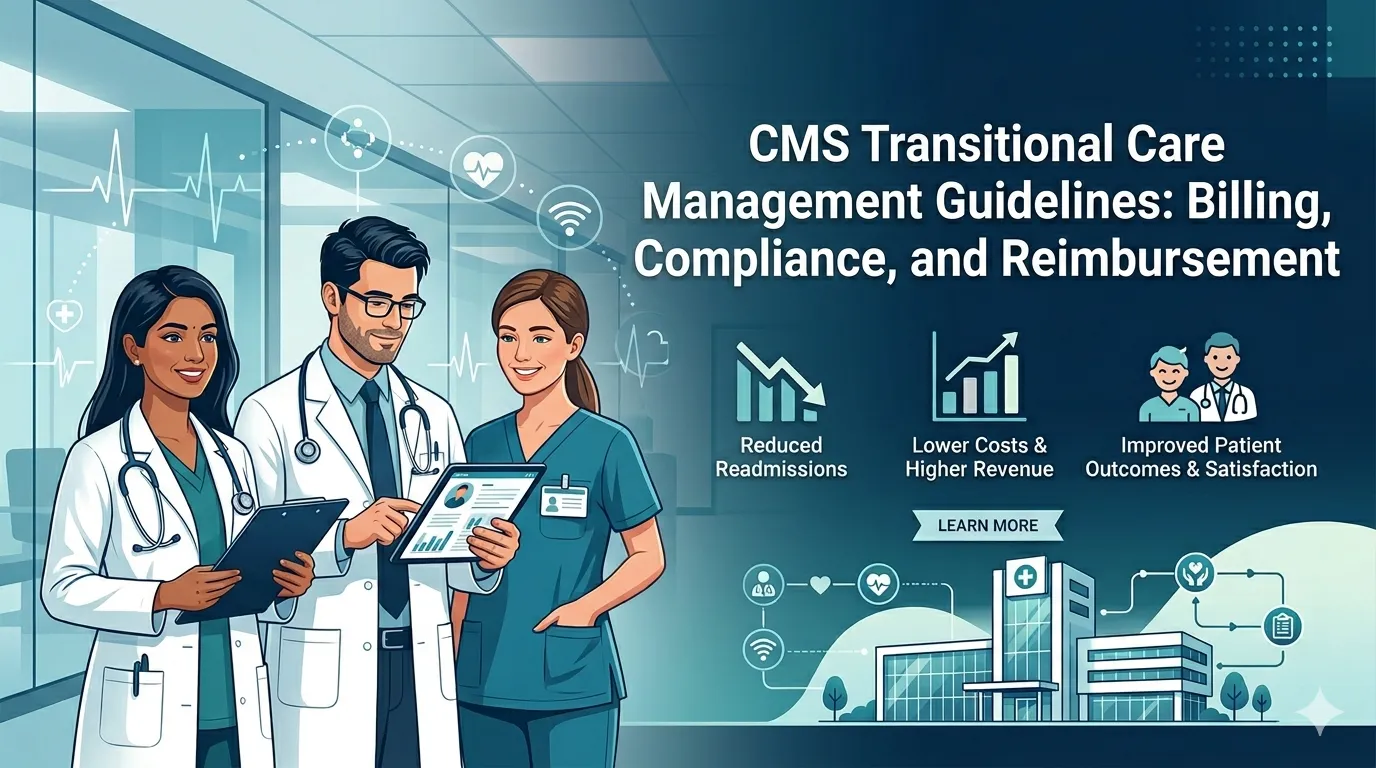

Transitional care management (TCM) services play a crucial role in supporting patients as they move from an inpatient hospital setting back to their home or another care facility. With chronic illnesses and complex health conditions on the rise, effective transitional care is essential for ensuring better outcomes and reducing costly readmissions. To support this, the Centers for Medicare & Medicaid Services (CMS) has established specific guidelines for transitional care management, covering aspects like billing, compliance, and reimbursement. If you’re a healthcare provider or practice manager, understanding the CMS transitional care management requirements is key to optimizing your practice’s revenue and delivering high-quality care.
What is CMS Transitional Care Management?
CMS transitional care management refers to a set of services designed to assist patients as they transition from hospital or skilled nursing facility to their home or another setting. The goal is to ensure the patient receives appropriate follow-up care, medication management, and support to prevent unnecessary readmissions. Providers can bill for TCM services if they meet certain criteria established by CMS, ensuring that the patient’s care continues seamlessly after discharge.
Key Components of CMS Transitional Care Management Services
The CMS transitional care management services are defined by several core components:
1. Communication (direct contact, telephone, or electronic) with the patient or caregiver within two business days of discharge.
2. Medical decision-making of moderate or high complexity during the service period.
3. Face-to-face visit with the patient within specific timeframes:
- Within 7 days for high complexity cases (CPT 99496)
- Within 14 days for moderate complexity cases (CPT 99495)
These requirements must be met for providers to bill for TCM services.
Billing Guidelines for CMS Transitional Care Management
Accurate billing is essential for receiving proper reimbursement for transitional care management. CMS has outlined billing codes and rules that must be followed:
TCM Codes
- CPT 99495: For moderate complexity medical decision-making, with a face-to-face visit within 14 days post-discharge.
- CPT 99496: For high complexity medical decision-making, with a face-to-face visit within 7 days post-discharge.
Billing Tips
- Only one provider may bill for TCM services per patient per 30-day period.
- The service period begins on the date of discharge and continues for the next 29 days.
- The provider must document the initial communication, the complexity of medical decision-making, and the face-to-face visit in the medical record.
- TCM services cannot be billed during the same period as certain other services, such as care plan oversight or home health supervision.
CMS Transitional Care Management Compliance Requirements
To ensure compliance with CMS transitional care management guidelines, providers must adhere to several important regulations:
Patient Eligibility
- The patient must be discharged from an inpatient acute care hospital, skilled nursing facility, or certain other qualifying settings.
- TCM services are appropriate for patients with medical or psychosocial problems requiring moderate or high complexity medical decision-making.
Documentation Requirements
- Keep thorough records of all patient communications, the date of discharge, medication reconciliation, and care coordination activities.
- Document the timing and content of the face-to-face visit, and ensure it aligns with the required timeframe.
Provider Qualifications
- Services must be furnished by a physician or qualified non-physician practitioner (such as a nurse practitioner or physician assistant).
Best Practices for CMS Transitional Care Management Compliance
To stay compliant and avoid billing errors, consider these best practices:
- Develop a protocol for tracking patient discharges and scheduling follow-up communications and visits.
- Train your care team on TCM documentation and communication requirements.
- Use electronic health records (EHRs) to automate reminders and streamline documentation.
- Regularly review CMS updates on transitional care management guidelines.
Reimbursement for CMS Transitional Care Management
The reimbursement rates for CMS transitional care management services are higher than routine office visits due to the additional care coordination involved. Proper billing and documentation can improve your practice’s revenue cycle.
Key Points on Reimbursement
- Reimbursement rates vary by geographic location and Medicare fee schedule updates.
- TCM services are considered “non-face-to-face” and “face-to-face” components, both of which are billable under the TCM codes.
- Providers may receive additional payments for complex care coordination under CMS transitional care management codes.
Maximizing Reimbursement
- Ensure all elements of TCM are completed and documented accurately.
- Submit claims promptly after the face-to-face visit.
- Monitor denied claims and address any compliance or documentation gaps.
Frequently Asked Questions about CMS Transitional Care Management
Which patients are eligible for CMS transitional care management?
Patients discharged from an inpatient hospital, skilled nursing facility, or similar setting who require moderate to high complexity medical decision-making are eligible for TCM services.
Can multiple providers bill for TCM services for the same patient?
No, only one provider can bill for TCM services within a 30-day period following the patient’s discharge.
What services are included in CMS transitional care management?
TCM includes communication with the patient or caregiver, medication reconciliation, care coordination, and a face-to-face visit within the required timeframe.
Are telehealth visits allowed for TCM?
CMS allows some flexibility for conducting the initial communication and follow-up visits via telehealth if appropriate for the patient’s condition and needs.
Why is proper documentation so important for TCM billing?
Accurate documentation is crucial for compliance, supporting reimbursement claims, and defending against audits or denials.
How healthArc Supports CMS Transitional Care Management
Efficient management of CMS transitional care management guidelines can be challenging without the right tools and workflows. HealthArc offers comprehensive solutions designed to streamline TCM processes, from automated patient tracking and reminders to documentation templates and billing support. With HealthArc, providers can reduce administrative burdens, ensure compliance, and maximize reimbursement for transitional care management services.
Conclusion: Optimizing Practice Success with CMS Transitional Care Management
CMS transitional care management services provide a valuable opportunity for healthcare providers to enhance patient care during critical transitions while improving financial outcomes. By understanding and implementing CMS transitional care management guidelines, your practice can deliver seamless, compliant care and capture appropriate reimbursement. Stay updated on CMS requirements, invest in training and tools like HealthArc, and focus on thorough documentation to achieve the best results for your patients and your practice.
For more information on CMS transitional care management or to discover how HealthArc can help your organization, contact us today!






























Sign in to leave a comment.