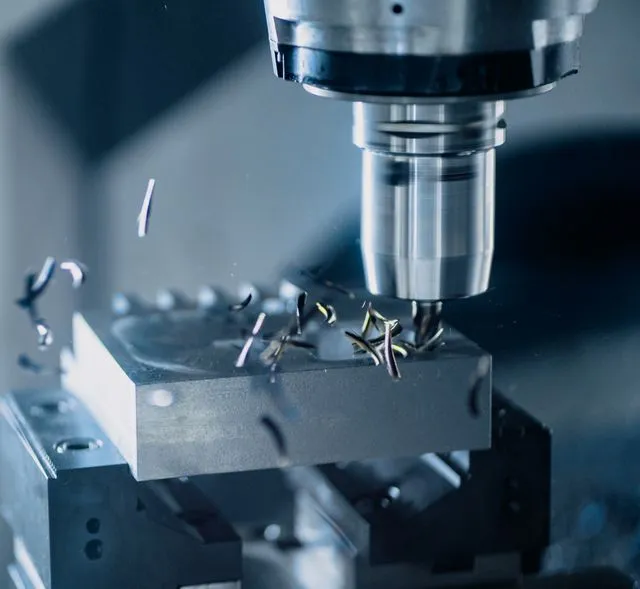

CNC milling services provide manufacturers with an efficient and highly accurate way to produce components from a wide range of materials. Using computer-controlled cutting equipment, CNC milling can create precise surfaces, pockets, slots, holes, contours, and complex three-dimensional features that may be difficult to manufacture using conventional machining methods. From prototypes and custom parts to repeat production runs, CNC milling is used across industries that require consistent dimensions, reliable performance, and high-quality finishes.
Modern milling technology allows manufacturers to produce increasingly complex components while maintaining repeatability. However, achieving good results involves more than simply programming a machine. The material, tooling, workholding method, machine capabilities, cutting strategy, tolerances, and inspection requirements all need to be considered. A well-planned CNC milling process can improve efficiency while ensuring that finished components meet their engineering specifications.
What Is CNC Milling?
CNC milling is a subtractive manufacturing process in which a computer-controlled machine removes material from a workpiece using rotating cutting tools. The machine follows programmed movements to produce the required geometry.
Unlike manual milling, CNC equipment can automatically control tool movement, cutting speed, feed rate, and other machining parameters. This allows manufacturers to produce consistent components with a high level of repeatability.
Depending on the machine, CNC milling can involve three, four, five, or more axes of movement. Additional axes allow cutting tools to approach the workpiece from different directions, making it possible to manufacture complex shapes and surfaces.
How CNC Milling Works
The process typically begins with an engineering drawing or three-dimensional computer-aided design model.
Manufacturing software is used to develop toolpaths that determine how the cutting tools will move through the material. The resulting machine instructions are transferred to the CNC milling machine.
The workpiece is secured using an appropriate fixture or workholding system. Cutting tools are then selected based on the material and features being produced.
The machine removes material according to the programmed sequence until the desired geometry is achieved.
Depending on the component, multiple tools and operations may be required.
After machining, the finished part can be inspected to verify dimensions and other specifications.
CNC Milling for Complex Components
One of the biggest advantages of CNC milling is its ability to manufacture components with complicated features.
A single component may require flat surfaces, angled faces, pockets, holes, slots, curved contours, and other details.
Advanced CNC milling equipment can combine several operations while maintaining the relationship between critical features.
Multi-axis machining can further reduce the need for multiple setups.
Fewer setups can improve efficiency while reducing the potential for alignment errors.
This makes CNC milling particularly valuable for components where dimensional relationships are important.
Materials Suitable for CNC Milling
CNC milling can be used with numerous materials.
Aluminum is commonly machined because it is relatively lightweight and can provide a good combination of strength and machinability. Stainless steel and other steels are frequently used when greater strength or durability is required.
Brass, copper, titanium, engineering plastics, and other specialty materials can also be machined.
Each material behaves differently during cutting.
Tool selection, cutting speed, feed rate, coolant, and machining strategy may need to be adjusted according to the material.
Choosing the right approach can help reduce tool wear and produce a consistent surface finish.
CNC Milling for Prototypes
CNC milling is particularly useful during product development.
Engineers can create functional prototypes directly from digital designs without committing to permanent production tooling.
A machined prototype can help evaluate physical dimensions, fit, assembly, and performance.
If changes are necessary, the digital design and machining program can be modified for the next version.
This flexibility can shorten development cycles and help manufacturers identify problems before moving into larger production runs.
CNC milling can therefore serve as an important bridge between digital product design and physical manufacturing.
Small-Batch Manufacturing
Not every project requires thousands of components.
CNC milling is well suited to low- and medium-volume production because manufacturers can produce parts without creating specialized molds or dies.
This flexibility can be valuable for replacement parts, specialized equipment, custom machinery, and products with relatively limited demand.
Small-batch manufacturing also allows businesses to adjust production quantities based on customer requirements.
For companies that need several variations of a component, CNC machining can provide additional flexibility.
High-Volume Production
CNC milling services can also support larger production requirements.
Once the machining process has been programmed and optimized, the same sequence can be repeated to produce consistent components.
Production efficiency can be improved through optimized toolpaths, automated tool changes, suitable workholding, and careful process planning.
For larger orders, manufacturers can analyze cycle times and tooling requirements to improve throughput.
Automation can also be incorporated where appropriate.
The objective is to maintain quality while producing components efficiently.
Tight Tolerances
Many machined components require close dimensional tolerances.
CNC milling can provide the repeatability necessary for manufacturing parts where dimensions and feature locations need to remain consistent.
However, the achievable tolerance depends on factors such as the machine, material, tool condition, workholding, temperature, and machining strategy.
Critical dimensions should be identified during production planning.
Inspection equipment can then be selected to verify the features that have the greatest impact on the function of the component.
Surface Finish
The surface finish of a milled component can influence both appearance and performance.
Different cutting tools and machining strategies can produce different finishes.
Roughing operations remove material quickly, while finishing passes can improve dimensional accuracy and surface quality.
Some components may require additional finishing processes after machining.
These can include polishing, coating, anodizing, plating, heat treatment, or other treatments.
The desired finish should be communicated before production so that machining and post-processing can be planned together.
CNC Milling and Workholding
Workholding is an important part of the milling process.
The component must remain securely positioned while cutting forces are applied.
Fixtures, vises, clamps, and specialized workholding systems may be used depending on the shape and requirements of the part.
Good workholding can improve accuracy and repeatability.
For complex components, custom fixtures may be developed to provide access to multiple surfaces while maintaining a consistent reference position.
The workholding strategy should be considered during the design and programming stages.
Multi-Axis CNC Milling
Multi-axis milling provides additional flexibility for complex components.
A three-axis machine moves the cutting tool along three primary directions. Four- and five-axis equipment adds rotational movement, allowing the tool to reach surfaces that would otherwise require additional setups.
This can be useful for aerospace components, medical parts, molds, tooling, and other complex geometries.
Reducing the number of setups can improve efficiency and help maintain accurate relationships between features.
Multi-axis machining can also allow shorter and more efficient cutting tools to be used in certain applications.
Quality Control and Inspection
Quality control should be integrated into the CNC milling process.
Measurements may be taken during machining or after the component is completed.
Calipers, micrometers, gauges, optical equipment, and coordinate measuring machines can be used depending on the required accuracy.
Inspection procedures can verify critical dimensions, hole locations, surface characteristics, and other specifications.
For production work, documented inspection procedures can help maintain consistency across batches.
Effective quality control helps identify problems early and reduces the risk of defective components reaching assembly or customers.
CNC Milling for Custom Parts
Custom components are another important application for CNC milling.
Businesses may need replacement parts for machinery, specialized brackets, custom fixtures, tooling, or components that are not available commercially.
CNC milling can produce these parts directly from engineering drawings or digital models.
This can be particularly useful when an original component is obsolete or when only a small number of replacement parts are needed.
The process can provide manufacturers with greater independence from standard component suppliers.
Design for CNC Milling
Design decisions can have a major impact on machining cost and efficiency.
Deep pockets, extremely small internal corners, unnecessary tight tolerances, and difficult-to-access features can increase machining time.
Engineers can often simplify manufacturing by designing components with tool access and machining capabilities in mind.
A machining provider can review a design before production and identify opportunities to improve manufacturability.
Design for manufacturing can help reduce unnecessary operations without changing the function of the finished component.
Choosing a CNC Milling Provider
When evaluating CNC milling services, manufacturers should consider machine capabilities, available axes, material experience, tolerances, inspection equipment, production capacity, and turnaround times.
It is also important to understand whether the provider can support prototypes, production runs, finishing, and inspection.
Clear communication about drawings, materials, quantities, tolerances, and delivery requirements can help avoid production issues.
A capable machining provider should be able to explain the proposed manufacturing approach and identify potential challenges before work begins.
Benefits of CNC Milling Services
CNC milling provides several important manufacturing advantages.
The process offers repeatability, flexibility, and the ability to produce complex components from many different materials. Digital programming allows manufacturers to reproduce designs consistently while making changes relatively easily when product requirements evolve.
CNC milling can also reduce dependence on manual machining and support efficient production planning.
For manufacturers that require both precision and flexibility, these characteristics make CNC milling an effective solution for a broad range of applications.
Professional CNC Milling Services
Reliable CNC milling services combine advanced equipment with effective programming, tooling, workholding, inspection, and process control.
Whether a project involves a single prototype, a small batch of custom components, or a larger production run, the machining process should be planned around the specifications and intended use of the finished part.
By choosing appropriate materials, optimizing toolpaths, controlling critical dimensions, and inspecting finished components, manufacturers can achieve consistent results.
CNC milling continues to play an important role in modern manufacturing because it can adapt to changing designs, complex geometries, and demanding production requirements. With the right equipment and experienced machining professionals, CNC milling can provide accurate, repeatable components that support everything from product development to full-scale manufacturing.

























Sign in to leave a comment.