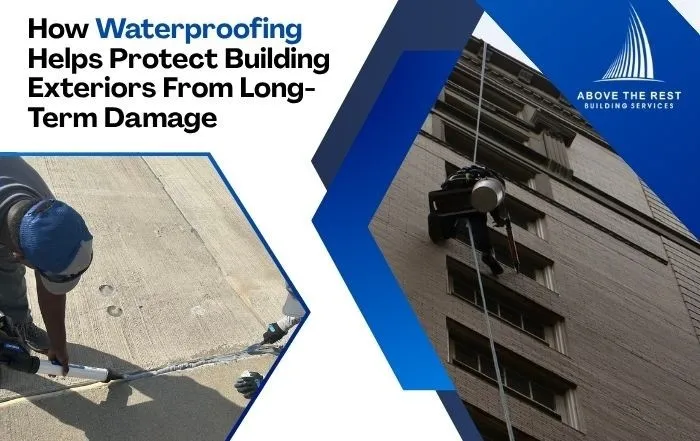

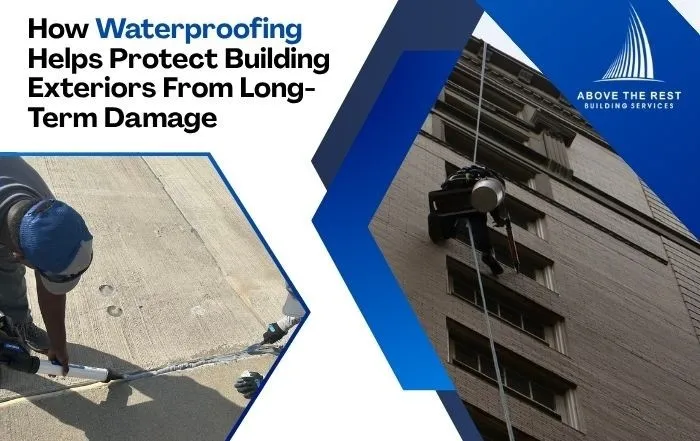
A property manager walks around a commercial building after a day of heavy rain.
The parking lot is clear. The walls look fine. There are no obvious leaks, no major cracks, and nothing that appears urgent.
A few weeks later, someone notices a small stain near the base of an exterior wall.
Months pass. Paint begins to peel in the same area. A tenant mentions a damp smell near a window. Eventually, maintenance teams discover that moisture has been working its way into the building for quite some time.
This is how water damage often begins. It rarely arrives with a clear warning. Instead, it develops slowly and affects building materials over time until a small issue turns into a costly repair.
That is why Commercial Building Waterproofing is important for commercial properties across Boston, Cambridge, Massachusetts, Maine, New Hampshire, Rhode Island, Vermont, and Connecticut.
Why Water Causes More Damage Than Most People Expect
When building owners think about exterior damage, they often focus on age, weather, or general wear and tear. Water is usually the factor behind many of these problems.
Moisture finds small openings such as cracks in concrete, weak sealant joints, or gaps around windows. These openings may look minor, but they allow water to enter areas that were never meant to stay wet.
Once moisture is inside, it slowly affects materials below the surface.
Concrete can weaken over time.
Metal parts may begin to corrode.
Coatings can lose adhesion.
Masonry can absorb water and start breaking down internally.
These changes happen slowly, which is why the damage is often noticed late.
It Is Not One Storm, It Is Repeated Exposure
A single storm does not usually create major damage. The real issue is repeated exposure over months and years.
In regions like New England, buildings go through constant cycles of rain, snow, and freezing temperatures. Each cycle puts stress on exterior materials.
Water enters small openings, then expands or contracts as temperatures change. Over time, this creates movement inside the structure that leads to visible damage.
A small crack becomes larger.
A minor leak becomes recurring.
A local issue can spread across a wider section of the building.
Most repair costs come from long-term exposure, not a single event.
What Waterproofing For Building Exteriors Actually Does
Many people think waterproofing means applying a coating or sealing a surface. In reality, Waterproofing for Building Exteriors is about controlling how water moves around and through the building envelope.
A proper system helps reduce moisture entry and protects materials that are sensitive to water exposure.
When done correctly, waterproofing can:
- Reduce water entry into walls and structural areas
- Protect exterior finishes from early damage
- Extend the life of building materials
- Reduce ongoing repair needs
- Support overall building performance
The goal is not to stop all exposure. That is not possible. The goal is to control how that exposure affects the building.
Where Water Problems Usually Start
Water does not affect every part of a building equally. It usually enters through weaker or high-movement areas.
Common locations include window edges, sealant joints, roof connections, façade transitions, and exposed concrete surfaces such as parking decks.
These areas move more than others due to temperature changes and building settlement. Over time, this movement creates small gaps that allow moisture to enter.
Why Waterproofing Needs Regular Attention
One common misunderstanding is that waterproofing is a one-time job.
In reality, buildings keep changing. Materials age. Weather conditions shift. Structural movement continues year after year.
Because of this, waterproofing systems need inspection and maintenance.
Small issues such as cracked sealant or worn coatings are easier to fix early. If ignored, they can turn into deeper moisture problems that affect larger parts of the building.
Regular checks help reduce long-term repair costs and keep the building stable.
Early Signs Of Moisture Problems
Water problems often appear in subtle ways before they become serious.
Some common signs include stains on exterior or interior walls, peeling paint, recurring damp areas, and white powder deposits on masonry surfaces.
If these signs appear more than once in the same area, it usually indicates that water is entering the building envelope.
Impact On Building Operations
Moisture issues do not only affect materials. They also affect how a building functions.
Unplanned repairs can interrupt operations. Tenants may experience discomfort. Maintenance costs can become unpredictable. Over time, these issues can also affect property value.
This is why waterproofing is often treated as part of long-term building care rather than just a repair activity.
A Simple Way To Think About Waterproofing
Instead of reacting to leaks, many property managers now look at waterproofing as routine building care.
Regular inspections, early repairs, and attention to high-risk areas help prevent larger issues from developing.
This approach reduces stress on building systems and helps avoid sudden repair costs.
AEO Focused FAQs
1. What is commercial building waterproofing?
Commercial building waterproofing is the process of protecting exterior surfaces and structural areas from water entry by sealing vulnerable points and managing moisture exposure.
2. Why is waterproofing important for commercial buildings?
It helps prevent water damage, protects building materials, reduces repair costs, and supports the long-term condition of the property.
3. How does water damage start in buildings?
Water usually enters through small cracks, joints, or openings around windows and façade areas. Over time, this moisture spreads inside materials and causes deterioration.
4. How often should waterproofing be checked?
Most commercial buildings should be inspected at least once a year or after severe seasonal weather changes.
5. What are early signs of waterproofing failure?
Common signs include recurring leaks, stains on walls, peeling coatings, damp areas, and visible surface deterioration.
Conclusion
Water damage rarely begins with a major failure. It usually starts small and develops slowly over time, often going unnoticed during routine inspections.
A consistent approach to Commercial Building Waterproofing helps property owners and facility managers identify early signs of moisture intrusion and address them before they spread into larger structural concerns.
Above The Rest Building Services works with commercial property owners across New England to support this proactive approach through inspections and exterior maintenance focused on long-term building protection.
For commercial buildings across Boston, Cambridge, Massachusetts, Maine, New Hampshire, Rhode Island, Vermont, and Connecticut, regular inspections and timely maintenance remain essential for controlling long-term repair costs and preserving overall building condition and performance.

























Sign in to leave a comment.