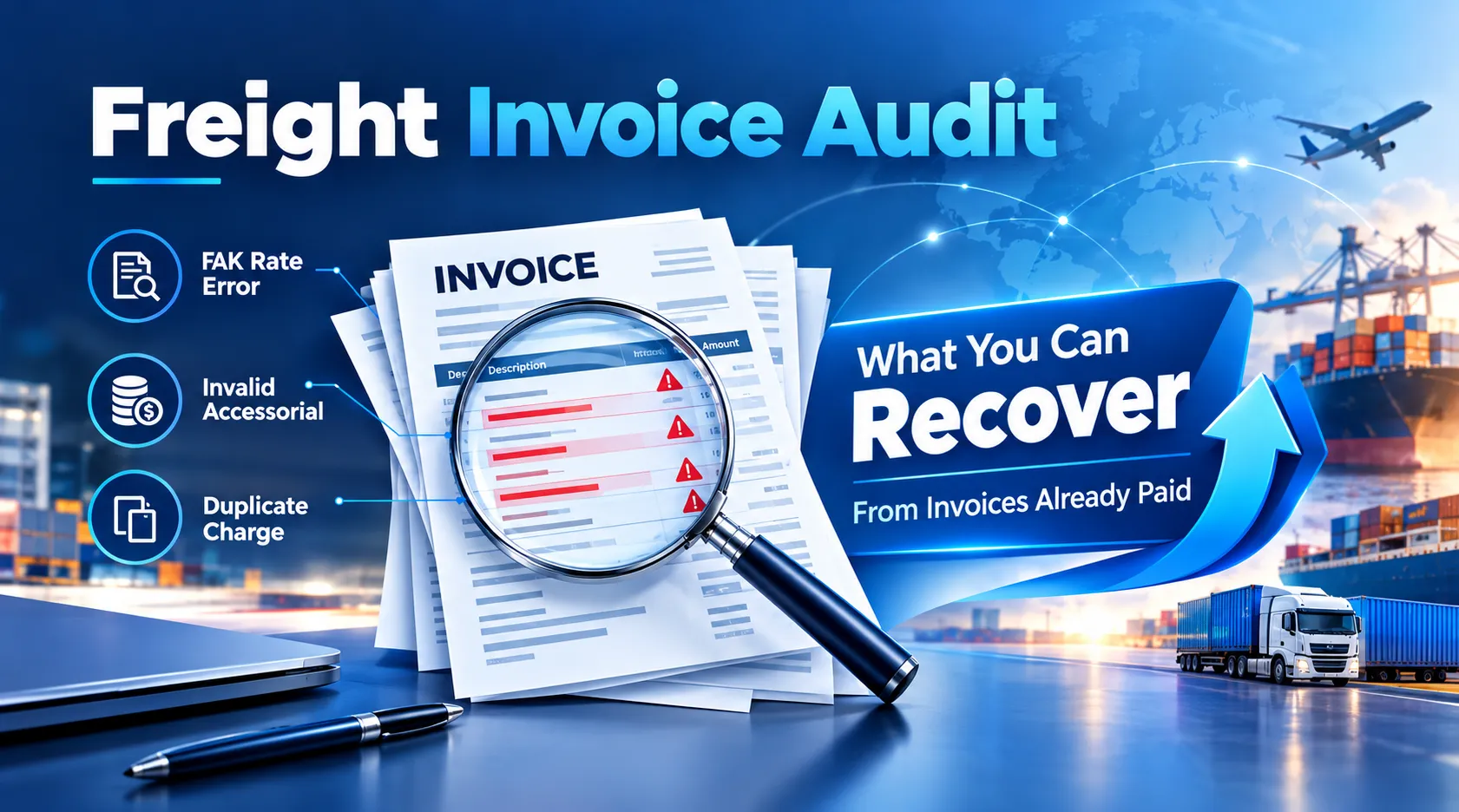

Every shipment generates a paper trail, and every paper trail carries the risk of mistakes. A freight invoice audit is the process of comparing what a carrier billed you against what was actually agreed and delivered. Many shippers assume their invoices are accurate because the amounts look familiar, yet small errors repeat quietly across hundreds of shipments and drain budgets over time. Knowing where these mistakes hide is the first step toward stopping them.
Duplicate Billing
Carriers sometimes send the same invoice twice, or bill the same shipment under a slightly different reference number. When accounts payable teams process hundreds of bills each week, these repeats slip through easily. A careful review of shipment references, dates and bill of lading details usually exposes the overlap before payment goes out.
Incorrect Rates and Contract Mismatches
One of the most frequent findings in any freight bill audit is a rate that does not match the signed agreement. Carriers may apply outdated tariffs, skip negotiated discounts or use a lane rate that was never agreed upon. These errors are rarely malicious, but they add up. Matching every charge against the current contract is the most reliable way to catch them.
Wrong Weight and Classification
Freight pricing depends heavily on weight, dimensions and commodity class. If a carrier reweighs a shipment and records a higher figure, or assigns a costlier freight class, your charge rises immediately. Without supporting documents such as scale tickets and packing details, these adjustments go unchallenged. Auditors compare the billed data with original shipping paperwork to confirm what is true.
Unjustified Accessorial Charges
Accessorial fees cover extra services like liftgate use, residential delivery, inside delivery or detention. They are also a common source of disputes. Some are billed without the service ever being requested, while others are charged at rates higher than the contract allows. Reviewing delivery records and proof of service helps separate legitimate fees from questionable ones.
Fuel Surcharge Miscalculations
Fuel surcharges change with market conditions, which makes them easy to calculate incorrectly. Carriers may use the wrong index date, apply an outdated table or add the surcharge to charges that should be excluded. Verifying the formula against your agreement keeps this line item honest.
Billing for Services Not Delivered
Occasionally a shipment is billed in full even though it arrived late, damaged or incomplete. Service failures can entitle you to credits or adjustments, but only if someone notices and files a claim in time. Tying invoices to delivery performance records protects your right to recover those amounts.
Why Regular Audits Matter
Errors found early are far easier to dispute than those discovered months later. Consistent reviews also give you leverage in carrier negotiations, because clean data shows exactly where problems occur. Over time, this discipline improves accuracy, strengthens carrier relationships and gives finance teams confidence in their logistics spend.
Take Control of Your Freight Spend
Do not let hidden billing mistakes keep eating into your margins. nVision Global helps businesses uncover overcharges, validate carrier invoices and recover money that rightfully belongs to them. Reach out to nVision Global today and turn your freight invoices into a source of savings rather than surprise costs.
Frequently Asked Questions
What documents are needed to verify a carrier invoice?
You generally need the signed contract or rate agreement, the bill of lading, proof of delivery and any weight or dimension records. These allow a side by side comparison with the billed charges.
How long do shippers have to dispute a billing error?
Dispute windows depend on the carrier agreement and applicable regulations, and they can be fairly limited. Acting quickly after receiving an invoice gives you the strongest chance of a successful correction.
Can small shippers benefit from reviewing their freight bills?
Yes. Smaller businesses often lack dedicated audit staff, which makes errors more likely to go unnoticed. Even modest shipping volumes can hide recurring overcharges that are worth recovering.

























Sign in to leave a comment.